James Webb Space Telescope marks first anniversary: NASA releases image, check discoveries
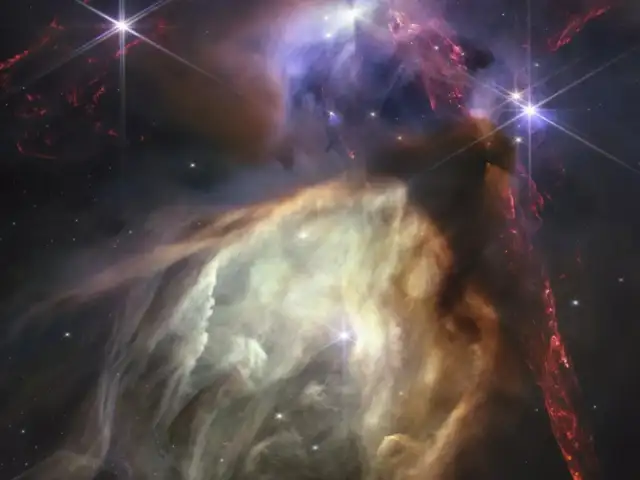
As James Webb Space Telescope marks its first anniversary, NASA has released an image of Rho Ophiuchi cloud complex.
By The Feed | Updated:

Today marks the first science anniversary of the James Webb Space Telescope, an extraordinary observatory that has been in the hands of astronomers for a year now. To commemorate this occasion, NASA has released a spectacular new image of the Rho Ophiuchi cloud complex. Located 400 light-years away, Rho Ophiuchi is the closest star-forming region to us. Both professional and amateur stargazers are captivated by this region, situated adjacent to the plane of the Milky Way. The image captured by Webb represents only a fraction of the dense gas and dust in this area, showcasing the remarkable resolution of the telescope. The entire image spans approximately half a light-year, equivalent to 4.7 trillion kilometers.
"In just one year, the James Webb Space Telescope has transformed humanity's view of the cosmos, peering into dust clouds and seeing light from faraway corners of the universe for the very first time," said NASA Administrator Bill Nelson. "Every new image is a new discovery, empowering scientists around the globe to ask and answer questions they once could never dream of."
James Webb's image shows around 50 young stars, of similar mass to our Sun or smaller. Some have the signature shadows of circumstellar disks -- a sign that planets may eventually form around them. Huge jets of hydrogen appear horizontally in the upper third, and vertically on the right.
A glowing cave of dust dominates the lower half of the image, carved out by the star S1 at its center. S1 is the only star in the image significantly bigger than the Sun.
Webb, the most powerful observatory in orbit, was launched in December 2021 from French Guiana, on a million mile (1.6 million kilometer) voyage to a region called the second Lagrange point.
Its first full color picture was revealed by President Joe Biden on July 11, 2022: the clearest view yet of the early universe, going back 13 billion years.
The next wave included "mountains" and "valleys" of a star-forming region, dubbed the Cosmic Cliffs, in a region of space called the Carina Nebula; and a grouping of five galaxies bound in a celestial dance, called Stephan's Quintet.
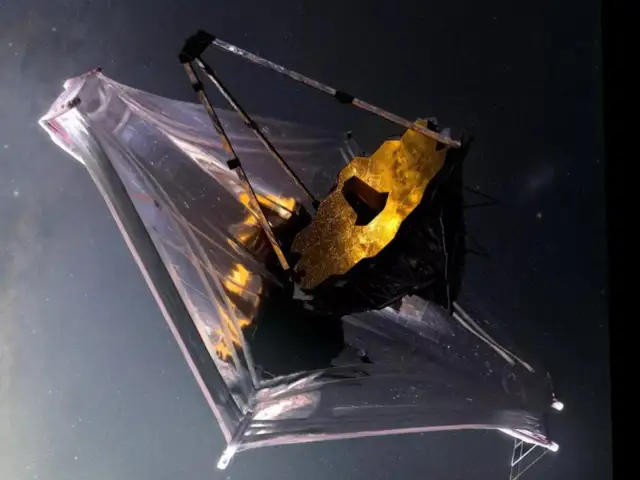
Webb boasts a primary mirror measuring more than 21 feet (6.5 meters) that is made up of 18 hexagonal, gold-coated segments, as well as a five-layer sunshield the size of a tennis court.
Unlike its predecessor Hubble, it operates primarily in the infrared spectrum, allowing it to look back nearer towards the start of time, and to better penetrate dust clouds where stars and planetary systems are being formed today.
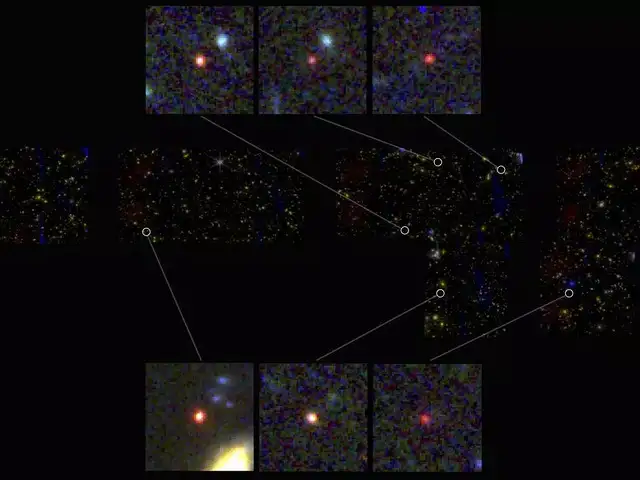
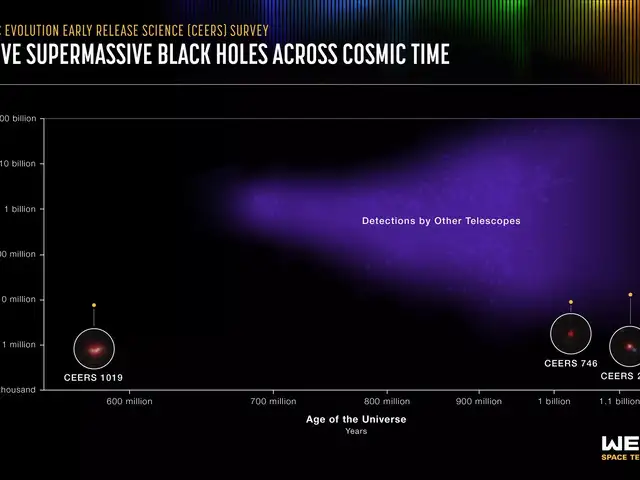
Key discoveries include some of the earliest galaxies formed a few hundred million years after the Big Bang, finding carbon dioxide in the atmosphere of a planet outside our solar system, and, in our own neck of the woods, stunning new views of the planet Jupiter.
Webb has enough fuel for a 20-year mission, promising a new era of astronomy.
Q1. What are key discoveries of James Webb?
A1. James Webb's key discoveries include some of the earliest galaxies formed a few hundred million years after the Big Bang, finding carbon dioxide in the atmosphere of a planet outside our solar system, and, in our own neck of the woods, stunning new views of the planet Jupiter.
Q2. What is James Webb?
A2. James Webb, the most powerful observatory in orbit, was launched in December 2021 from French Guiana, on a million mile (1.6 million kilometer) voyage to a region called the second Lagrange point.
Here it is: @NASAWebb’s one-year anniversary image. Called Rho Ophiuchi, this area shows about 50 young stars in a cocoon of gas and dust. At 390 light-years away, it's the closest star-forming region to Earth: https://t.co/A3e2XLx9Ef
— NASA (@NASA) July 12, 2023
Webb continues to #UnfoldTheUniverse. pic.twitter.com/tfXT8J2xBW
"In just one year, the James Webb Space Telescope has transformed humanity's view of the cosmos, peering into dust clouds and seeing light from faraway corners of the universe for the very first time," said NASA Administrator Bill Nelson. "Every new image is a new discovery, empowering scientists around the globe to ask and answer questions they once could never dream of."
James Webb's image shows around 50 young stars, of similar mass to our Sun or smaller. Some have the signature shadows of circumstellar disks -- a sign that planets may eventually form around them. Huge jets of hydrogen appear horizontally in the upper third, and vertically on the right.
A glowing cave of dust dominates the lower half of the image, carved out by the star S1 at its center. S1 is the only star in the image significantly bigger than the Sun.
Webb, the most powerful observatory in orbit, was launched in December 2021 from French Guiana, on a million mile (1.6 million kilometer) voyage to a region called the second Lagrange point.
ADVERTISEMENT
Its first full color picture was revealed by President Joe Biden on July 11, 2022: the clearest view yet of the early universe, going back 13 billion years.
The next wave included "mountains" and "valleys" of a star-forming region, dubbed the Cosmic Cliffs, in a region of space called the Carina Nebula; and a grouping of five galaxies bound in a celestial dance, called Stephan's Quintet.
Webb boasts a primary mirror measuring more than 21 feet (6.5 meters) that is made up of 18 hexagonal, gold-coated segments, as well as a five-layer sunshield the size of a tennis court.
Unlike its predecessor Hubble, it operates primarily in the infrared spectrum, allowing it to look back nearer towards the start of time, and to better penetrate dust clouds where stars and planetary systems are being formed today.
ADVERTISEMENT
Key discoveries include some of the earliest galaxies formed a few hundred million years after the Big Bang, finding carbon dioxide in the atmosphere of a planet outside our solar system, and, in our own neck of the woods, stunning new views of the planet Jupiter.
Webb has enough fuel for a 20-year mission, promising a new era of astronomy.
ADVERTISEMENT
FAQs
Q1. What are key discoveries of James Webb?
A1. James Webb's key discoveries include some of the earliest galaxies formed a few hundred million years after the Big Bang, finding carbon dioxide in the atmosphere of a planet outside our solar system, and, in our own neck of the woods, stunning new views of the planet Jupiter.
Q2. What is James Webb?
A2. James Webb, the most powerful observatory in orbit, was launched in December 2021 from French Guiana, on a million mile (1.6 million kilometer) voyage to a region called the second Lagrange point.
Download
The Economic Times Business News App for the Latest News in Business, Sensex, Stock Market Updates & More.
The Economic Times Business News App for the Latest News in Business, Sensex, Stock Market Updates & More.
Download
The Economic Times News App for Quarterly Results, Latest News in ITR, Business, Share Market, Live Sensex News & More.
The Economic Times News App for Quarterly Results, Latest News in ITR, Business, Share Market, Live Sensex News & More.
Related Articles
 On this planet, clouds emerge every morning and disappear by night: James Webb Space Telescope reveals daily cloud cycle on WASP-94A b2026-06-02T20:33:24Z
- Who was Charlie Kirk's mentor Jeff Webb? 'Visionary' cheerleading pioneer dies in accident, Turning Point USA reacts2026-03-24T19:22:28Z
- Jeff Webb, father of modern cheerleading and Charlie Kirk mentor dies at 76: Unusual cause of death revealed2026-03-24T07:25:48Z

ADVERTISEMENT


