James Webb Space Telescope clicks its first image of iconic 'Pillars of Creation'
According to NASA, the 'Pillars of Creation' lie 6,500 light years away from Earth, standing within the vast Eagle Nebula.
By ET Spotlight Special |

Agencies
The world's most powerful and significant space telescope, James Webb Space Telescope, has captured the iconic 'Pillars of Creation'. It comprises enormous structures of gas and dust swarming with stars.
It was in 1995 that NASA's Hubble Space Telescope captured the first images of the Pillars.
Due to the infrared capabilities of the new telescope Webb which was launched into space, not more than a year ago, it's revealing the phenomenon of ongoing formations of new stars as it can peer through the opacity of the Pillars.
From the images captured by James Webb Space Telescope, bright red, lava-like sports can be seen at the end of several pillars. NASA said that these are "ejections from stars." These stars are still forming and are only a few hundred thousand years old.
It further added that "supersonic jets" are periodically shot out by these young stars, colliding with material clouds.
The science program manager at the STScI, Klaus Pontoppidan, said on Twitter that they had to do the Pillars of Creation because of "popular demand."
Pontoppidan added that "so many stars!" are there.
FAQs:
How many galaxies are there?
Two trillion galaxies, according to estimates.
What is the oldest galaxy?
GLASS-z13
First shot
In a statement released on Wednesday, the United States space agency stated that the James Webb Space Telescope had captured its first image of the massive copper, gold, and brown columns 6500 light years away from Earth, standing within the vast Eagle Nebula.It was in 1995 that NASA's Hubble Space Telescope captured the first images of the Pillars.
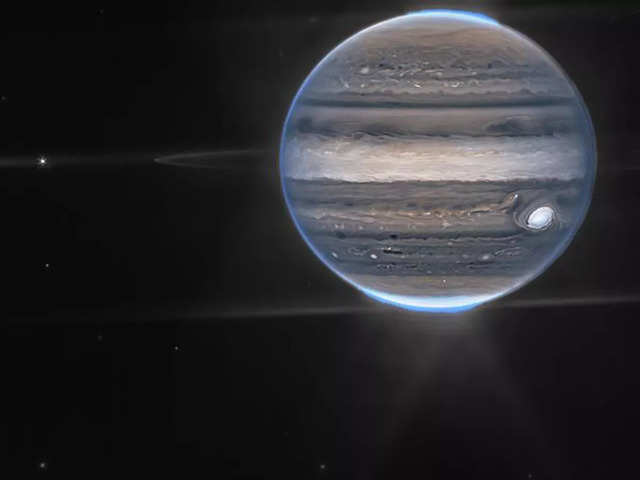
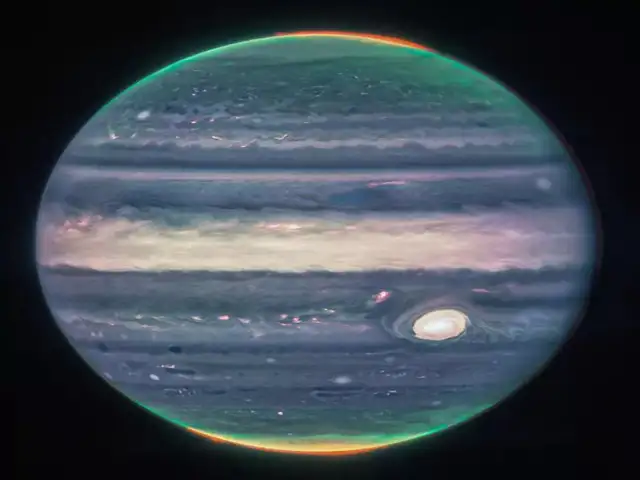
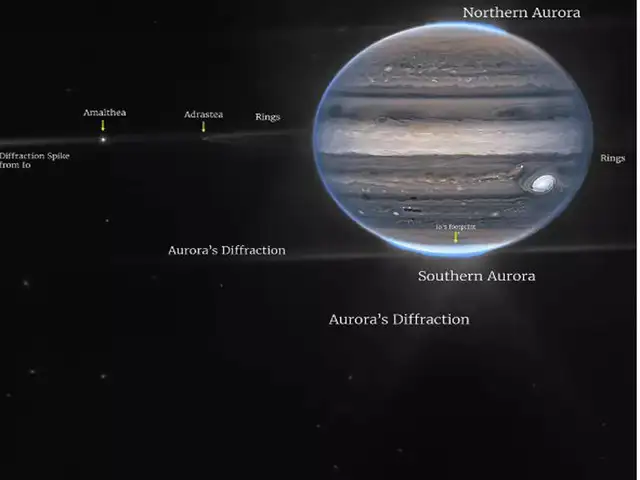
The world's newest and biggest space telescope is showing Jupiter as never before, auroras and all. Scientists released the shots on Monday of the solar system's biggest planet. The James Webb Space Telescope took the photos in July, capturing unprecedented views of Jupiter's northern and southern lights, and swirling polar haze.


Due to the infrared capabilities of the new telescope Webb which was launched into space, not more than a year ago, it's revealing the phenomenon of ongoing formations of new stars as it can peer through the opacity of the Pillars.
ADVERTISEMENT
"Ejections from stars"From the images captured by James Webb Space Telescope, bright red, lava-like sports can be seen at the end of several pillars. NASA said that these are "ejections from stars." These stars are still forming and are only a few hundred thousand years old.
It further added that "supersonic jets" are periodically shot out by these young stars, colliding with material clouds.
The science program manager at the STScI, Klaus Pontoppidan, said on Twitter that they had to do the Pillars of Creation because of "popular demand."
ADVERTISEMENT
James Webb Space Telescope is operated by Space Telescope Science Institute (STScI) in Baltimore, Maryland. Pontoppidan added that "so many stars!" are there.
ADVERTISEMENT
FAQs:
How many galaxies are there?
Two trillion galaxies, according to estimates.
What is the oldest galaxy?
GLASS-z13
Download
The Economic Times Business News App for the Latest News in Business, Sensex, Stock Market Updates & More.
The Economic Times Business News App for the Latest News in Business, Sensex, Stock Market Updates & More.
Download
The Economic Times News App for Quarterly Results, Latest News in ITR, Business, Share Market, Live Sensex News & More.
The Economic Times News App for Quarterly Results, Latest News in ITR, Business, Share Market, Live Sensex News & More.
ADVERTISEMENT


