Humans can save Earth from ‘killer’ planetary bodies, reveals DART
The Double Asteroid Redirection Test (DART) mission provides evidence that humanity can protect Earth from the impact of planetary bodies.
By The Feed |

Agencies
In September last year, NASA intentionally crashed a spaceship into an asteroid to observe the outcome. Recently, the Johns Hopkins Applied Physics Lab (APL) led an investigation team and published a paper confirming the success of the Double Asteroid Redirection Test (DART) mission. This experiment provides evidence that humanity can deflect asteroids and potentially prevent a planetary disaster.
In a blog post released by NASA on Wednesday, the "kinetic impactor" technique, humorously defined by APL writer Ajai Raj as "smashing a thing into another thing," was identified as a viable method for planetary defense.
According to Nicola Fox, NASA's associate administrator for the Science Mission Directorate, the findings of the DART mission published in a series of four papers in Nature contribute to our understanding of asteroids and provide a foundation for defending Earth from potentially hazardous asteroids.
The mission, which took place on September 26 last year, resulted in a 33-minute alteration of the orbit of the asteroid moonlet Dimorphos, as detailed in one of the papers. The DART spacecraft utilized the "kinetic impactor" technique by launching debris at the asteroid's impact point, or ejecta, causing a change in its momentum. The study showed that the recoil effect of the debris had a greater impact on the asteroid's momentum change than the actual impact itself.
In another paper by APL authors, it was reported that asteroids similar in size to Dimorphos, with a diameter of approximately half a mile, can be effectively deflected using the kinetic impactor technique without the need for an advanced reconnaissance mission. However, the authors caution that a sufficient warning time, ideally several decades or at least several years in advance, will be required to mitigate such a threat.
Overall, there is considerable optimism about humanity's ability to defend against potentially dangerous asteroids. The APL authors suggest that the knowledge and techniques gained from the DART mission can be passed onto future generations, as there is currently no known asteroid threat to Earth for the next 100 years.
In a blog post released by NASA on Wednesday, the "kinetic impactor" technique, humorously defined by APL writer Ajai Raj as "smashing a thing into another thing," was identified as a viable method for planetary defense.
According to Nicola Fox, NASA's associate administrator for the Science Mission Directorate, the findings of the DART mission published in a series of four papers in Nature contribute to our understanding of asteroids and provide a foundation for defending Earth from potentially hazardous asteroids.
The mission, which took place on September 26 last year, resulted in a 33-minute alteration of the orbit of the asteroid moonlet Dimorphos, as detailed in one of the papers. The DART spacecraft utilized the "kinetic impactor" technique by launching debris at the asteroid's impact point, or ejecta, causing a change in its momentum. The study showed that the recoil effect of the debris had a greater impact on the asteroid's momentum change than the actual impact itself.
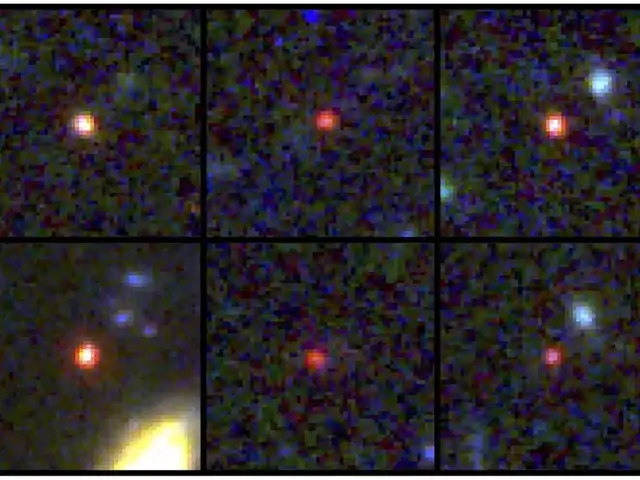
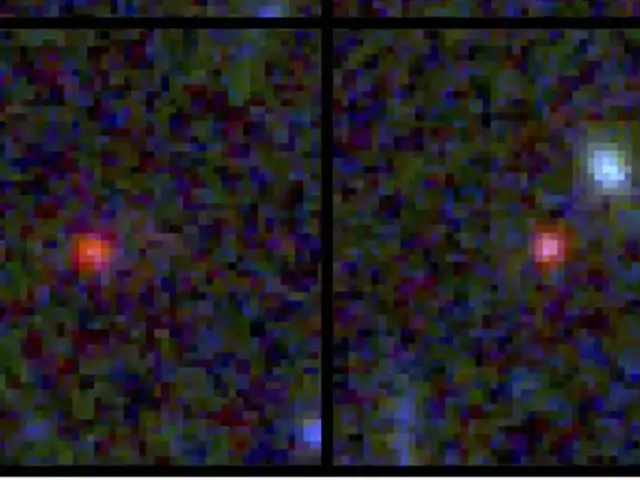
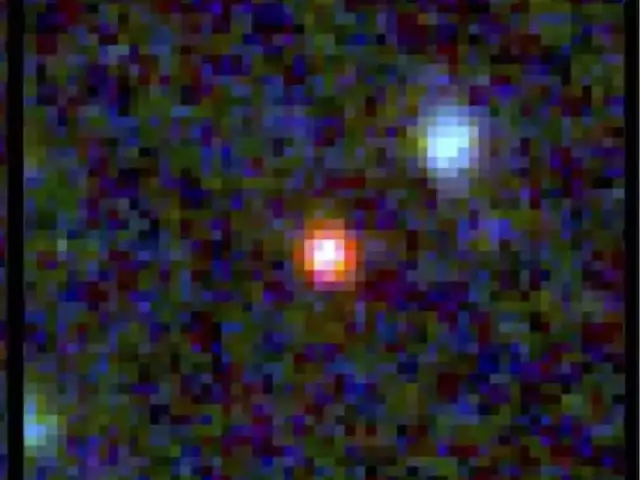
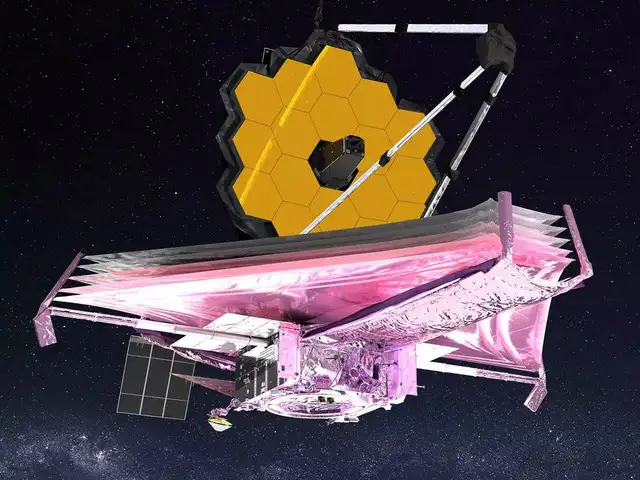
NASA's James Webb telescope has found six big galaxies that are changing our understanding of the entire universe. The new observations indicate the presence of mature and large, but compact galaxies swarming with stars way sooner than scientists thought was possible.

In another paper by APL authors, it was reported that asteroids similar in size to Dimorphos, with a diameter of approximately half a mile, can be effectively deflected using the kinetic impactor technique without the need for an advanced reconnaissance mission. However, the authors caution that a sufficient warning time, ideally several decades or at least several years in advance, will be required to mitigate such a threat.
ADVERTISEMENT
Overall, there is considerable optimism about humanity's ability to defend against potentially dangerous asteroids. The APL authors suggest that the knowledge and techniques gained from the DART mission can be passed onto future generations, as there is currently no known asteroid threat to Earth for the next 100 years.
FAQs:
- When was the DART mission launched?
November 24, 2021, at 06:21 UTC - What was the mass of the DART spacecraft?
1,340 lb
Download
The Economic Times Business News App for the Latest News in Business, Sensex, Stock Market Updates & More.
The Economic Times Business News App for the Latest News in Business, Sensex, Stock Market Updates & More.
Download
The Economic Times News App for Quarterly Results, Latest News in ITR, Business, Share Market, Live Sensex News & More.
The Economic Times News App for Quarterly Results, Latest News in ITR, Business, Share Market, Live Sensex News & More.
ADVERTISEMENT


