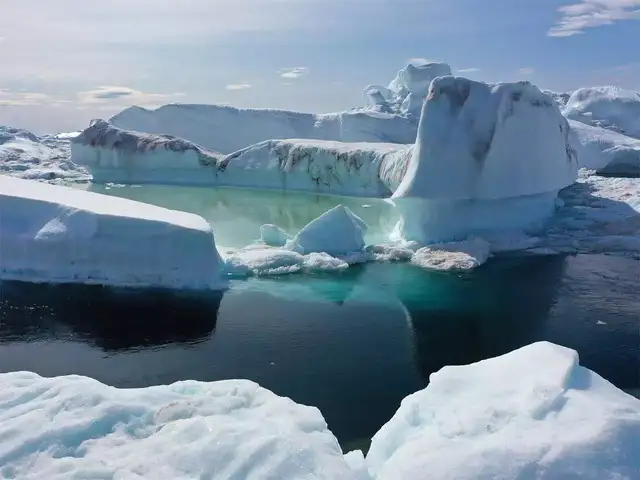
Global warming: Melting of ice at Greenland triggers rise in levels of oceans around the world. Find out how
According to a study by NASA, Greenland is the main reason for the rise in the levels of oceans around the world as the ice sheet that holds it together has started to melt due to the rise in temperatures.
By ET Spotlight Special |

Agencies
Rising temperatures are the main reason that the Arctic is on the boil, with millions of tonnes of snow and ice melting and creating a rather scary scenario for humankind in general. It is believed that within this century, ocean water levels are going to keep surging up, inundating large tracts of land near the coastal regions. More than 1.3 billion people could directly be affected by these developments as major seaports and cities located near the coastal areas would go under water, forcing people to leave for higher zones. NASA has said that Greenland is the main reason why our Earth’s water levels continue to rise.
Oceans have been rising ever since the beginning of the industrial revolution and continue unabated. If the global promise of trying to control rising temperatures to 2 degrees Celsius is adhered to, the water is going to rise by 27 cm. The snowfall on the ice sheet helps protect the lower layers from melting away. But it is estimated that the snowline is receding every year and exposing the lower ice sheet to sunlight, causing major melting away of the ice.
According to the Geological Survey of Denmark and Greenland (GEUS), Greenland will lose its total mass by 3.3%. If high levels of melting are experienced as they have been in 2012, the water level will rise by 78 cm in this century. This will expose coastlines to severe storm surges, causing many islands to drown completely and inundate vast tracts of land with seawater.
The Intergovernmental Panel on Climate Change (IPCC) predicts that sea levels will rise by 18 cm by 2100. According to Jason Box, the report's author, this suggests that the estimates made at the time were "too low."
The upper areas of Greenland’s ice sheets are able to add ice mass due to snowfall every year. However, it has been noticed since the 1980s that there has been a deficit of ice. Due to the surface melting of ice, Greenland is now losing more ice than it creates. The calculations of yore are in jeopardy as Greenland is unable to retain ice or create ice. Instead, its ice is melting, creating more water and increasing the water level. Gerhard Krinner, on the other hand, believes that melting will cause large areas to flood this century. He is of the view that the climate deal signed between countries in the Paris acknowledges that the global warming average would be 2 degrees Celsius. At this rate, or up to 2.5 degrees Celsius, 1.3 billion people are expected to be affected by floods and water logging. So, one can imagine what would happen if 78 cm of water level was experienced.
Oceans have been rising ever since the beginning of the industrial revolution and continue unabated. If the global promise of trying to control rising temperatures to 2 degrees Celsius is adhered to, the water is going to rise by 27 cm. The snowfall on the ice sheet helps protect the lower layers from melting away. But it is estimated that the snowline is receding every year and exposing the lower ice sheet to sunlight, causing major melting away of the ice.
According to the Geological Survey of Denmark and Greenland (GEUS), Greenland will lose its total mass by 3.3%. If high levels of melting are experienced as they have been in 2012, the water level will rise by 78 cm in this century. This will expose coastlines to severe storm surges, causing many islands to drown completely and inundate vast tracts of land with seawater.
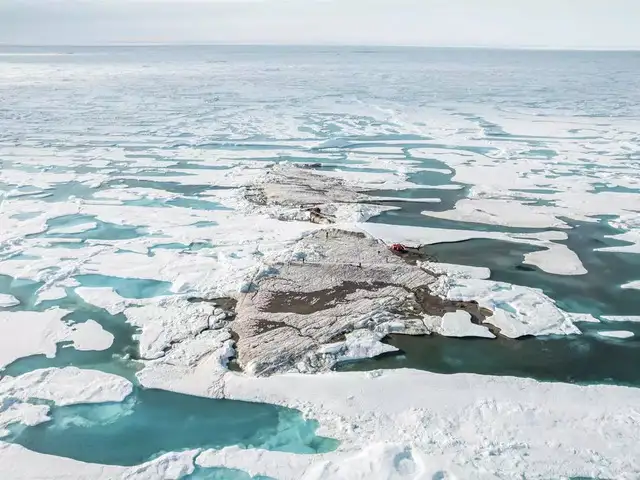
This could well be the northernmost island of the world, reports say. A team of Arctic researchers from Denmark say they discovered it off the coast of Greenland by accident. It is yet to be officially named.

The Intergovernmental Panel on Climate Change (IPCC) predicts that sea levels will rise by 18 cm by 2100. According to Jason Box, the report's author, this suggests that the estimates made at the time were "too low."
The upper areas of Greenland’s ice sheets are able to add ice mass due to snowfall every year. However, it has been noticed since the 1980s that there has been a deficit of ice. Due to the surface melting of ice, Greenland is now losing more ice than it creates. The calculations of yore are in jeopardy as Greenland is unable to retain ice or create ice. Instead, its ice is melting, creating more water and increasing the water level. Gerhard Krinner, on the other hand, believes that melting will cause large areas to flood this century. He is of the view that the climate deal signed between countries in the Paris acknowledges that the global warming average would be 2 degrees Celsius. At this rate, or up to 2.5 degrees Celsius, 1.3 billion people are expected to be affected by floods and water logging. So, one can imagine what would happen if 78 cm of water level was experienced.
ADVERTISEMENT
Download
The Economic Times Business News App for the Latest News in Business, Sensex, Stock Market Updates & More.
The Economic Times Business News App for the Latest News in Business, Sensex, Stock Market Updates & More.
Download
The Economic Times News App for Quarterly Results, Latest News in ITR, Business, Share Market, Live Sensex News & More.
The Economic Times News App for Quarterly Results, Latest News in ITR, Business, Share Market, Live Sensex News & More.
Related Articles
 A 650-foot mega tsunami struck Greenland, and scientists detected something even stranger afterward2026-06-24T13:05:33Z
- A Greenland ice core reads back almost 12,000 years of mercury fallout; humans were leaving traces thousands of years before the first factories2026-06-15T09:55:14Z
- Greenland's independence champion despised Denmark. Trump changed his mind2026-05-29T08:09:27Z
ADVERTISEMENT


