Giant bug found in Arkansas by university scientist is a rare Jurassic-era insect. See details
A giant flying bug discovered on the side of a Walmart in Arkansas by Michael Skvarla, director of Penn State University's Insect Identification Lab, has turned out to be a "super-rare" Jurassic-era insect.
By The Feed |

Agencies
A university scientist made an exciting discovery outside a Walmart in Arkansas. Michael Skvarla, director of Penn State University's Insect Identification Lab, stumbled upon a mysterious and large insect on the side of the building during a routine shopping trip for milk. Skvarla initially believed the bug was an antlion, but upon closer inspection years later, he discovered it was a "super-rare" Jurassic-era giant lacewing.
Skvarla took the insect home and forgot about it for almost a decade before teaching an online course on insect biodiversity and evolution in 2020. During a Zoom call, Skvarla realized that the insect he had collected was not what he originally thought it was, and his colleagues helped him to confirm its true identity through DNA testing.
Codey Mathis, a doctoral candidate in entomology at Penn State, recalls the excitement of discovering something new during an online lab course: "Here we were making a true discovery in the middle of an online lab course."
Skvarla then deposited the specimen safely in the collections of the Frost Entomological Museum at Penn State, where scientists and students will have access to it for further research.
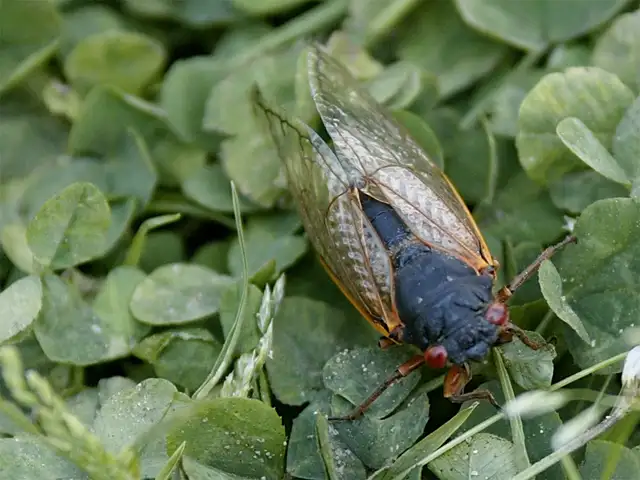
The giant lacewing has a fascinating appearance with four intricately veined wings mottled with browns and black, elongated bodies, and clubbed or curved antennae about as long as the combined head and thorax. This discovery is not only exciting for scientists but also for the general public who are always fascinated by the idea of finding something that has been extinct for millions of years.
Skvarla's discovery highlights the importance of keeping an open mind and not dismissing something that looks "interesting." Sometimes, what may seem like a routine shopping trip could lead to a historically significant discovery.
Skvarla took the insect home and forgot about it for almost a decade before teaching an online course on insect biodiversity and evolution in 2020. During a Zoom call, Skvarla realized that the insect he had collected was not what he originally thought it was, and his colleagues helped him to confirm its true identity through DNA testing.
Codey Mathis, a doctoral candidate in entomology at Penn State, recalls the excitement of discovering something new during an online lab course: "Here we were making a true discovery in the middle of an online lab course."
Skvarla then deposited the specimen safely in the collections of the Frost Entomological Museum at Penn State, where scientists and students will have access to it for further research.
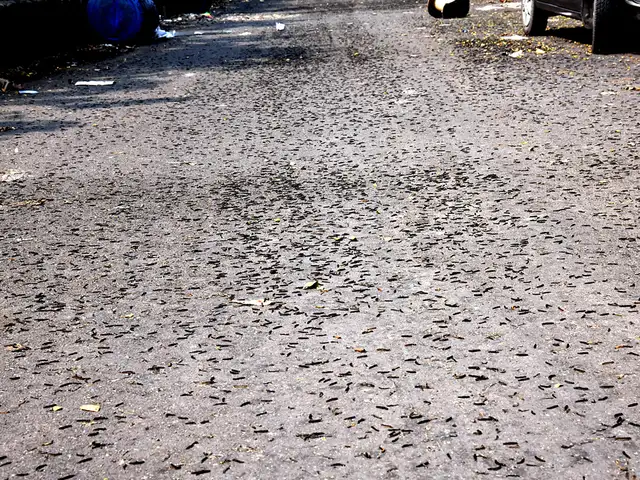
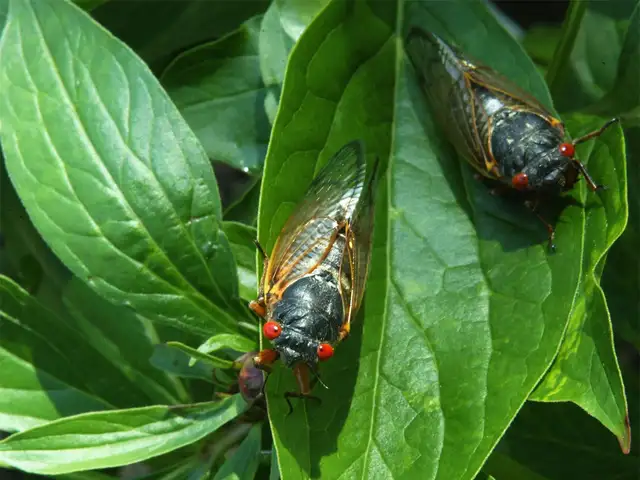
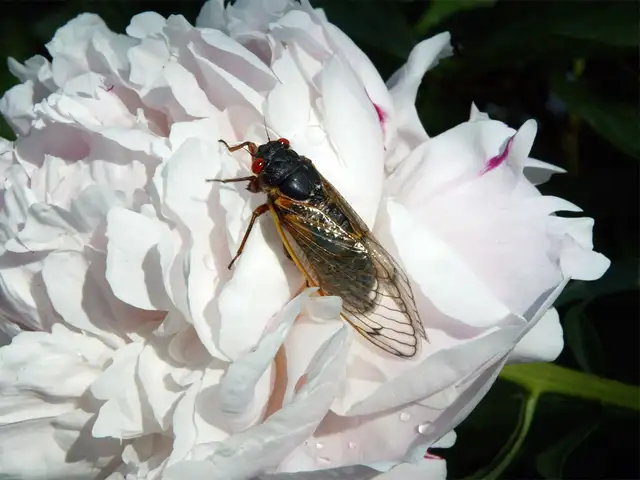
About every two decades, Americans see hordes of cicadas - every 17 years - emerge to mate, lay eggs and then just drop dead.


The giant lacewing has a fascinating appearance with four intricately veined wings mottled with browns and black, elongated bodies, and clubbed or curved antennae about as long as the combined head and thorax. This discovery is not only exciting for scientists but also for the general public who are always fascinated by the idea of finding something that has been extinct for millions of years.
ADVERTISEMENT
Skvarla's discovery highlights the importance of keeping an open mind and not dismissing something that looks "interesting." Sometimes, what may seem like a routine shopping trip could lead to a historically significant discovery.
FAQs:
- Who discovered the Jurassic-era insect?
Michael Skvarla - Where was the bug discovered?
It was found on the side of a Walmart in Arkansas.
Download
The Economic Times Business News App for the Latest News in Business, Sensex, Stock Market Updates & More.
The Economic Times Business News App for the Latest News in Business, Sensex, Stock Market Updates & More.
Download
The Economic Times News App for Quarterly Results, Latest News in ITR, Business, Share Market, Live Sensex News & More.
The Economic Times News App for Quarterly Results, Latest News in ITR, Business, Share Market, Live Sensex News & More.
Related Articles
 'Jurassic Park' got it wrong! Scientists just found that pterosaurs, may have had more wing-shape diversity than current reconstructions allow, changing how we picture ancient flight2026-06-25T10:53:57Z
- On This Day in History, June 10: Troy falls, Italy enters WWII, Jurassic Park premieres, Thatcher wins for 3rd time, FIFA World Cup opens and other key events2026-06-10T17:05:10Z
- Quote of the day by Steven Spielberg: 'Everything has to start with fear. Loss, loneliness, being challenged and pursued by big forces...'; Jaws, Schindler's List, Jurassic Park director explains why fear and loneliness can shape personal growth2026-05-30T10:24:22Z
ADVERTISEMENT


