Another NASA stunner from the Universe! James Webb Space Telescope captures newborn stars 'Tarantula Nebula'
By ET Spotlight Special |

Agencies
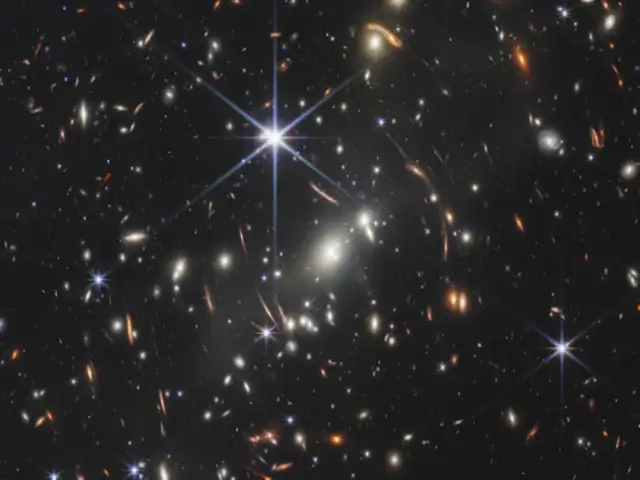
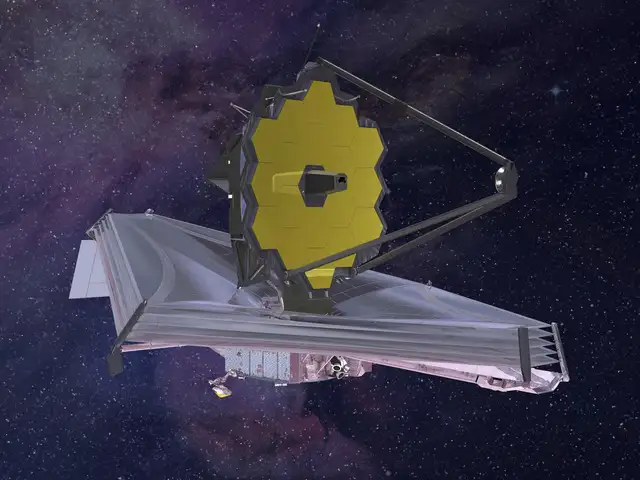
The James Webb Space Telescope has been busy doing its homework superbly, and once again stunned astronomers and scientists with its new spectacular image of a cosmic nebula. The stellar nursery, labelled Tarantula Nebula, reveals plenty of things about the formation of stars.
The telescope also shows distant galaxies in the background and the detailed composition of dust and gas in this nebula.
This Webb caught a giant space tarantula! 🕸️ Take a moment to stare into thousands of never-before-seen young stars in the Tarantula Nebula. @NASAWebb reveals details of the structure and composition of the nebula, as well as background galaxies: https://t.co/DZePgDpPEH pic.twitter.com/aSmPDqgKTE
— NASA (@NASA) September 6, 2022
What is Tarantula Nebula and how it was captured?
The latest image captured by James Webb Space Telescope gives us an extraordinary view of an area where star forms, known as the Tarantula Nebula. The cosmic nebula showcases an unprecedented view of thousands of young star's nursery, which means Doradus 30, and was originally nicknamed Tarantula because of its spider-like appearance. This star region is well-known to astronomers but was earlier masked in a cloud of cosmic dust, however, with the powerful new telescope, these regions are now clear.The image was captured by James Webb’s high-resolution Near-Infrared camera (NIRCam), which shows the Tarantula Nebula stretching across 340 light years. The most active regions in the image show sparking young stars in pale blue, while there are also embedded red stars. Webb has also viewed this image from a different perspective using Mid-Infrared Instrument (MIRI), focusing more on dust and glowing gas and showing an abundance of hydrocarbon light in blue and purple, while the hot stars fade in the background.
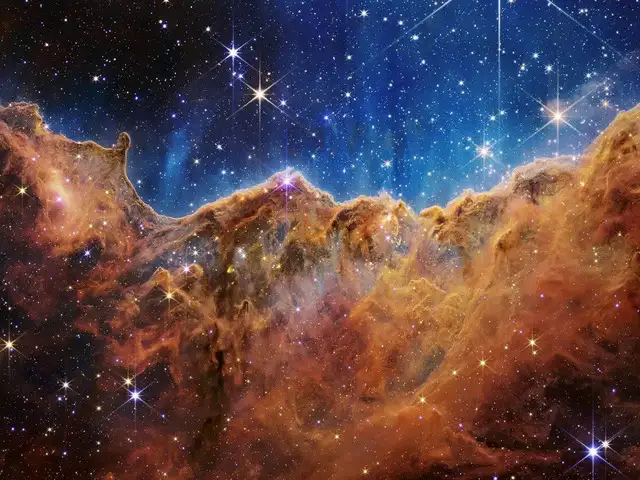
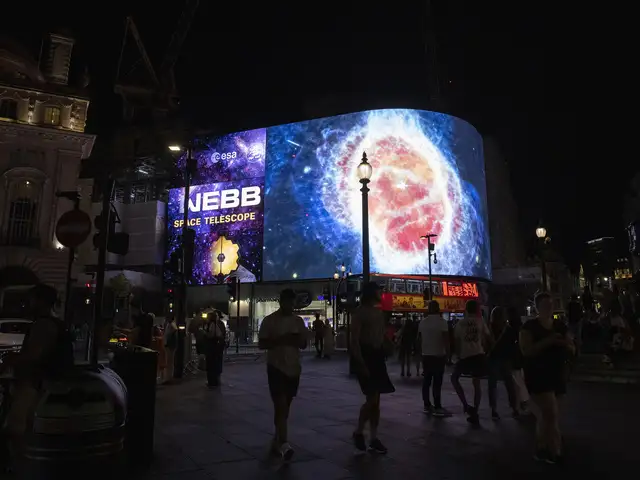
NASA is releasing even more pictures from its James Webb Telescope. One of the most stunning ones in the new bunch is the Carina Nebula - a star nursery 7,600 light-years away. The orange cliffs and valleys are actually the edge of a star forming region.

What is the distance of Tarantula Nebula from earth?
The Tarantula Nebula is 161,000 light years away, located in the Large Magellanic Cloud. It is one of the brightest star-forming regions nearest to our Milky Way neighbourhood. It is the hub of the most massive and hottest stars we have known. Another reason Tarantula Nebula has been a topic of interest is that it features a similar chemical composition as the enormous star-forming regions observed at our universe’s Cosmic Noon, a theory, that tells about the history of the universe and how the formation of galaxies occurred.
ADVERTISEMENT
There is still an incredible number of mysteries in the universe, and the Nasa James Webb Space Telescope has just begun rewriting the creation history.
FAQs
1. For how long will James Webb Space Telescope work?A. The mission has a minimum baseline of five years, but the observatory has enough propellant to support the science mission for over ten years.
2. Is NASA James Webb Telescope serviceable like Hubble?
A. Hubble is located just 600kms from Earth in a low orbit and is easily reachable for servicing. However, the Webb Telescope is located at the L2 (second large) point, approximately 15 lakh kilometres (1.5 million) from the earth, therefore is not within the reach of crewed service missions, as of now.
ADVERTISEMENT
Download
The Economic Times Business News App for the Latest News in Business, Sensex, Stock Market Updates & More.
The Economic Times Business News App for the Latest News in Business, Sensex, Stock Market Updates & More.
Download
The Economic Times News App for Quarterly Results, Latest News in ITR, Business, Share Market, Live Sensex News & More.
The Economic Times News App for Quarterly Results, Latest News in ITR, Business, Share Market, Live Sensex News & More.
Related Articles
 On this planet, clouds emerge every morning and disappear by night: James Webb Space Telescope reveals daily cloud cycle on WASP-94A b2026-06-02T20:33:24Z
- Who was Charlie Kirk's mentor Jeff Webb? 'Visionary' cheerleading pioneer dies in accident, Turning Point USA reacts2026-03-24T19:22:28Z
- Jeff Webb, father of modern cheerleading and Charlie Kirk mentor dies at 76: Unusual cause of death revealed2026-03-24T07:25:48Z
ADVERTISEMENT


