45 years in space: NASA's twin Voyager spacecraft still solving mysteries
The Voyager Mission, comprising 2 spacecraft, Voyager 1 and Voyager 2, completes 45 years in space, becoming the longest-running NASA space mission.
By ET Spotlight Special | Updated:

Agencies
It is interesting to note that NASA's Voyager 2 was released into space before Voyager 1. On August 20th, 1977, Voyager 2 was launched into space, whereas Voyager 1 was launched on September 3rd, 1977. Both satellites have become relics of their time, having spent 45 long years in space.
NASA's Voyager satellites have an eight-track tape recorder for storing data, which has three million times less space than today’s smartphones. The data that is recorded is sent back to earth from the satellites at a 38,000 times slower rate than a 5G internet connection.
Both Voyagers are in the lead at the moment in space travel. The Jet Propulsion Laboratory (California Institute of Technology) in Southern California is in charge of tracking their journey and, as of now, the first satellites to go into interstellar space, which is the cosmic ocean where they float around, along with the sun and other planets.
Voyager 1, launched after Voyager 2, reached Jupiter and Saturn earlier than Voyager 2 due to its higher speed capability. Both satellites provided plenty of information about Jupiter and Saturn and the planetary satellites that orbit them.
In 1986 and 1989, Voyager 2 provided information on Uranus and Neptune, coming to about 1000 kilometers in the vicinity of each planet in the years 1986 and 1989, respectively. In the meantime, Voyager 1 proceeded towards the heliosphere barrier, which Voyager 2 later proceeded to after its flybys of Uranus and Neptune.
The Voyager 2 reached the heliosphere barrier in 2018, which provided first-hand insights into the nature of the heliosphere. Earlier, man only assumed the nature of the heliosphere, which was not correct.
The crew that is tracking the Voyagers often resorts to seeking help and support from earlier scientists and colleagues to overcome current challenges.
Both Voyagers rely on the power from the radioisotope thermoelectric generator that has plutonium as its fuel. As the plutonium wears off, the Voyagers will lose their power and heat. As a result, whatever is not considered absolutely necessary has been shut down on both Voyagers.
Heaters too have been shut down to preserve energy for as long as possible. The heaters provide the necessary warmth for the machines to function properly in freezing space temperatures. The miracle is that all five instruments on board are still functioning normally despite the heaters being switched off in 2019.
Voyager 1 has been having problems with its status reports for a system onboard. Scientists are trying to work around the issue and circumvent this problem, while engineers are trying their best to correct it. Both satellites continue to provide scientific data to the NASA station even today.
NASA's Voyager satellites have an eight-track tape recorder for storing data, which has three million times less space than today’s smartphones. The data that is recorded is sent back to earth from the satellites at a 38,000 times slower rate than a 5G internet connection.
Both Voyagers are in the lead at the moment in space travel. The Jet Propulsion Laboratory (California Institute of Technology) in Southern California is in charge of tracking their journey and, as of now, the first satellites to go into interstellar space, which is the cosmic ocean where they float around, along with the sun and other planets.
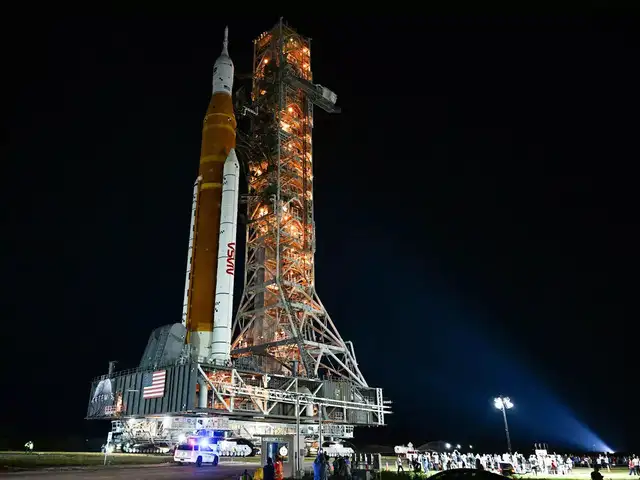
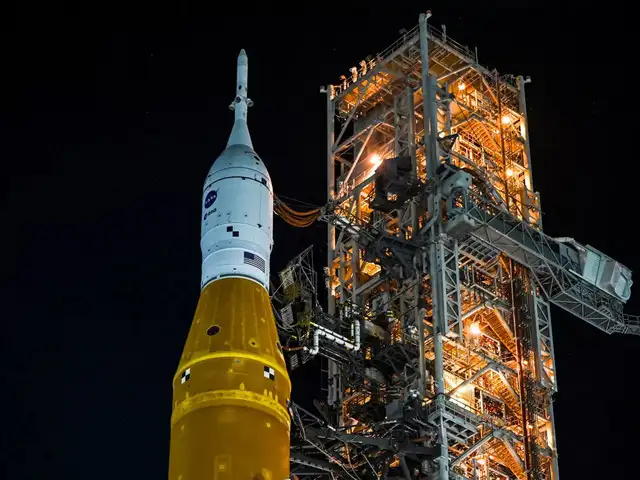
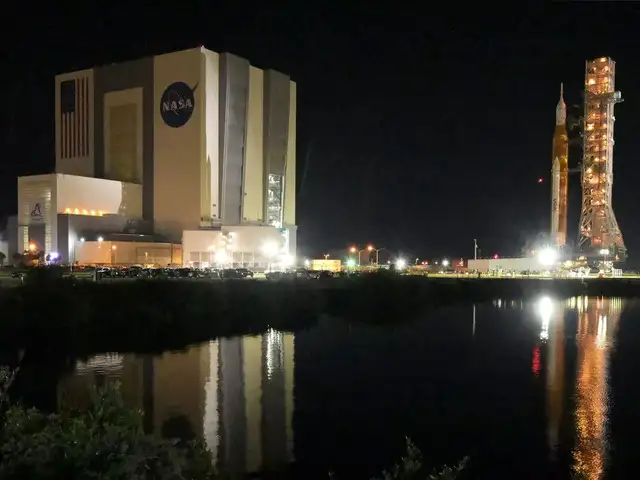
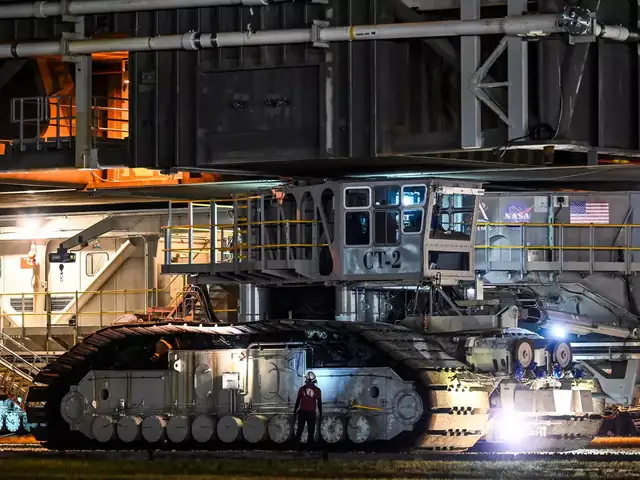
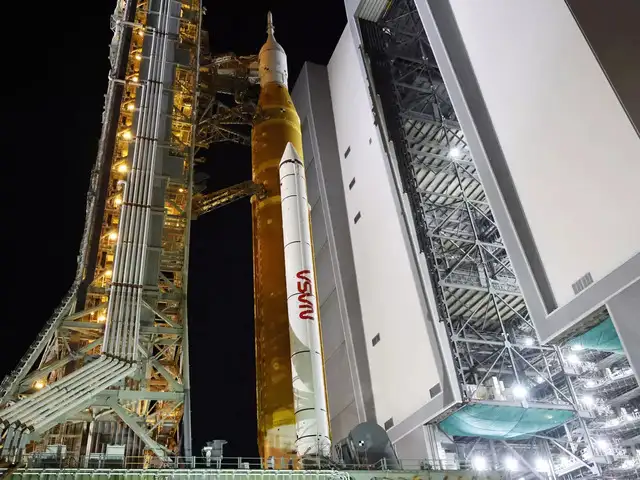
NASA's gigantic Space Launch System moon rocket, topped with an uncrewed astronaut capsule, began an hours-long crawl to its launchpad ahead of the behemoth's debut test flight this month.

Voyager 1, launched after Voyager 2, reached Jupiter and Saturn earlier than Voyager 2 due to its higher speed capability. Both satellites provided plenty of information about Jupiter and Saturn and the planetary satellites that orbit them.
In 1986 and 1989, Voyager 2 provided information on Uranus and Neptune, coming to about 1000 kilometers in the vicinity of each planet in the years 1986 and 1989, respectively. In the meantime, Voyager 1 proceeded towards the heliosphere barrier, which Voyager 2 later proceeded to after its flybys of Uranus and Neptune.
ADVERTISEMENT
The Voyager 2 reached the heliosphere barrier in 2018, which provided first-hand insights into the nature of the heliosphere. Earlier, man only assumed the nature of the heliosphere, which was not correct.
The crew that is tracking the Voyagers often resorts to seeking help and support from earlier scientists and colleagues to overcome current challenges.
Both Voyagers rely on the power from the radioisotope thermoelectric generator that has plutonium as its fuel. As the plutonium wears off, the Voyagers will lose their power and heat. As a result, whatever is not considered absolutely necessary has been shut down on both Voyagers.
Heaters too have been shut down to preserve energy for as long as possible. The heaters provide the necessary warmth for the machines to function properly in freezing space temperatures. The miracle is that all five instruments on board are still functioning normally despite the heaters being switched off in 2019.
ADVERTISEMENT
Voyager 1 has been having problems with its status reports for a system onboard. Scientists are trying to work around the issue and circumvent this problem, while engineers are trying their best to correct it. Both satellites continue to provide scientific data to the NASA station even today.
Download
The Economic Times Business News App for the Latest News in Business, Sensex, Stock Market Updates & More.
The Economic Times Business News App for the Latest News in Business, Sensex, Stock Market Updates & More.
Download
The Economic Times News App for Quarterly Results, Latest News in ITR, Business, Share Market, Live Sensex News & More.
The Economic Times News App for Quarterly Results, Latest News in ITR, Business, Share Market, Live Sensex News & More.
ADVERTISEMENT


