Volcanic eruption near Iceland capital Reykjavik. Watch video
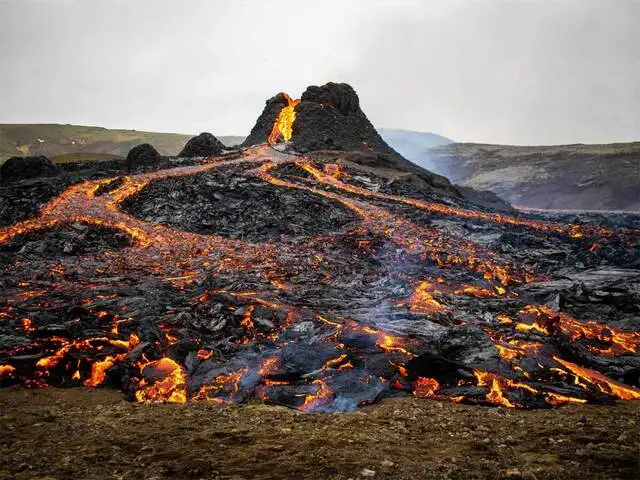
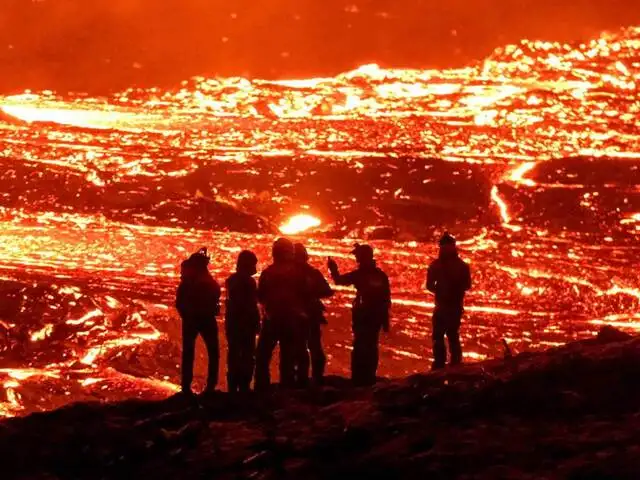
Lava and smoke can be seen spewing from a fissure on Fagradalsfjall Mountain. The eruption occurred near Mount Fagradalsfjall, where a volcano erupted for six months in 2021, located approximately 40 kilometers, i.e., 20 miles from the capital of ...
By ET Spotlight Special |

Agencies
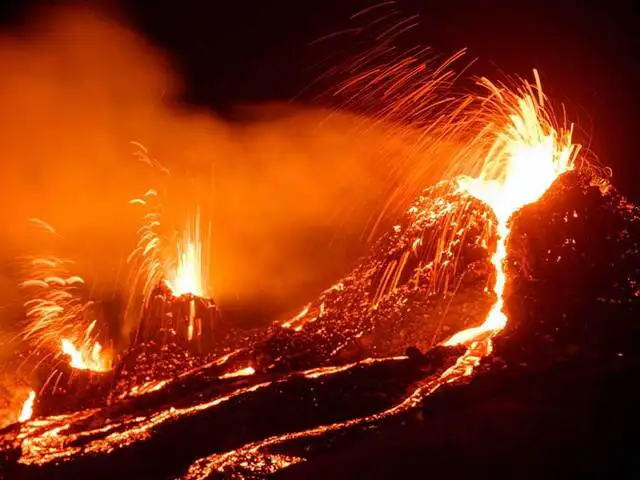
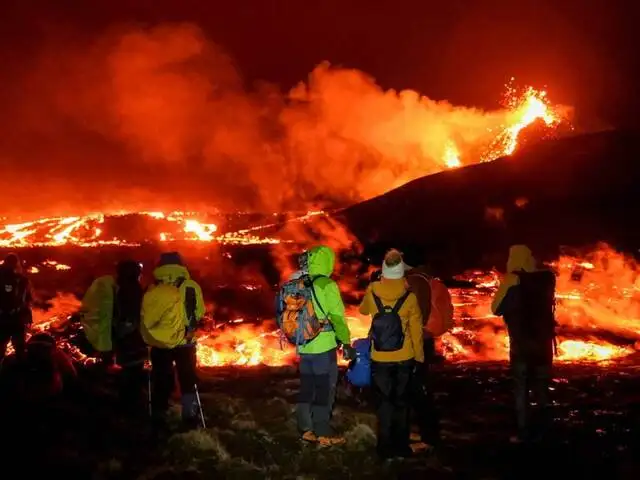
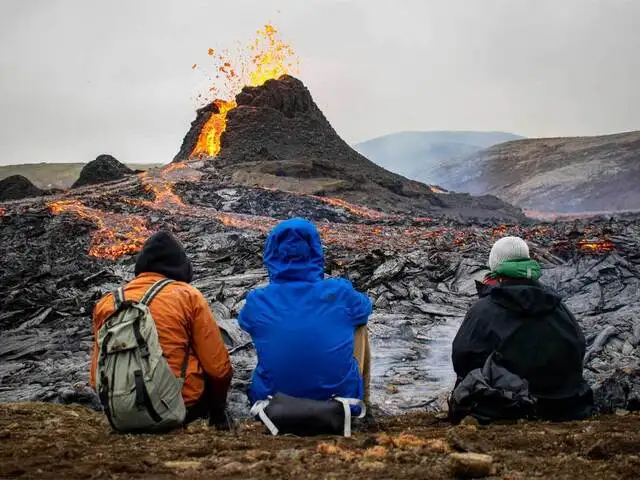
Thousands of tourists and spectators took in the spectacular view after red-hot lava flowed out of Iceland's volcano. On Wednesday, the Geldingadalir volcano erupted in an uninhabited valley near the capital, Reykjavik, after days of continuous seismic activity.
News agency AFP tweeted a video showing people standing near the site wearing layers of winter clothing as they watched the volcanic activity. The day was quite windy; glowing red lava poured out of the ground, and bluish smoke rose from the site. Another person is also seen taking pictures of the event. While lava spewed from the volcano, there was an intense roar.
A lava flow occurred around 40 kilometers from Reykjavik, near the site of Mount Fagradalsfjall in southwestern Iceland, which erupted for six months in March-September 2021. An eruption on Wednesday followed a period of intense seismic activity, with more than 10,000 earthquakes being recorded since Saturday, including two earthquakes having at least 5.0 magnitudes.
The President of Iceland, Gudni Johannesson, happened to be near the scene of the volcanic eruption on Wednesday when it took place. He, too, appealed to people to be careful and assess the situation before they get close to the location. He added that if the current eruption were anything like the one that appeared previously, there would be plenty of time and hence there wouldn't be any need to rush.
News agency AFP tweeted a video showing people standing near the site wearing layers of winter clothing as they watched the volcanic activity. The day was quite windy; glowing red lava poured out of the ground, and bluish smoke rose from the site. Another person is also seen taking pictures of the event. While lava spewed from the volcano, there was an intense roar.
VIDEO: People watch as lava spews out of a volcanic fissure in the Geldingadalir volcano in Iceland.
— AFP News Agency (@AFP) August 4, 2022
The volcano erupted near the capital Reykjavik, spewing red hot lava and plumes of smoke out of a fissure in an uninhabited valley after several days of intense seismic activity pic.twitter.com/KFKqZXdoo7
A lava flow occurred around 40 kilometers from Reykjavik, near the site of Mount Fagradalsfjall in southwestern Iceland, which erupted for six months in March-September 2021. An eruption on Wednesday followed a period of intense seismic activity, with more than 10,000 earthquakes being recorded since Saturday, including two earthquakes having at least 5.0 magnitudes.
A volcano erupted in Iceland on Wednesday near the capital Reykjavik, spewing red hot lava and plumes of smoke out of a fissure in an uninhabited valley after several days of intense seismic activity https://t.co/JnD2jW0xad pic.twitter.com/FuWoSFU0JK
— AFP News Agency (@AFP) August 3, 2022
ADVERTISEMENT
A rescue team and police arrived at the scene on Wednesday to assess the possible gas contamination and evaluate the danger. They discouraged more visitors from getting too close.The President of Iceland, Gudni Johannesson, happened to be near the scene of the volcanic eruption on Wednesday when it took place. He, too, appealed to people to be careful and assess the situation before they get close to the location. He added that if the current eruption were anything like the one that appeared previously, there would be plenty of time and hence there wouldn't be any need to rush.
A volcano that spewed glowing red lava near Iceland's capital Reykjavik after awakening for the first time in 900 years appeared to be subsiding, posing no danger to people.

Download
The Economic Times Business News App for the Latest News in Business, Sensex, Stock Market Updates & More.
The Economic Times Business News App for the Latest News in Business, Sensex, Stock Market Updates & More.
Download
The Economic Times News App for Quarterly Results, Latest News in ITR, Business, Share Market, Live Sensex News & More.
The Economic Times News App for Quarterly Results, Latest News in ITR, Business, Share Market, Live Sensex News & More.
Related Articles
 'Truly remarkable gifts': Iceland Cricket trolls Gautam Gambhir after India's 0-2 T20 series loss to Ireland2026-06-29T02:09:34Z
- Messi magic returns in Argentina's 3-0 win over Iceland in World Cup warm-up2026-06-10T04:42:05Z
- Messi set for World Cup tune-up against Iceland warm-up fixture, Scaloni confirms Argentina captain will feature2026-06-09T08:15:56Z
ADVERTISEMENT


