Artemis programme: NASA to send next mission to Moon. Check out the details
As part of the Artemis programme, NASA's rocket, which is called the Space Launch System (SLS), will take Orion, a capsule, to the Moon. The SLS is poised to be the most powerful rocket to launch from Kennedy Space Center. If all goes according to...
By ET Spotlight Special | Updated:

Agencies
The officials of NASA conducted a review of flight readiness on Monday and given a go-ahead to the launch, which will be a part of Artemis programme. The SLS's launch will happen from Kennedy Space Center (KSC). The vehicle will be given a two-hour window to get off Earth on Monday, starting from 08:33 Florida time (12:33 GMT).
The launch of this 'Artemis I mission' is important as NASA is looking to celebrate 50 years in December since the last human landing on Moon i.e. Apollo 17. NASA is returning with the new and advanced, Artemis program this time. As per mythology, Artemis was Apollo's twin, goddess of the Moon, and a Greek god.
NASA wants to prepare to go to Mars in the 2030s with astronauts after the Moon excursion. Orion and SLS have been in development for over a decade and have individually cost over $20 billion till now.
Orion was on a test outing near Earth sometime in 2014 and has flown before. However, that outing used an existing commercial rocket.
This time, Artemis exploration hardware will have its first test. Orion and SLS were sent to the launch pad a few days back, and technical and engineering staff has spent time attaching communication, fuel and electrical lines for the launch.
The SLS is poised to be the most powerful rocket to launch from Kennedy Space Centre. As it launches off the pad, it would produce 8.8 million pounds (39.1 meganewtons) of thrust. It equates to over 20% of the previously used space shuttle system. It is also 15% more than the Saturn V rockets of Apollo.
In a nutshell, upon take-off, the SLS can power the equivalent of 60 supersonic Concorde jets. Orion will get 42 days to travel to and beyond the Moon. NASA expects it to be back for a splashdown in the Pacific Ocean near California on October 10.
The first mission with a crew, Artemis II, would use the SLS-Orion in 2024 if everything goes as expected. Artemis III would be the first Moon landing since 1972 and will happen after late 2025. NASA has confirmed a few locations on the Moon where NASA will send the crew. However, the astronauts have not been decided yet.
The launch of this 'Artemis I mission' is important as NASA is looking to celebrate 50 years in December since the last human landing on Moon i.e. Apollo 17. NASA is returning with the new and advanced, Artemis program this time. As per mythology, Artemis was Apollo's twin, goddess of the Moon, and a Greek god.
NASA wants to prepare to go to Mars in the 2030s with astronauts after the Moon excursion. Orion and SLS have been in development for over a decade and have individually cost over $20 billion till now.
Orion was on a test outing near Earth sometime in 2014 and has flown before. However, that outing used an existing commercial rocket.
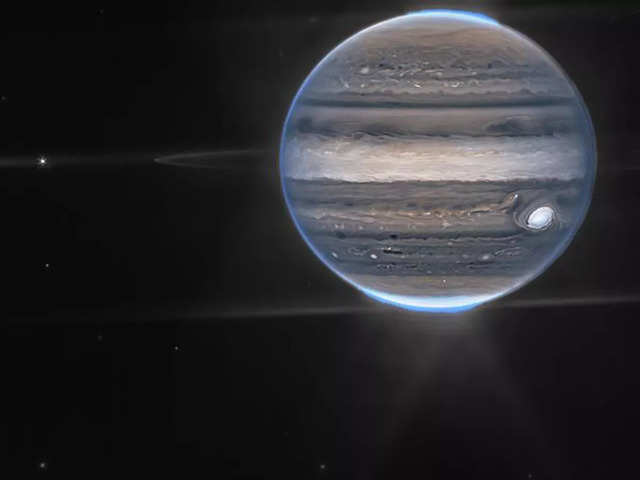
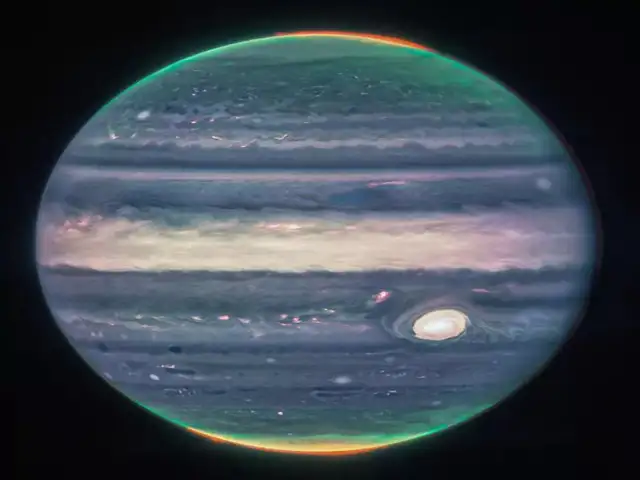
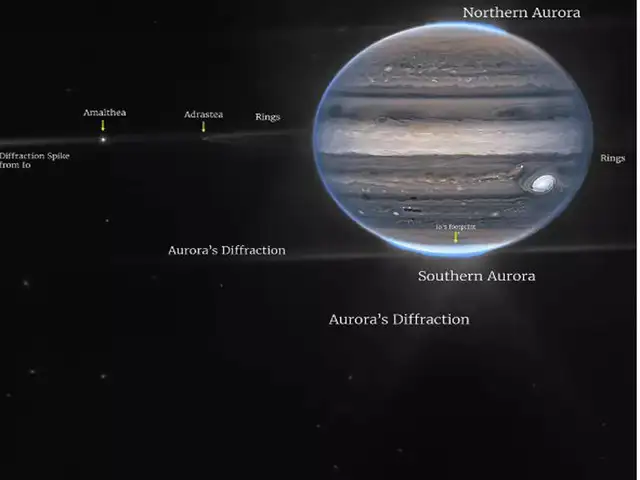
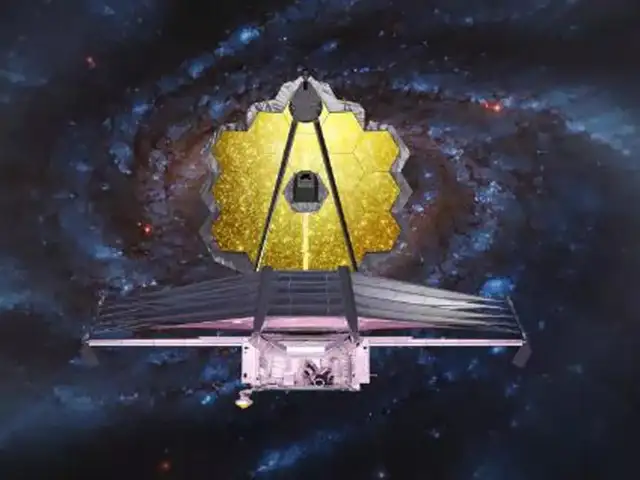
The world's newest and biggest space telescope is showing Jupiter as never before, auroras and all. Scientists released the shots on Monday of the solar system's biggest planet. The James Webb Space Telescope took the photos in July, capturing unprecedented views of Jupiter's northern and southern lights, and swirling polar haze.


This time, Artemis exploration hardware will have its first test. Orion and SLS were sent to the launch pad a few days back, and technical and engineering staff has spent time attaching communication, fuel and electrical lines for the launch.
ADVERTISEMENT
The SLS is poised to be the most powerful rocket to launch from Kennedy Space Centre. As it launches off the pad, it would produce 8.8 million pounds (39.1 meganewtons) of thrust. It equates to over 20% of the previously used space shuttle system. It is also 15% more than the Saturn V rockets of Apollo.
In a nutshell, upon take-off, the SLS can power the equivalent of 60 supersonic Concorde jets. Orion will get 42 days to travel to and beyond the Moon. NASA expects it to be back for a splashdown in the Pacific Ocean near California on October 10.
The first mission with a crew, Artemis II, would use the SLS-Orion in 2024 if everything goes as expected. Artemis III would be the first Moon landing since 1972 and will happen after late 2025. NASA has confirmed a few locations on the Moon where NASA will send the crew. However, the astronauts have not been decided yet.
Download
The Economic Times Business News App for the Latest News in Business, Sensex, Stock Market Updates & More.
The Economic Times Business News App for the Latest News in Business, Sensex, Stock Market Updates & More.
Download
The Economic Times News App for Quarterly Results, Latest News in ITR, Business, Share Market, Live Sensex News & More.
The Economic Times News App for Quarterly Results, Latest News in ITR, Business, Share Market, Live Sensex News & More.
Related Articles
 NASA's Artemis III crew: A test pilot, an Italian, a record-holder and a first-timer2026-06-10T01:33:26Z
- NASA Artemis II Launch live streaming: Check when and where to watch the historic launch, crew details and their roles2026-03-31T05:59:21Z
- How NASA's Artemis II moon mission will unfold2026-03-30T10:37:02Z
ADVERTISEMENT


