
Wayand landslide kills over 100; what caused it?
1/7
What happened?
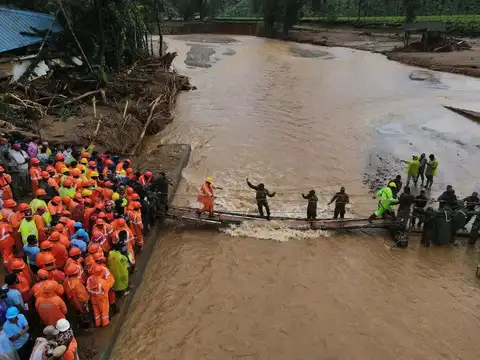
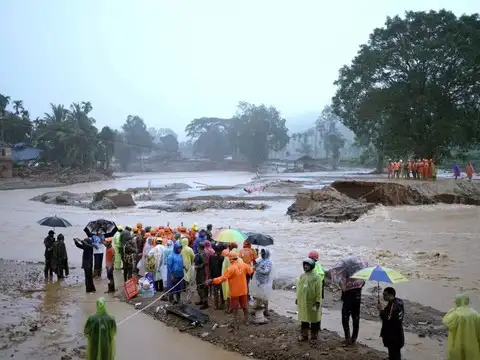
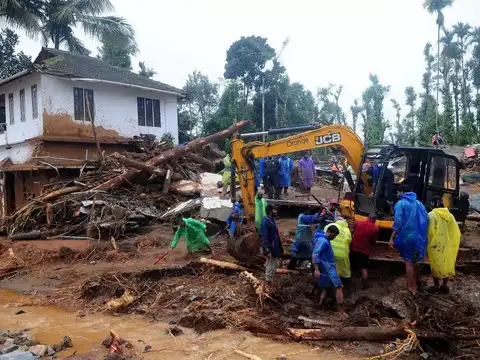
The landslide in Meppadi region in Kerala’s Wayanad that has upended hundreds of lives remains to be one of India's worst recent tragedies. Over a hundred people have died from the natural disaster, with many still missing. The landslide, which hit post midnight on July 30, has triggered a 2-day rescue operation which is still ongoing.
2/7
Rescue teams initiate operation
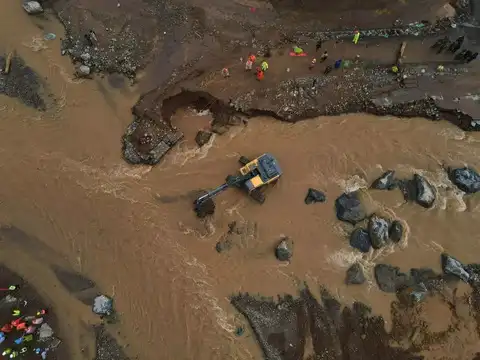
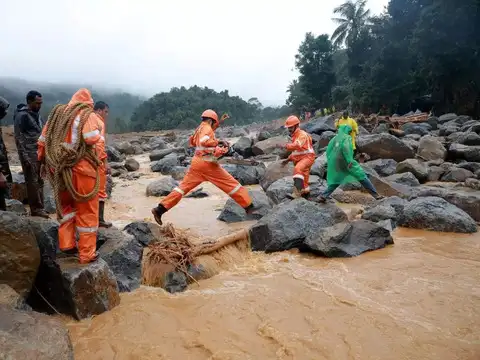
The National Disaster Response Force (NDRF), the Indian Army, and the Fire Force have formed a 300-strong team of rescue officers. Over 1000 people from the region have been relocated to safer locations, informed Nityanand Rai, Minister of State for Home Affairs. Multiple Indian Air Force helicopters have also been deployed in the region.
3/7
Immediate cause
The landslide was caused by incessant rainfall resulting from the warming of the Arabian Sea, said climate experts to TOI. According to its report, the active monsoon offshore trough had been affecting the entire Konkan region for two weeks, leading to saturated soil in multiple areas. Among other wider reasons for the cause of the Wayanad landslide are climate change and loss of forest cover.
Amazon Top Deals
POWERED BY

Crompton Ozone 75 Litres Desert Air Cooler for home | Large & Easy Clean Ice Chamber | 4-Way Air Deflection | High Density Honeycomb Pads | Everlast Pump | Auto Fill| 3 Year Brand Warranty
₹9,798Buy Now43%
OFF

LG 32 L Convection Microwave Oven (MC3286BRUM, Black, 360° Motorised Rotisserie for Bar-be-queing, 301 Auto Cook Menu, Stainless steel cavity, Indian Cuisine, Tandoor Se, Steam Clean & Diet Fry)
₹19,340Buy Now19%
OFF
4/7
What IMD data shows
IMD data shows that the state received 537% more than normal daily (24 hours) rainfall on July 30. “The landslide was caused by very heavy rainfall over the region during the last two days. Soil conditions were conducive with previous episodes of rains,” Madhavan Rajeevan, former secretary of ministry of earth sciences (MoES), told TOI.
5/7
Wayanad: A landslide-prone region
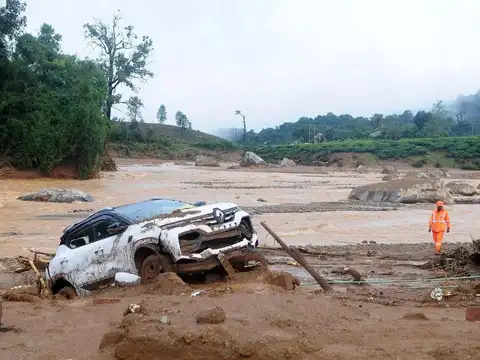
Moreover, according to a study released by the Indian Space Research Organisation (ISRO) last year, 10 out of the 30 most landslide-prone districts in the country were situated in Kerala, with Wayand ranking 13th. Another 2022 study showed that around 62 percent of forest cover in the region had disappeared between 1950 and 2018, resulting in lack of protection from loosening soil, especially after heavy rainfall.
6/7
Additional factors that caused it
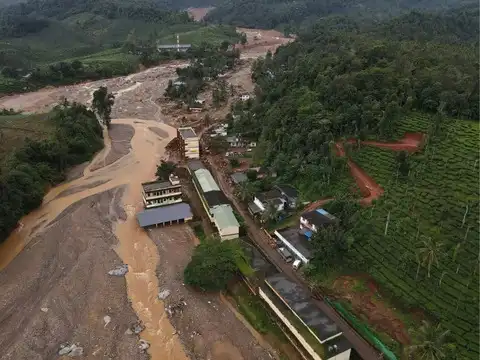
Wayanad is also an ecologically fragile zone as it falls within the Western Ghats. Human activities in such areas can be hazardous to its environment, said an ET report. However, governments have failed in notifying it as an eco-sensitive area (ESA), which would ban hazardous human activity.
7/7
An ecologically sensitive zone
Absence of ESA cover to Western Ghats resulted in continuation of several environmentally-hazardous human activities, including massive deforestation for mining and construction over the years, leading to loosening of soil and affecting hillside stability -- the main reason of landslides during extremely heavy rainfall like the ones that struck Kerala.