
Tap cleaning aluminium foil hack: How to use aluminium foil to remove stubborn tap stains without chemicals
1/7
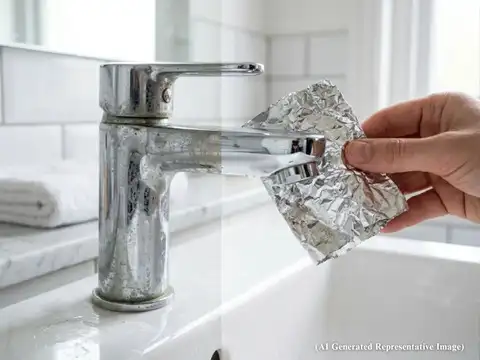
What Are Those Tap Stains Made Of?
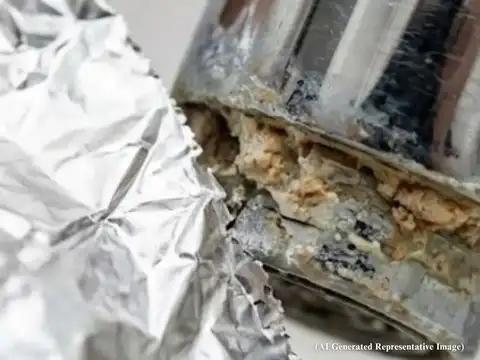
The reddish brown marks around taps are iron oxide, also known as rust. The white chalky deposits are limescale, formed when hard water evaporates and leaves calcium carbonate behind. According to this study published in arXiv on limescale formation, calcium carbonate scale build up is a well documented phenomenon wherever hard water flows through or sits on surfaces regularly.
2/7
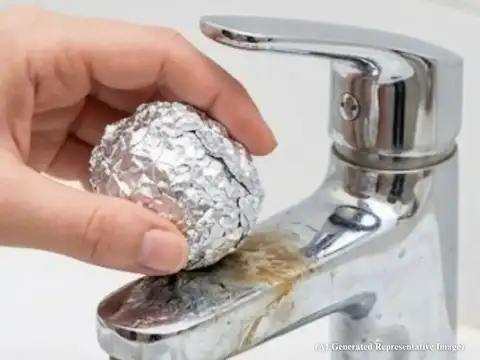
Why Aluminium Foil Works On Rust
When aluminium meets iron oxide in the presence of water, a mild galvanic reaction takes place. Aluminium, being more reactive, pulls oxygen away from the rust, chemically loosening it from the surface. Research published in Springer's Protection of Metals journal confirmed that when iron and aluminium are coupled in an aqueous solution, aluminium releases ions that actively disrupt the iron oxide layer.
3/7
What You Need
Just two things: a sheet of aluminium foil and water. No vinegar, no baking soda, no store bought cleaner needed. Scrunch the foil into a loose ball so it has some texture to work with. The slightly abrasive surface of crumpled foil combined with the galvanic reaction is what does the actual cleaning work here.
Amazon Top Deals
POWERED BY
4/7
How To Do It: Step By Step
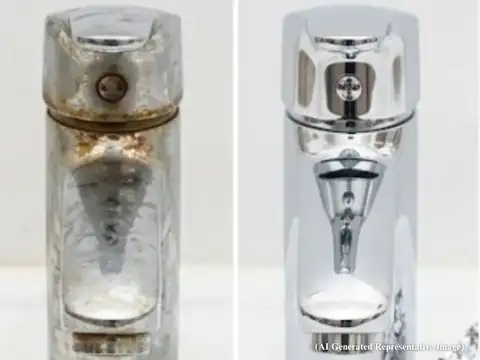
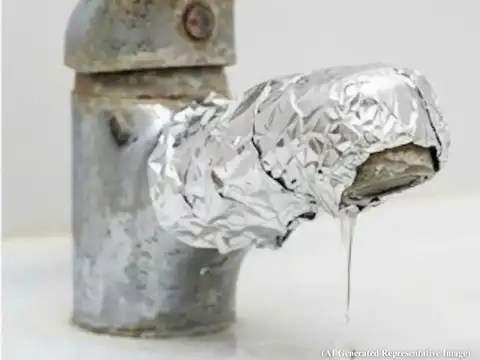
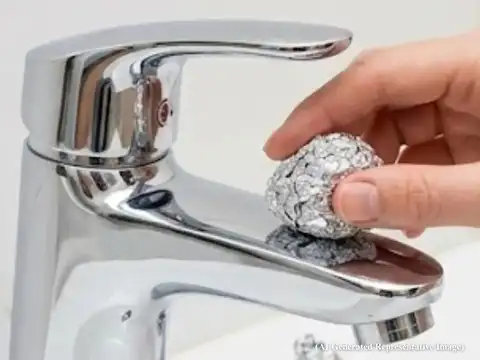
Wet the tap surface and the foil ball with plain water. Rub gently in small circular motions over the stained areas. You will see the rust or discolouration begin to lift within a minute or two. Rinse the tap clean and wipe dry. Do not scrub too hard, light pressure is enough for surface stains.
5/7
Does It Work On Limescale Too?
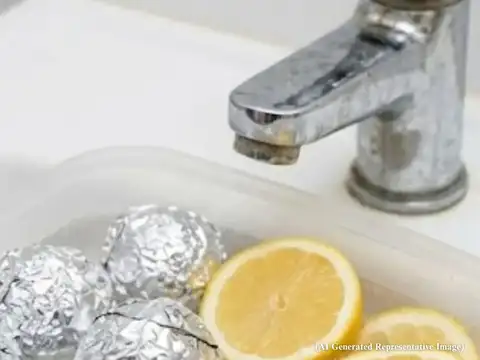
Partially. The foil's mild abrasive action can scrub away soft limescale deposits on the surface. However, a Journal of Water Process Engineering study on limescale removal notes that hard calcium carbonate scale requires a mild acid for effective dissolution. For heavy limescale, pair foil scrubbing with a small amount of lemon juice for better results.
6/7
Which Tap Surfaces Is It Safe On?
It works well on chrome plated taps, which are the most common type in most homes. Avoid using it on brushed stainless steel as it can leave fine swirl marks on the finish. Also skip it on painted or powder coated surfaces. When unsure, test on a small hidden area before going over the whole tap.
7/7
Why This Beats Chemical Cleaners
Most commercial tap cleaners contain phosphoric or oxalic acid, which can damage chrome finishes over repeated use. A US patent filing on acidic cleaning compositions specifically flags that acids like phosphoric acid can cause corrosion on aluminium, chromed steel, and stainless steel surfaces. The foil method is gentler, cheaper, and leaves no chemical residue behind.