
Putting an A4 sheet in fridge door: Why more people are doing it and its benefits
1/6
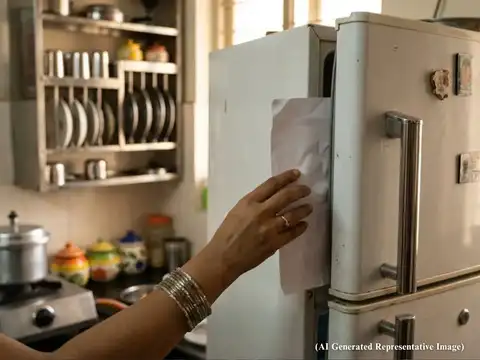
It Absorbs Excess Moisture
Paper is made of cellulose fibres, and cellulose naturally pulls in moisture from the surrounding air. Placing a sheet in your fridge door helps soak up excess humidity that builds up every time you open and close it.Research published in ScienceDirect confirmed that cellulose sheets are effective enough at moisture absorption that they are now used as official food simulants in international refrigerator testing standards.
2/6
It Helps Food Stay Fresh Longer
Too much moisture inside a fridge is one of the main reasons food spoils faster than it should. It raises the local water activity on food surfaces, giving bacteria and mould exactly what they need to grow.A Frontiers in Microbiology study noted that humidity is a key extrinsic parameter that directly influences how quickly spoilage microorganisms colonise food. A paper sheet helps keep that moisture in check.

3/6
It Quietly Reduces Odours
Stale fridge smells usually come from moisture mixing with food residue and microbial activity. By absorbing some of that ambient moisture, the paper also reduces one of the main triggers for those lingering odours.Utah State University's food storage research points out that if humidity in a storage environment is not managed, mould and bacteria grow rapidly, producing the kind of odours most people associate with a fridge that needs a deep clean.
Amazon Top Deals
POWERED BY

4/6
It Protects Vegetables In The Crisper
Vegetables lose water and go limp when humidity inside the crisper is either too low or uncontrolled. A paper sheet placed near the drawer helps stabilise that moisture balance passively, without any gadget or setting change.A ScienceDirect study on domestic refrigerator humidity found that mushrooms and crispy lettuce showed measurably improved preservation when relative humidity was better maintained inside the crisper compartment.

5/6
It Slows Down Mould Growth
Mould in the fridge is almost always a moisture problem first. Mould spores are present in most environments, but they need available water to activate and spread.Research in the International Advance Journal of Engineering, Science and Management explains that most mould species can grow at water activity levels as low as 0.80, meaning even moderate excess humidity inside a fridge is enough for them to thrive. Paper helps reduce that risk passively.
6/6
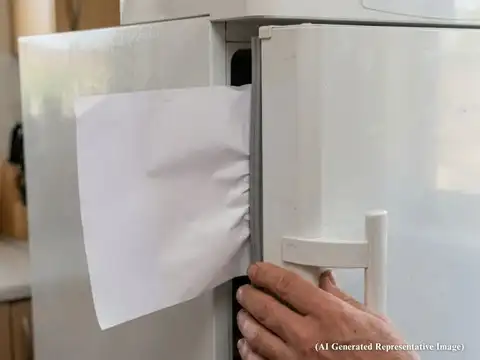
It Costs Nothing And Needs No Maintenance
This is arguably the best part. You are not buying a dehumidifier pack or a charcoal sachet. A plain A4 sheet works because cellulose is inherently hygroscopic. Just swap it out every 10 to 14 days or when it feels damp.The IEC 63169:2020 international standard, used to test refrigerator food preservation performance globally, actually relies on cellulose sheets as its benchmark moisture measurement tool. That alone says something about how well paper handles fridge humidity.
(Disclaimer: This story is for educational purposes alone and should not be considered as professional medical advice and does not substitute any medical advice.)
(Disclaimer: This story is for educational purposes alone and should not be considered as professional medical advice and does not substitute any medical advice.)