PM Modi inaugurates new Parliament building
Indian Prime Minister Narendra Modi inaugurated the country's new Parliament building, which was constructed by Tata Projects Ltd. The triangular-shaped building has a built-up area of 64,500 square metres and features a grand constitutional hall ...
By ET Online | Updated:
PM Narendra Modi inaugurates new Parliament building after Pooja, Sengol ceremony
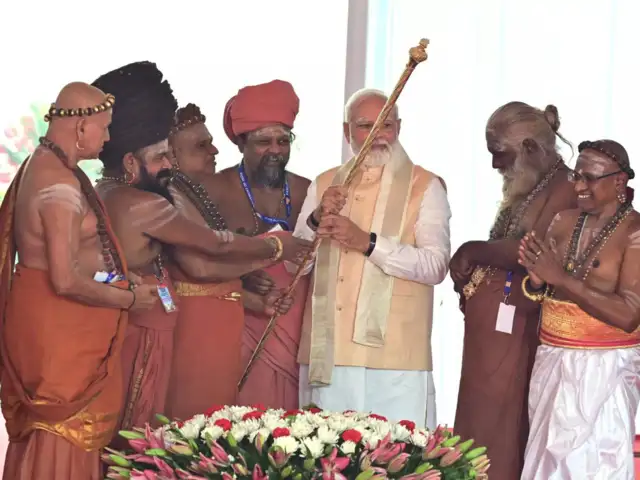
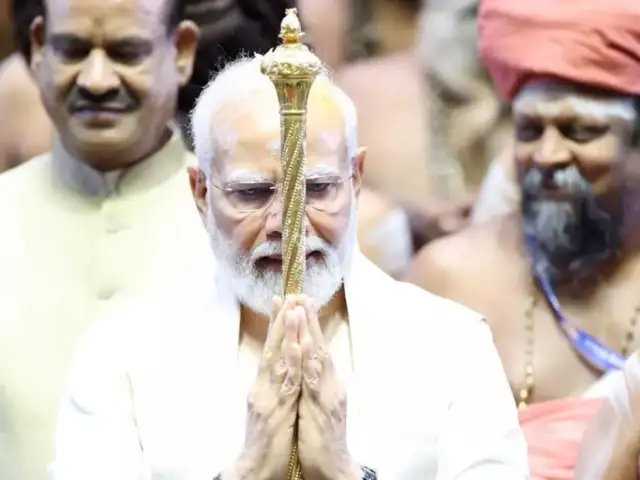
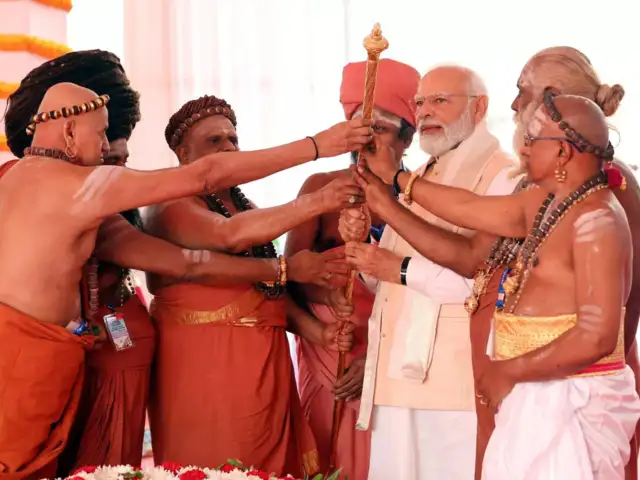
Prime Minister Narendra Modi today inaugurated the new Parliament building, seeking blessings from high priests of various 'adheenams' in Tamil Nadu with the holy sceptre in hand. He also installed the historic Sengol in the Lok Sabha chamber.
Dressed in traditional attire, PM Modi walked into Parliament premises from its Gate No. 1 and was welcomed by Lok Sabha Speaker Om Birla.
Amid Vedic chants by priests from Karnataka's Shringeri Math, the prime minister performed "Ganapati Homam" to invoke Gods to bless the inauguration of the new Parliament building.
PM then carried the Sengol in a procession amid tunes of "nadaswaram" and chanting of Vedic mantras to the new Parliament building and installed it in a special enclosure on the right side of the Speaker's chair in the Lok Sabha chamber.
Rajnath Singh, Amit Shah, S Jaishankar, Ashwini Vaishnaw, Mansukh Mandaviya and Jitendra Singh, Yogi Adityanath, Himanta Biswa Sarma and BJP president J P Nadda among other leaders were present on the occasion.
The prime minister also felicitated some workers with shawls and souvenirs who played key roles in the construction of the new Parliament building.
A multi-faith prayer was also held to mark the occasion.
The prime minister along with the Speaker and some other dignitaries later went to the old Parliament House.
Highlights of the new Parliament building
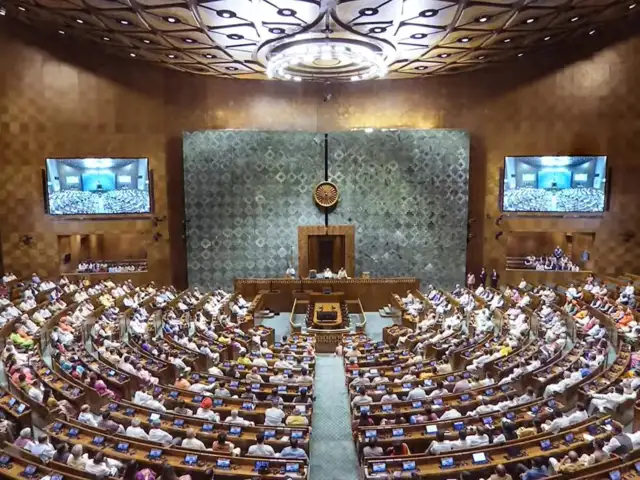
The new Parliament building can comfortably seat 888 members in the Lok Sabha chamber and 300 in the Rajya Sabha chamber. In case of a joint sitting of both the Houses, a total of 1,280 members can be accommodated in the Lok Sabha chamber.
PM Modi had laid the foundation stone of the new Parliament building on December 10, 2020. The present Parliament building was completed in 1927, and is now 96 years old.
Over the years, the old building was found to be inadequate for present day requirements.
Lok Sabha and Rajya Sabha had passed resolutions urging the government to construct a new building for Parliament.
The existing building served as independent India's first Parliament and witnessed the adoption of the Constitution.
Originally called the Council House, the building housed the Imperial Legislative Council. The Parliament building witnessed the addition of two floors in 1956 to address the demand for more space.
In 2006, the Parliament Museum was added to showcase the 2,500 years of rich democratic heritage of India.
Officials said the present building was never designed to accommodate a bicameral legislature and the seating arrangements were cramped and cumbersome, with no desks beyond the second row.
The Central Hall has seating capacity only for 440 people and the need for more space was acutely felt during joint sittings of both the houses.
(With inputs from PTI)
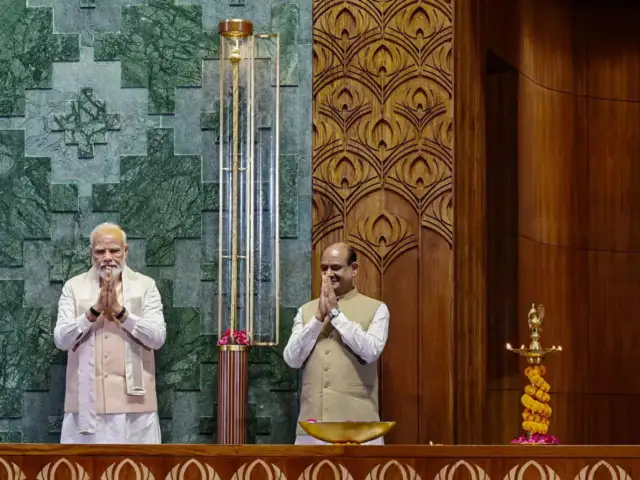
Dressed in traditional attire, PM Modi walked into Parliament premises from its Gate No. 1 and was welcomed by Lok Sabha Speaker Om Birla.
Amid Vedic chants by priests from Karnataka's Shringeri Math, the prime minister performed "Ganapati Homam" to invoke Gods to bless the inauguration of the new Parliament building.
PM then carried the Sengol in a procession amid tunes of "nadaswaram" and chanting of Vedic mantras to the new Parliament building and installed it in a special enclosure on the right side of the Speaker's chair in the Lok Sabha chamber.
Rajnath Singh, Amit Shah, S Jaishankar, Ashwini Vaishnaw, Mansukh Mandaviya and Jitendra Singh, Yogi Adityanath, Himanta Biswa Sarma and BJP president J P Nadda among other leaders were present on the occasion.
The prime minister also felicitated some workers with shawls and souvenirs who played key roles in the construction of the new Parliament building.
ADVERTISEMENT
A multi-faith prayer was also held to mark the occasion.
The prime minister along with the Speaker and some other dignitaries later went to the old Parliament House.
Highlights of the new Parliament building
- Constructed by Tata Projects Ltd, the new parliament building will have a grand constitution hall to showcase India's democratic heritage, a lounge for MPs, a library, multiple committee rooms, dining areas and ample parking space. The material used for the new building has been acquired from various parts of the country.
- The teakwood used in the building was sourced from Nagpur in Maharashtra, while the red and white sandstone was procured from Sarmathura in Rajasthan. The sandstone for the Red Fort and Humayun's Tomb in the national capital was also known to have been sourced from Sarmathura.
- The triangular-shaped four-storey building has a built-up area of 64,500 square metres.
- The building has three main gates -- Gyan Dwar, Shakti Dwar, and Karma Dwar. It also has separate entrances for VIPs, MPs, and visitors.
- The Kesharia green stone has been procured from Udaipur, the red granite from Lakha near Ajmer and the white marble has been sourced from Ambaji in Rajasthan.
- "In a way, the entire country came together to construct the temple of democracy, thus reflecting the true spirit of Ek Bharat Shreshtha Bharat," an official said.
- The steel structure for the false ceilings in the Lok Sabha and the Rajya Sabha chambers have been sourced from the union territory of Daman and Diu, while the furniture in the new building was crafted in Mumbai.
- The stone 'jaali' (lattice) works dotting the building were sourced from Rajnagar in Rajasthan and Noida in Uttar Pradesh.
- The materials for the Ashoka Emblem were sourced from Aurangabad in Maharashtra and Jaipur in Rajasthan, while the Ashok Chakra donning the massive walls of the Lok Sabha and the Rajya Sabha chambers and the exteriors of the parliament building were procured from Indore in Madhya Pradesh.
- The new Parliament building used manufactured sand or M-sand from Charkhi Dadri in Haryana for creating concrete mix for the construction activities. This sand is considered environment friendly as it is manufactured by crushing large hard stones or granite and not by dredging of river beds.
- The fly ash bricks used in the construction were sourced from Haryana and Uttar Pradesh, while brass works and pre-cast trenches were from Ahmedabad in Gujarat.
The new Parliament building can comfortably seat 888 members in the Lok Sabha chamber and 300 in the Rajya Sabha chamber. In case of a joint sitting of both the Houses, a total of 1,280 members can be accommodated in the Lok Sabha chamber.
ADVERTISEMENT
PM Modi had laid the foundation stone of the new Parliament building on December 10, 2020. The present Parliament building was completed in 1927, and is now 96 years old.
Over the years, the old building was found to be inadequate for present day requirements.
ADVERTISEMENT
Lok Sabha and Rajya Sabha had passed resolutions urging the government to construct a new building for Parliament.
The existing building served as independent India's first Parliament and witnessed the adoption of the Constitution.
Originally called the Council House, the building housed the Imperial Legislative Council. The Parliament building witnessed the addition of two floors in 1956 to address the demand for more space.
In 2006, the Parliament Museum was added to showcase the 2,500 years of rich democratic heritage of India.
Officials said the present building was never designed to accommodate a bicameral legislature and the seating arrangements were cramped and cumbersome, with no desks beyond the second row.
The Central Hall has seating capacity only for 440 people and the need for more space was acutely felt during joint sittings of both the houses.
(With inputs from PTI)
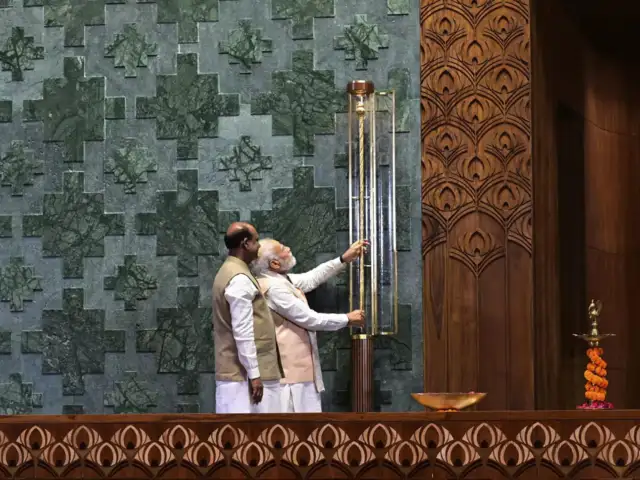
Prime Minister Narendra Modi inaugurated the new Parliament building in New Delhi on Sunday morning and installed the historic Sengol in the Lok Sabha chamber.

Download
The Economic Times Business News App for the Latest News in Business, Sensex, Stock Market Updates & More.
The Economic Times Business News App for the Latest News in Business, Sensex, Stock Market Updates & More.
Download
The Economic Times News App for Quarterly Results, Latest News in ITR, Business, Share Market, Live Sensex News & More.
The Economic Times News App for Quarterly Results, Latest News in ITR, Business, Share Market, Live Sensex News & More.
ADVERTISEMENT


