India's new Parliament building: Significant features
The old building could seat 543 Members in the Lok Sabha and 250 in the Rajya Sabha. The new Parliament building will have space for 888 members in the Lok Sabha and 384 members in the Rajya Sabha.
By ET Online | Updated:
New Parliament Building: Ahead of the opening ceremony on May 28, how the new symbol of Aatmanirbhar Bharat came about
Come May 28, India will have a new seat of power when PM Modi inaugurates India's majestic new Parliament building. On the eve of this significant occasion, here's looking at the key features of the new symbol of Indian democracy.
The construction of the original parliament building was completed in 1927. The almost-a-century-old structure was increasingly being found to be inadequate to service the government's present-day requirements. Keeping this in mind, both the Lok Sabha and the Rajya Sabha passed resolutions to construct a new building for the Parliament. After due process, the foundation stone of the new building was laid on December 10, 2020 by PM Modi.
The old building could seat 543 Members in the Lok Sabha and 250 in the Rajya Sabha. The new Parliament building will have space for 888 members in the Lok Sabha and 384 members in the Rajya Sabha.
Key things to know about the new building:
The construction of the original parliament building was completed in 1927. The almost-a-century-old structure was increasingly being found to be inadequate to service the government's present-day requirements. Keeping this in mind, both the Lok Sabha and the Rajya Sabha passed resolutions to construct a new building for the Parliament. After due process, the foundation stone of the new building was laid on December 10, 2020 by PM Modi.
The old building could seat 543 Members in the Lok Sabha and 250 in the Rajya Sabha. The new Parliament building will have space for 888 members in the Lok Sabha and 384 members in the Rajya Sabha.
Key things to know about the new building:
- The structure is built over an area of 64,500 square metres.
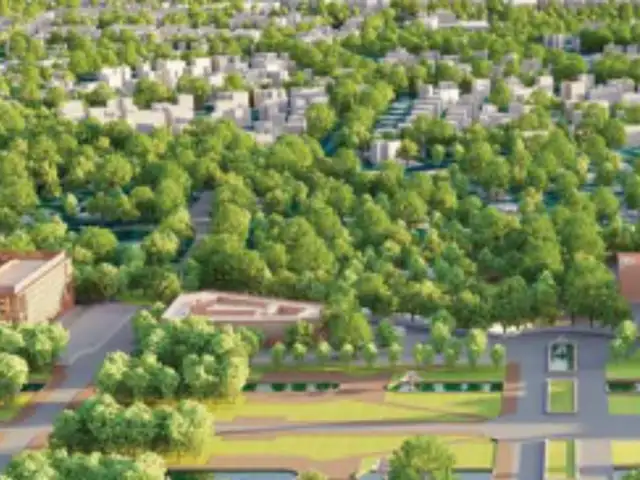
- The new Parliament, constructed on the lines of the Central Vista buildings, is a triangular structure. It houses the Lok Sabha, the Rajya Sabha, the Central Lounge and offices of constitutional authorities.
- The new Lok Sabha Chamber is designed in the likeness of India's National Bird, the Peacock. The new Rajya Sabha Chamber, on the other hand, bears similarities to the National Flower, the Lotus.
- As a whole, the newly constructed building reflects various architectural influences from important heritage buildings of India, such as the Rashtrapati Bhavan, the govt's official document says.
- Around 800 chambers for MPs are being constructed in the redeveloped Shram Shakti Bhawan. Their construction, which started in April 2022, is scheduled to be completed by March 2024.
- The old building will continue to be used. The basic architectural strategy is to make the two buildings complement each other. As per the govt's stated plan, full care will be taken to retain the old building's historical heritage.
- Efforts are on to make sure that there is no change to the visibility of the original Parliament House after the construction of the new building. All the statues situated in the Parliament Complex will also be restored.
- The new building will have six Committee rooms. The present structure has three such rooms.
- There will be 92 rooms for the use of the Council of Ministers.
- In the new building, two members will be able to sit side by side on each bench in the Lok Sabha and the Rajya Sabha Chambers, says the govt's official document. Each seat will be equipped with digital systems and touch screens.
- A central courtyard will make for an open meeting space for Members of both houses.
- The facility is designed to meet high-level of security standards.
- The new building will have a Constitution Hall for the purpose of showcasing India's democratic heritage. Other upcoming structure include a library, a dining room and ample parking for the members.
- The new building will feature rainwater harvesting and water recycling systems. Provision of 100% UPS power backup will be made throughout the building, the document states.
- The designing of the new building was done by Ahmedabad-based HCP Design and Management Pvt Limited. Tata Projects won the contract to build the new Parliament building, a part of the Centre's Central Vista redevelopment plans.
- The current Parliament consists of Sansad Bhawan (Parliament House), Reception Office Building, Sansadiya Soudha (Parliament House Annexe), Extension to Parliament House Annexe and Sansadiya Gyanpeeth (Parliament Library Building).
-

Download
The Economic Times Business News App for the Latest News in Business, Sensex, Stock Market Updates & More.
The Economic Times Business News App for the Latest News in Business, Sensex, Stock Market Updates & More.
Download
The Economic Times News App for Quarterly Results, Latest News in ITR, Business, Share Market, Live Sensex News & More.
The Economic Times News App for Quarterly Results, Latest News in ITR, Business, Share Market, Live Sensex News & More.






ADVERTISEMENT


