
How Kolam patterns in South India are secretly mathematical codes
1/8
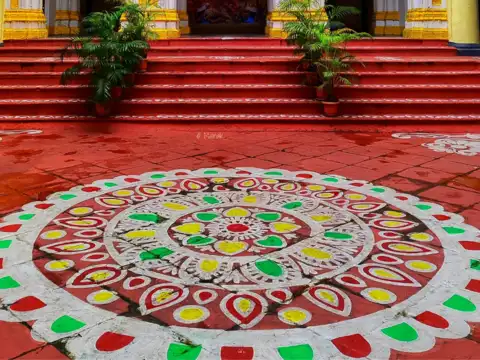
Kolam
Kolam is a traditional South Indian art form where intricate geometric patterns are drawn daily at doorsteps using rice flour, symbolizing welcome, cultural heritage, and mathematical beauty.
2/8
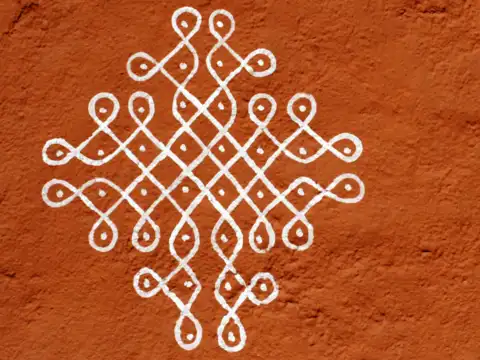
Symmetry in Everyday Design
Kolams feature bilateral, rotational, and translational symmetry—with designs repeating and mirroring across axes, following mathematical rules.
3/8
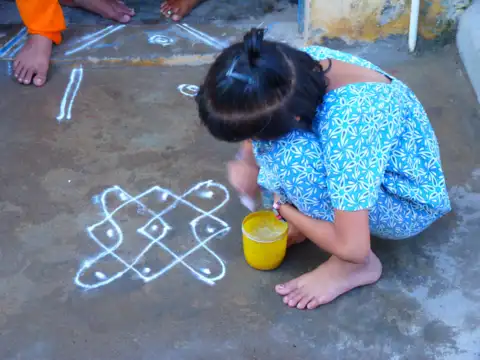
Dot Grids as Blueprints
Women start with grid patterns of dots, which act as coordinates. Lines weave around these dots, just like plotting graphs or geometric points.
Amazon Top Deals
POWERED BY

4/8
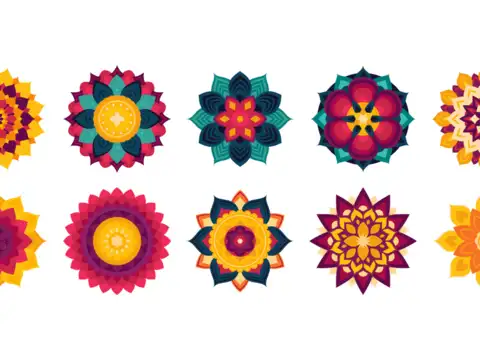
Algorithms in a Powder Trail
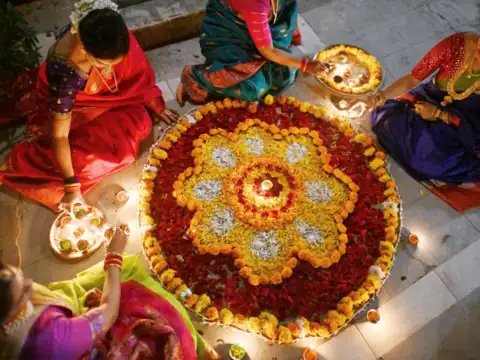
Drawing Kolam is algorithmic: Step-by-step sequences use logic, repetition, and problem-solving to close shapes and create continuous paths without lifting the hand.
5/8
Fibonacci and Fractals Appear
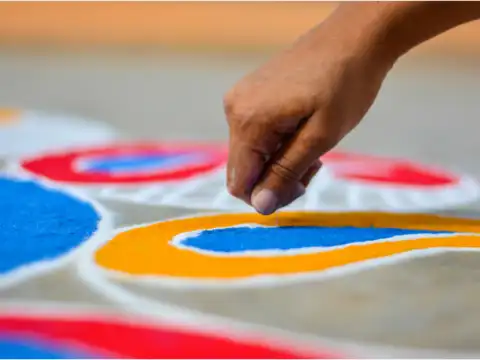
Some Kolams mirror the Fibonacci sequence and fractal patterns: smaller motifs repeat within larger ones, creating complex, self-similar art.
6/8
Mathematical Concepts: Closed Loops
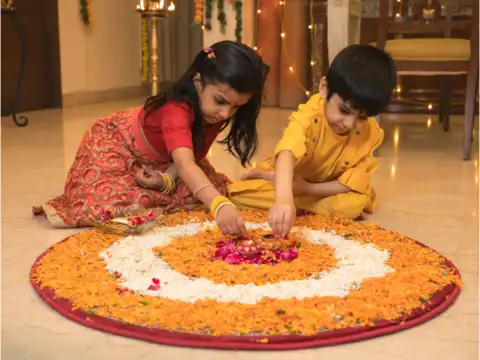
Kolam designs often use Eulerian paths—lines that pass through each point without retracing, a problem studied in graph theory.
7/8
Patterns That Teach Probability
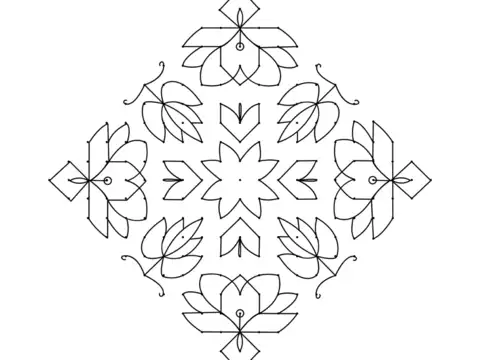
Some daily Kolams are random yet follow combinatorics, showcasing how many versions can be made from a fixed grid. Real-life math in every morning routine!
8/8
From Tradition to Coding Challenge
Mathematicians and programmers have created computer algorithms to replicate Kolam designs, highlighting their logical roots and computational beauty.