
9 famous quotes from George Orwell’s books that still resonate
1/9
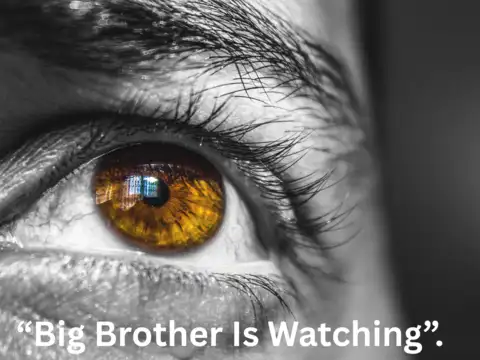
"Big Brother is watching you.”
Book: 1984 authored in 1949
In George Orwell’s dystopian masterpiece 1984, this haunting line appears on posters, telescreens, and government signage throughout Oceania. “Big Brother” is the face of the totalitarian regime, representing the omnipresent surveillance state that constantly watches, monitors, and controls every citizen’s actions, thoughts, and emotions. The regime ensures loyalty not only through fear of punishment but also by instilling paranoia and self-censorship.
Meaning: Orwell warns how unchecked political power, when paired with advanced surveillance, can strip away personal freedom and individuality. This line has since become synonymous with invasive government monitoring and a loss of civil liberties in the name of security.
In George Orwell’s dystopian masterpiece 1984, this haunting line appears on posters, telescreens, and government signage throughout Oceania. “Big Brother” is the face of the totalitarian regime, representing the omnipresent surveillance state that constantly watches, monitors, and controls every citizen’s actions, thoughts, and emotions. The regime ensures loyalty not only through fear of punishment but also by instilling paranoia and self-censorship.
Meaning: Orwell warns how unchecked political power, when paired with advanced surveillance, can strip away personal freedom and individuality. This line has since become synonymous with invasive government monitoring and a loss of civil liberties in the name of security.
2/9
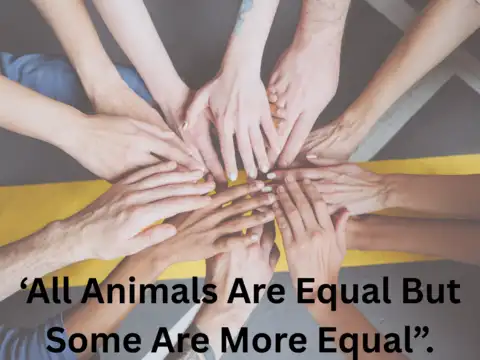
“All animals are equal, but some animals are more equal than others.”
Book: Animal Farm (1945)This quote appears after the pigs in Animal Farm, who led a revolution for equality, eventually become indistinguishable from the tyrannical humans they overthrew. Initially, all animals unite under the belief in shared rights and fairness. But as the pigs rise in power, they revise the original egalitarian commandments to suit their privilege.
Meaning: Orwell uses this paradox to expose how those in power manipulate language and laws to justify hypocrisy and inequality. It's a timeless critique of corrupt leadership and how revolutions can betray their ideals.
Meaning: Orwell uses this paradox to expose how those in power manipulate language and laws to justify hypocrisy and inequality. It's a timeless critique of corrupt leadership and how revolutions can betray their ideals.
3/9
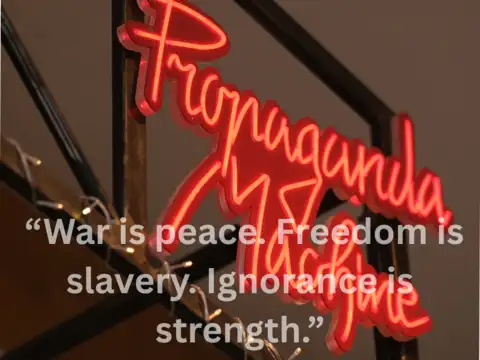
“War is peace. Freedom is slavery. Ignorance is strength.”
Book: 1984
These three paradoxical slogans represent the core principles of The Party in 1984. Citizens are trained to believe these contradictions through a process called “doublethink,” where they accept two opposing ideas as true simultaneously.
Meaning: Orwell illustrates how authoritarian regimes distort truth to maintain control. By redefining language and suppressing logical thinking, the government ensures obedience. The slogans emphasize how propaganda turns lies into accepted norms.
These three paradoxical slogans represent the core principles of The Party in 1984. Citizens are trained to believe these contradictions through a process called “doublethink,” where they accept two opposing ideas as true simultaneously.
Meaning: Orwell illustrates how authoritarian regimes distort truth to maintain control. By redefining language and suppressing logical thinking, the government ensures obedience. The slogans emphasize how propaganda turns lies into accepted norms.
Amazon Top Deals
POWERED BY

4/9
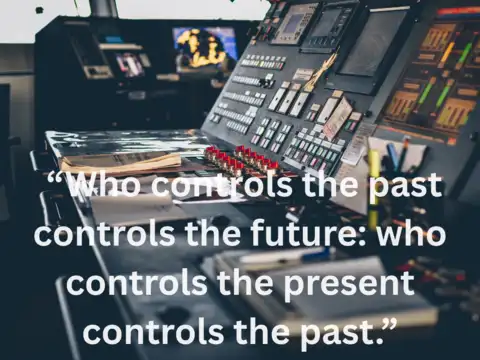
“Who controls the past controls the future: who controls the present controls the past.”
Book: 1984
In Orwell’s dystopia, the ruling Party constantly rewrites historical records to match its current narrative. By doing this, they erase contradictory evidence and make it appear as though their version of reality has always been true.
Meaning: This quote reflects the dangers of historical revisionism. Orwell shows how controlling history gives regimes immense power over society’s beliefs, memory, and future direction. Without access to accurate history, people lose the ability to question authority.
In Orwell’s dystopia, the ruling Party constantly rewrites historical records to match its current narrative. By doing this, they erase contradictory evidence and make it appear as though their version of reality has always been true.
Meaning: This quote reflects the dangers of historical revisionism. Orwell shows how controlling history gives regimes immense power over society’s beliefs, memory, and future direction. Without access to accurate history, people lose the ability to question authority.
5/9
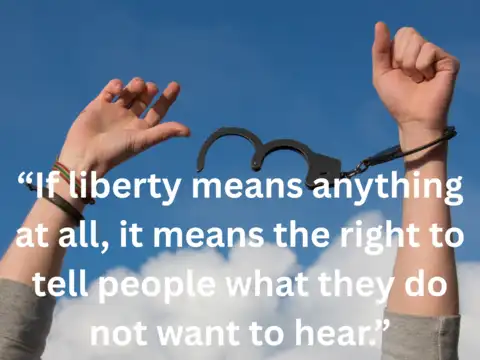
“If liberty means anything at all, it means the right to tell people what they do not want to hear.”
Book: Unpublished preface to Animal Farm
Orwell originally wrote this in a suppressed preface about censorship in wartime Britain. Though Animal Farm is about Soviet totalitarianism, Orwell was also frustrated by democratic societies that avoided uncomfortable truths.
Meaning: Freedom of speech is not just about popular ideas, it must include the right to challenge, provoke, and criticize. Orwell believed that real liberty allows room for dissent, even when it's unpopular.
Orwell originally wrote this in a suppressed preface about censorship in wartime Britain. Though Animal Farm is about Soviet totalitarianism, Orwell was also frustrated by democratic societies that avoided uncomfortable truths.
Meaning: Freedom of speech is not just about popular ideas, it must include the right to challenge, provoke, and criticize. Orwell believed that real liberty allows room for dissent, even when it's unpopular.
6/9
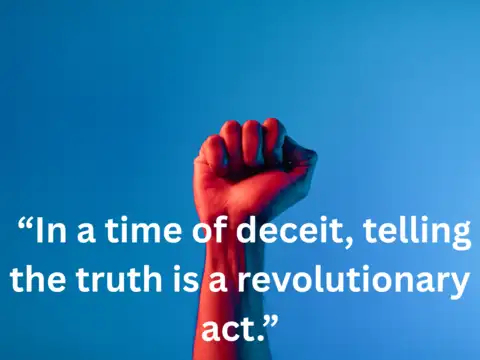
“In a time of deceit, telling the truth is a revolutionary act.”
Attributed to Orwell (reflective of 1984)
Though not a direct quote, this line captures the core message of Orwell’s dystopian world. In 1984, truth was constantly manipulated, and speaking factual reality is an act of rebellion.
Meaning: In a world dominated by lies, propaganda, and misinformation, honesty becomes a powerful form of resistance. Orwell reminds us that truth-telling requires courage when it goes against the dominant narrative.
Though not a direct quote, this line captures the core message of Orwell’s dystopian world. In 1984, truth was constantly manipulated, and speaking factual reality is an act of rebellion.
Meaning: In a world dominated by lies, propaganda, and misinformation, honesty becomes a powerful form of resistance. Orwell reminds us that truth-telling requires courage when it goes against the dominant narrative.
7/9
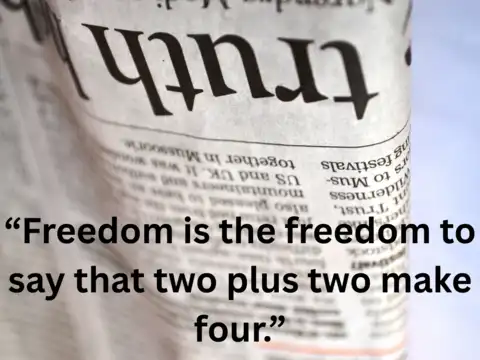
“Freedom is the freedom to say that two plus two make four.”
Book: 1984
Winston, the protagonist, repeats this phrase as an act of mental rebellion. In the world of 1984, objective facts are rewritten to serve the Party’s agenda. Even simple truths like 2 + 2 = 4 are denied when politically inconvenient.
Meaning: This quote is Orwell’s stand for intellectual freedom. It stresses the importance of acknowledging reality, even basic facts, against ideological distortion. Accepting obvious truths is the foundation of freedom.
Winston, the protagonist, repeats this phrase as an act of mental rebellion. In the world of 1984, objective facts are rewritten to serve the Party’s agenda. Even simple truths like 2 + 2 = 4 are denied when politically inconvenient.
Meaning: This quote is Orwell’s stand for intellectual freedom. It stresses the importance of acknowledging reality, even basic facts, against ideological distortion. Accepting obvious truths is the foundation of freedom.
8/9
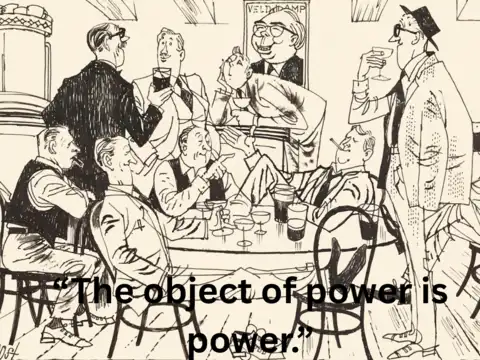
“The object of power is power.”
Book: 1984
O'Brien, an enforcer for the regime, explains to Winston that the Party doesn’t care about ideology or society’s welfare. Its only goal is to retain and expand its own power.
Meaning: Orwell critiques how totalitarian systems pursue power for its own sake, not to serve justice or progress. It's a stark commentary on the corrupting nature of absolute power and the emptiness of authoritarian ideologies.
O'Brien, an enforcer for the regime, explains to Winston that the Party doesn’t care about ideology or society’s welfare. Its only goal is to retain and expand its own power.
Meaning: Orwell critiques how totalitarian systems pursue power for its own sake, not to serve justice or progress. It's a stark commentary on the corrupting nature of absolute power and the emptiness of authoritarian ideologies.
9/9
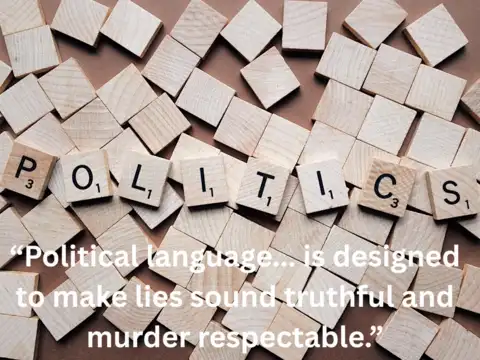
“Political language is designed to make lies sound truthful and murder respectable.”
Book: Politics and the English Language (1946 essay)
Orwell analyzed how vague and euphemistic political language masks violence and deceit. Terms like “collateral damage” or “enhanced interrogation” hide brutal realities.
Meaning: He urges writers and thinkers to use clear, precise language. Orwell believed that murky language enables manipulation and suppresses truth, allowing governments to mislead the public without accountability.
Orwell analyzed how vague and euphemistic political language masks violence and deceit. Terms like “collateral damage” or “enhanced interrogation” hide brutal realities.
Meaning: He urges writers and thinkers to use clear, precise language. Orwell believed that murky language enables manipulation and suppresses truth, allowing governments to mislead the public without accountability.