
8 rare animals to spot in the Great Himalayan National Park

1/8
Snow Leopard
The snow leopard is a shy, solitary predator adapted to harsh alpine environments. Known as the “Ghost of the Mountains,” it uses its thick fur and powerful limbs to survive snowy terrains.

2/8
Himalayan Musk Deer
This nocturnal deer inhabits coniferous forests and steep cliffs. Males possess a musk gland used in perfumes, making them targets for illegal poaching despite being protected under Indian wildlife laws.

3/8
Himalayan Tahr
A wild goat with a reddish-brown coat, the Himalayan tahr is an agile climber found on rocky slopes. Its dense fur and curved horns help it navigate harsh alpine climates.
Amazon Top Deals
POWERED BY

Crompton Ozone 75 Litres Desert Air Cooler for home | Large & Easy Clean Ice Chamber | 4-Way Air Deflection | High Density Honeycomb Pads | Everlast Pump | Auto Fill| 3 Year Brand Warranty
₹9,798Buy Now43%
OFF

LG 32 L Convection Microwave Oven (MC3286BRUM, Black, 360° Motorised Rotisserie for Bar-be-queing, 301 Auto Cook Menu, Stainless steel cavity, Indian Cuisine, Tandoor Se, Steam Clean & Diet Fry)
₹19,340Buy Now19%
OFF
4/8
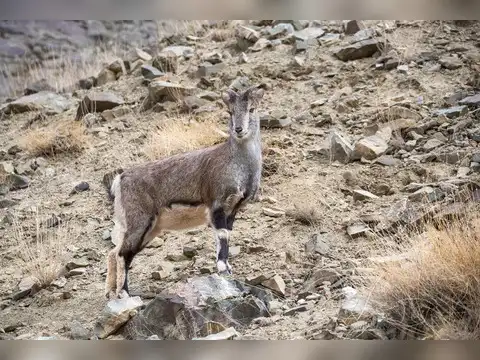
Bharal
The bharal, or blue sheep, blends perfectly into rocky Himalayan landscapes with its slate-blue coat. It’s a crucial prey species for snow leopards and thrives in high-altitude grasslands and cliffs.

5/8
Himalayan Brown Bear
This rare subspecies of the brown bear is found in alpine meadows and shrublands. Known for its bulk and omnivorous diet, it hibernates in caves during the harsh winter months.

6/8
Himalayan Serow
The Himalayan serow is a goat-antelope hybrid with bristly fur and short limbs. It inhabits rugged forests and cliffs and is usually seen alone or in small, shy groups.

7/8
Himalayan Monal
The Himalayan monal, Himachal’s state bird, is renowned for its iridescent feathers and long crest. Found in subalpine forests, it feeds on roots, insects, and seeds, often seen in pairs.

8/8
Western Tragopan
This vibrantly colored pheasant is highly elusive and prefers dense undergrowth. Known as the “King of Birds” in Himachal, the male tragopan performs dramatic courtship displays in the breeding season.