
6 overrated superfoods that have better alternatives
1/6
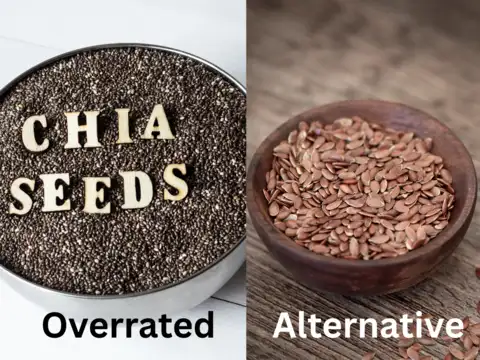
Chia seeds (overrated), Flax seeds (alternatives)
Chia seeds are often hailed as the ultimate omega-3 and fiber-rich superfood. But while they are indeed nutritious, the reality is that they’re not the best source of plant-based omega-3s. The omega-3 present in chia, must be converted into EPA and DHA, forms your body actually uses, and this conversion is inefficient.
Moreover, chia seeds can cause digestive discomfort when eaten dry or without soaking. They can also be expensive and imported, making them less sustainable and budget-friendly in places like India.
Flax seeds offer similar omega-3 levels, but are often richer in lignans, antioxidants that help fight cancer. They’re also more affordable and widely available. Ground flaxseeds are easier to digest and integrate into daily Indian meals, just mix them into atta, smoothies, or curd.
While chia seeds aren’t bad, they aren’t magic either. If you're looking for real value, flax wins in cost, accessibility, and ease of digestion.
Moreover, chia seeds can cause digestive discomfort when eaten dry or without soaking. They can also be expensive and imported, making them less sustainable and budget-friendly in places like India.
Flax seeds offer similar omega-3 levels, but are often richer in lignans, antioxidants that help fight cancer. They’re also more affordable and widely available. Ground flaxseeds are easier to digest and integrate into daily Indian meals, just mix them into atta, smoothies, or curd.
While chia seeds aren’t bad, they aren’t magic either. If you're looking for real value, flax wins in cost, accessibility, and ease of digestion.
2/6
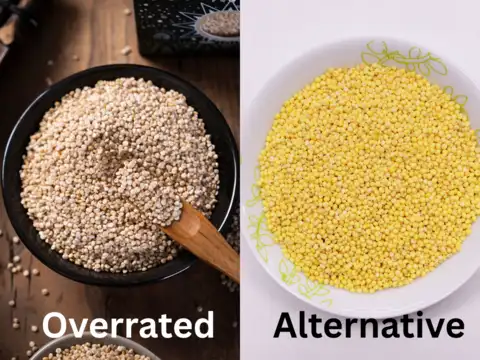
Quinoa (overrated), Foxtail millet (Alternatives)
Quinoa has achieved global “super grain” status, praised for being gluten-free, high-protein, and fiber-rich. But in many cultures, quinoa is overrated, especially when compared to equally powerful native grains.
It often travels long distances, making it a high-carbon-footprint choice. Also, it's not always easy to digest, and many first-time users experience bloating. Nutritionally, quinoa is good, but not extraordinary when matched against traditional grains like millets.
Foxtail millet is rich in protein, fiber, iron, and B-vitamins. It's gluten-free, local, and more sustainable. It stabilizes blood sugar, aids in digestion, and works well in dosa batter, upma, and pulao.
Millets like foxtail and barnyard are making a comeback, and they deserve more space on your plate than imported quinoa.
It often travels long distances, making it a high-carbon-footprint choice. Also, it's not always easy to digest, and many first-time users experience bloating. Nutritionally, quinoa is good, but not extraordinary when matched against traditional grains like millets.
Foxtail millet is rich in protein, fiber, iron, and B-vitamins. It's gluten-free, local, and more sustainable. It stabilizes blood sugar, aids in digestion, and works well in dosa batter, upma, and pulao.
Millets like foxtail and barnyard are making a comeback, and they deserve more space on your plate than imported quinoa.
3/6
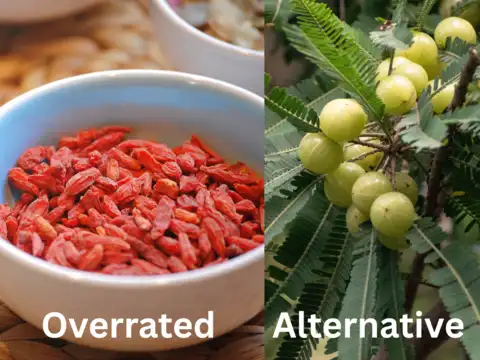
Goji berries (overrated), Amla (alternative)
Goji berries are hyped for their antioxidant content and vitamin C levels. But they’re not native to many regions, often travel thousands of miles, and can be heavily processed or sweetened when sold commercially.
They're expensive, less fresh when imported, and sometimes even irradiated for shelf life. For most consumers, there are better local alternatives that offer similar or superior nutritional profiles.
Amla offers 20x more vitamin C than oranges, is native to India, and is far more accessible and affordable. It boosts immunity, skin health, and digestion naturally.
You can consume amla as juice, candy, murabba, or even raw with salt. In Ayurveda, amla is considered a rasayana, meaning it supports longevity and vitality. Ditch the dried goji, and go desi.
They're expensive, less fresh when imported, and sometimes even irradiated for shelf life. For most consumers, there are better local alternatives that offer similar or superior nutritional profiles.
Amla offers 20x more vitamin C than oranges, is native to India, and is far more accessible and affordable. It boosts immunity, skin health, and digestion naturally.
You can consume amla as juice, candy, murabba, or even raw with salt. In Ayurveda, amla is considered a rasayana, meaning it supports longevity and vitality. Ditch the dried goji, and go desi.
Amazon Top Deals
POWERED BY

Crompton Ozone 75 Litres Desert Air Cooler for home | Large & Easy Clean Ice Chamber | 4-Way Air Deflection | High Density Honeycomb Pads | Everlast Pump | Auto Fill| 3 Year Brand Warranty
₹9,798Buy Now43%
OFF

LG 32 L Convection Microwave Oven (MC3286BRUM, Black, 360° Motorised Rotisserie for Bar-be-queing, 301 Auto Cook Menu, Stainless steel cavity, Indian Cuisine, Tandoor Se, Steam Clean & Diet Fry)
₹18,790Buy Now22%
OFF
4/6
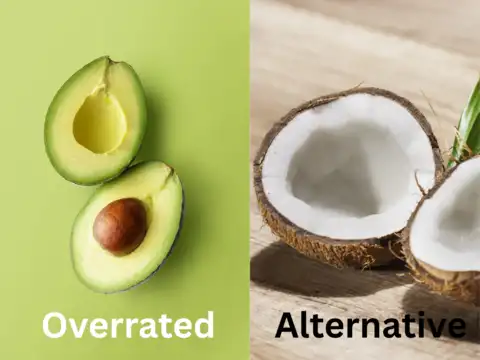
Avocado (overrated), Coconut (alternatives)
Avocados have become a global health icon, praised for heart-healthy fats, fiber, and creamy versatility. However, they’re often overrated in terms of cost, water usage, and carbon footprint. In regions where avocados don’t grow locally, they’re not always fresh and may be chemically ripened.They also lack significant micronutrients compared to other fruits and can trigger latex allergies in some people.
Coconut is rich in medium-chain triglycerides that boost energy, improve brain function, and support heart health. It’s widely available, fresh, and deeply rooted in traditional Indian diets.
Use grated coconut in curries, salads, chutneys, or snacks like coconut laddoos. It delivers healthy fats without the avocado hype, or price.
Coconut is rich in medium-chain triglycerides that boost energy, improve brain function, and support heart health. It’s widely available, fresh, and deeply rooted in traditional Indian diets.
Use grated coconut in curries, salads, chutneys, or snacks like coconut laddoos. It delivers healthy fats without the avocado hype, or price.
5/6
Protein powders (overrated), Roasted gram flour (alternatives)
Many people rely on expensive protein powders to meet their dietary needs. While they have value in specific fitness routines, they’re often over-marketed and misunderstood. Many brands contain artificial sweeteners, preservatives, and fillers that aren’t ideal for daily use, especially for kids or seniors.
Not to mention, overconsumption can burden the kidneys and digestive system.
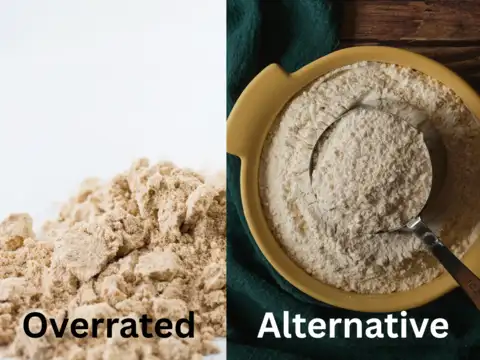
Sattu or Benagal gram flour is rich in plant protein, iron, and fiber. It’s affordable, easily digestible, and excellent for energy. Mix with water, lemon, and salt for a refreshing protein-packed drink or add to dough.
It’s clean, local, and ideal for people of all ages, no blender or brand logo required.
Not to mention, overconsumption can burden the kidneys and digestive system.
Sattu or Benagal gram flour is rich in plant protein, iron, and fiber. It’s affordable, easily digestible, and excellent for energy. Mix with water, lemon, and salt for a refreshing protein-packed drink or add to dough.
It’s clean, local, and ideal for people of all ages, no blender or brand logo required.
6/6
Kale (overrated), Drumstick leaves (alternatives)
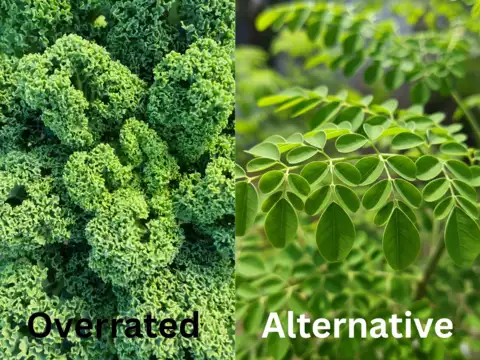
Kale is often crowned the king of leafy greens, rich in vitamin K, iron, and fiber. But it also contains high levels of oxalates which may inhibit calcium absorption and contribute to kidney stones if consumed in excess. It’s also hard to digest raw for many people.
In tropical countries, kale doesn’t grow naturally year-round and often wilts quickly in transport.
Moringa is a true native super-leaf, packed with calcium, iron, antioxidants, and anti-inflammatory compounds. It supports immunity, bone health, and even blood sugar control.
Use moringa in dals, curries, or stir-fries. It’s sustainable, local, and Ayurvedically validated. Kale may be Instagrammable, but moringa is invincible.
In tropical countries, kale doesn’t grow naturally year-round and often wilts quickly in transport.
Moringa is a true native super-leaf, packed with calcium, iron, antioxidants, and anti-inflammatory compounds. It supports immunity, bone health, and even blood sugar control.
Use moringa in dals, curries, or stir-fries. It’s sustainable, local, and Ayurvedically validated. Kale may be Instagrammable, but moringa is invincible.