View: It would be wiser to put off implementation of GST till September
While the finishing line is of utmost importance, we should not falter in the last leg of the race. Introducing GST from September makes more sense.
By ET CONTRIBUTORS | Updated:

Pratik Jain
The goods and services tax (GST) has received unprecedented support from all quarters. Government believes it will lead to revenue buoyancy, industry expects a simpler and more competitive tax regime, and the common man expects reduction in prices, once GST is implemented. The speed at which GoI has moved over the last six months or so is also very impressive. The GST Council met 12 times and resolved all the issues amicably, without the need for a vote. The rate structure was agreed upon, complex legislative and administrative issues were thrashed out and consensus was reached on the timelines for the rollout.
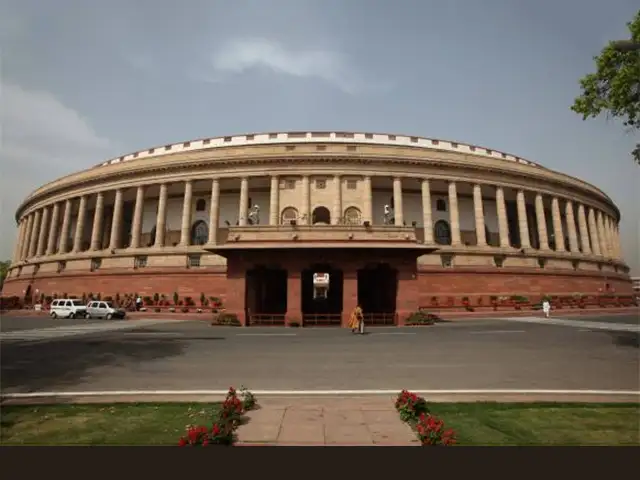
With the Cabinet approving the four central GST laws on March 20, and the Lok Sabha passing the Bill on Wednesday, this indeed is, in finance minister Arun Jaitley’s words, a ‘revolutionary’ Bill.
With this, while the government looks all set to implement GST by July 1, industry is getting nervous as to whether it will be ready in time. While the model law is available, few fundamental aspects, such as the states where tax has to be paid by service providers having multiple offices, treatment of current excise incentives, offset of tax already paid on transition stock, etc, are still unclear.
On March 24, GoI announced setting up of working groups for certain sectors including banking, telecom, exports, IT/ITeS, transport and logistics, and textiles. The working groups have been tasked to meet the industry associations, professionals and concerned administrative ministries to look at key issues and provide suggestions. This list of working groups may be expanded further to include few other sectors such as real estate and FMCG.
The working groups have to submit their report by April 10, which looks too short a time for a meaningful interaction and detailed analysis of complex sector-specific issues. It is also possible that a few of these issues might later require a legislative change, though the focus would be on procedural issues and rate of tax.
Don’t Tax Breathing Space
While the GST Act is in place, the rules are yet to be finalised. These include very critical aspects relating to valuation (including related party transactions and inter-state stock transfers), input credits including the credits pertaining to transition stock, and manner of inter-office invoices. Once the GST Council has a discussion on these rules in its next meeting on March 31, one can expect at least one month before they are finalised. So, final rules can only be expected by end-April.
Only after this can the enterprise resource planning (ERP) and software companies come out with their final GST patch/solution that needs to be deployed, customised (depending on the needs of a particular business) and tested thereafter. It is extremely difficult, if not impossible, to do this in two months.
Recently, the Confederation of All India Traders (CAIT) made a case for delaying the rollout of GST to September 1. They argued that about 70% small businesses are yet to adopt digital technology in their business and it is a big challenge for them to computerise themselves in this short period.
Finalisation of rate of tax is another complex area that will take time. It seems that the exercise of ‘bucketing’ various goods in the slabs decided by the GST council (5%, 12%, 18% and 28%) would commence in April. It will not be an easy task, especially for products on which the rates vary in different states, like edible items and agricultural commodities, IT products and mobile phones, and used cars.
Profit Nuts Get GST Bolts
The proposed anti-profiteering clause — similar to proposals in Malaysia and Australia on transition to GST — has further put a spin on this. If enacted, this will require businesses to pass on the benefits arising from reduced rates or higher credits to the customers. Pricing, compliant with this provision, cannot be done unless the rates are finalised. Therefore, while we eagerly await GST, there are still a few nuts and bolts to be tightened, which will take a bit longer. While the finishing line is of utmost importance, we should not falter in the last leg of the race. Introducing GST from September makes more sense.
The author is partner, indirect tax, PwC. Views expressed here are the author's own, and not Economictimes.com's.
The goods and services tax (GST) has received unprecedented support from all quarters. Government believes it will lead to revenue buoyancy, industry expects a simpler and more competitive tax regime, and the common man expects reduction in prices, once GST is implemented. The speed at which GoI has moved over the last six months or so is also very impressive. The GST Council met 12 times and resolved all the issues amicably, without the need for a vote. The rate structure was agreed upon, complex legislative and administrative issues were thrashed out and consensus was reached on the timelines for the rollout.
With the Cabinet approving the four central GST laws on March 20, and the Lok Sabha passing the Bill on Wednesday, this indeed is, in finance minister Arun Jaitley’s words, a ‘revolutionary’ Bill.
With this, while the government looks all set to implement GST by July 1, industry is getting nervous as to whether it will be ready in time. While the model law is available, few fundamental aspects, such as the states where tax has to be paid by service providers having multiple offices, treatment of current excise incentives, offset of tax already paid on transition stock, etc, are still unclear.
On March 24, GoI announced setting up of working groups for certain sectors including banking, telecom, exports, IT/ITeS, transport and logistics, and textiles. The working groups have been tasked to meet the industry associations, professionals and concerned administrative ministries to look at key issues and provide suggestions. This list of working groups may be expanded further to include few other sectors such as real estate and FMCG.
The working groups have to submit their report by April 10, which looks too short a time for a meaningful interaction and detailed analysis of complex sector-specific issues. It is also possible that a few of these issues might later require a legislative change, though the focus would be on procedural issues and rate of tax.
ADVERTISEMENT
Don’t Tax Breathing Space
While the GST Act is in place, the rules are yet to be finalised. These include very critical aspects relating to valuation (including related party transactions and inter-state stock transfers), input credits including the credits pertaining to transition stock, and manner of inter-office invoices. Once the GST Council has a discussion on these rules in its next meeting on March 31, one can expect at least one month before they are finalised. So, final rules can only be expected by end-April.
Only after this can the enterprise resource planning (ERP) and software companies come out with their final GST patch/solution that needs to be deployed, customised (depending on the needs of a particular business) and tested thereafter. It is extremely difficult, if not impossible, to do this in two months.
Recently, the Confederation of All India Traders (CAIT) made a case for delaying the rollout of GST to September 1. They argued that about 70% small businesses are yet to adopt digital technology in their business and it is a big challenge for them to computerise themselves in this short period.
ADVERTISEMENT
While GoI intends to start a nationwide outreach programme for businesses from April onwards, given the magnitude of task in hand, it may not be possible to do this in a couple of months. If small businesses, which could constitute a majority of registered businesses under GST, are not ready, GST may cause unwarranted disruption.Finalisation of rate of tax is another complex area that will take time. It seems that the exercise of ‘bucketing’ various goods in the slabs decided by the GST council (5%, 12%, 18% and 28%) would commence in April. It will not be an easy task, especially for products on which the rates vary in different states, like edible items and agricultural commodities, IT products and mobile phones, and used cars.
ADVERTISEMENT
Then there are products that are exempt from excise duty but attract state value-added tax (VAT), and vice versa. All this may need detailed deliberations in the GST Council. So, the rate of tax may not be finalised before end-May or even early June. It would give only one month or so for companies to decide the prices of products in a post-GST regime. This may also mean changing the maximum retail prices (MRPs) of the stock that is already in the distribution chain.Profit Nuts Get GST Bolts
The proposed anti-profiteering clause — similar to proposals in Malaysia and Australia on transition to GST — has further put a spin on this. If enacted, this will require businesses to pass on the benefits arising from reduced rates or higher credits to the customers. Pricing, compliant with this provision, cannot be done unless the rates are finalised. Therefore, while we eagerly await GST, there are still a few nuts and bolts to be tightened, which will take a bit longer. While the finishing line is of utmost importance, we should not falter in the last leg of the race. Introducing GST from September makes more sense.
The author is partner, indirect tax, PwC. Views expressed here are the author's own, and not Economictimes.com's.
(Disclaimer: The opinions expressed in this column are that of the writer. The facts and opinions expressed here do not reflect the views of www.economictimes.com.)
Download
The Economic Times Business News App for the Latest News in Business, Sensex, Stock Market Updates & More.
The Economic Times Business News App for the Latest News in Business, Sensex, Stock Market Updates & More.
Download
The Economic Times News App for Quarterly Results, Latest News in ITR, Business, Share Market, Live Sensex News & More.
The Economic Times News App for Quarterly Results, Latest News in ITR, Business, Share Market, Live Sensex News & More.
Related Articles
 Growth engine revving as GST, auto sales rise despite global roadblocks
The country now faces a race to get ready for GST in the next three months.
ET explains




ADVERTISEMENT


