Major changes likely in tax reforms for individuals and corporates in Budget 2017: Report
Care Ratings estimates the Government to levy tax between 12 per cent and 18 per cent on services, depending on its classification based on essential and non-essential services.
By PTI | Updated:

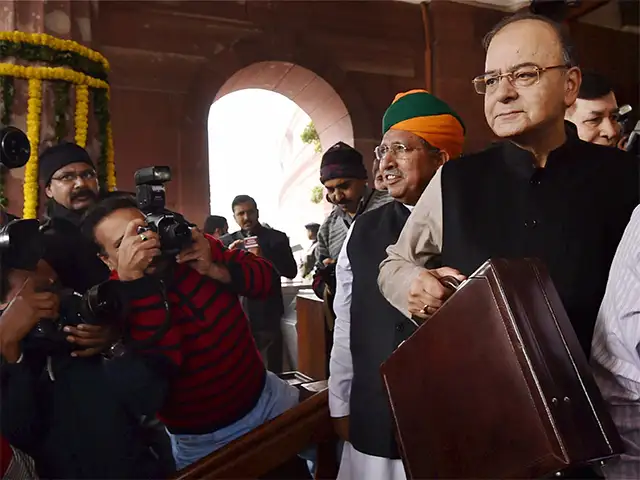
MUMBAI: The much-awaited Union Budget for 2017-18 is expected to bring in some major changes to the tax framework for individuals and corporates following the demonetisation measure, a rating agency said today.
According to Care Ratings, the Budget on February 1 would be addressing issues with respect to "additional revenue garnered on account of the income disclosure scheme as part of the demonetisation drive and expenditure allocations based on the assessment of the economy as there appears to be a slowdown in growth post demonetisation", among others.
"The tax framework would be interesting for individuals and corporates where there are expectations of some major changes following demonetisation," it said in a report.
"The indirect tax structure will be largely on lines with the agreed principles of GST (Goods and Services Tax), which looks likely to be implemented from July 1, 2017."
Care Ratings estimates the Government to levy tax between 12 per cent and 18 per cent on services, depending on its classification based on essential and non-essential services as a move towards the final GST rate.
On the direct tax front, the rating agency expects the Government to lower the corporate tax rate. Finance Minister Arun Jaitley in 2015 had laid a road map to reduce the tax rate from 30 per cent to 25 per cent over the next four years.
"This Budget is expected to take the first step in this direction and the rate may be lowered to 27.5 per cent with some checks on the exemptions which presently reside in the tax structure."
Moreover, the report said while the Government is expected to reduce the MAT (minimum alternate tax) rate to its initial level of 7.5 per cent, it would likely be brought down to 15 per cent for the next fiscal.
Observing that the current MAT rate at 18.5 per cent is quite high, the report said the high rate adversely impacts the cash flow of companies that have low taxable income or have incurred losses, among others.
The report noted that going with Prime Minister Narendra Modi's recent statement with respect to gains from financial markets to be used for nation building, there could be an "increase in the rate of tax for short term capital gains from 15 per cent to 17.5 per cent", for 2017-18.
"Long term capital gains on equity are also on the cards to be bought on par with debt with a three year lock-in period."
Besides, the tax exemption slab for individuals could be raised from Rs 2.5 lakh to Rs 3 lakh even though the main objective is to expand the tax base, it noted.
On the expenditure side, the revenue expenses in the next fiscal is expected to grow by 10-15 per cent from the level of Rs. 17.31 lakh crore in the current financial year on account of increased payments towards higher borrowings, interest rate subventions and implementation of the 7th Pay Commission and OROP Scheme (One Rank One Pension).
However, the report noted this increase in the expenditure heads could be offset to an extent by the lower subsidies on the fertilisers and food.
The budgeted expenditure towards Mahatma Gandhi National Rural Employment Guarantee Act ( MGNREGA) could be increased by 10 per cent for 2017-18, Care Ratings said.
According to Care Ratings, the Budget on February 1 would be addressing issues with respect to "additional revenue garnered on account of the income disclosure scheme as part of the demonetisation drive and expenditure allocations based on the assessment of the economy as there appears to be a slowdown in growth post demonetisation", among others.
"The tax framework would be interesting for individuals and corporates where there are expectations of some major changes following demonetisation," it said in a report.
"The indirect tax structure will be largely on lines with the agreed principles of GST (Goods and Services Tax), which looks likely to be implemented from July 1, 2017."
Care Ratings estimates the Government to levy tax between 12 per cent and 18 per cent on services, depending on its classification based on essential and non-essential services as a move towards the final GST rate.
On the direct tax front, the rating agency expects the Government to lower the corporate tax rate. Finance Minister Arun Jaitley in 2015 had laid a road map to reduce the tax rate from 30 per cent to 25 per cent over the next four years.
ADVERTISEMENT
"This Budget is expected to take the first step in this direction and the rate may be lowered to 27.5 per cent with some checks on the exemptions which presently reside in the tax structure."
Moreover, the report said while the Government is expected to reduce the MAT (minimum alternate tax) rate to its initial level of 7.5 per cent, it would likely be brought down to 15 per cent for the next fiscal.
Observing that the current MAT rate at 18.5 per cent is quite high, the report said the high rate adversely impacts the cash flow of companies that have low taxable income or have incurred losses, among others.
The report noted that going with Prime Minister Narendra Modi's recent statement with respect to gains from financial markets to be used for nation building, there could be an "increase in the rate of tax for short term capital gains from 15 per cent to 17.5 per cent", for 2017-18.
ADVERTISEMENT
"Long term capital gains on equity are also on the cards to be bought on par with debt with a three year lock-in period."
Besides, the tax exemption slab for individuals could be raised from Rs 2.5 lakh to Rs 3 lakh even though the main objective is to expand the tax base, it noted.
ADVERTISEMENT
On the expenditure side, the revenue expenses in the next fiscal is expected to grow by 10-15 per cent from the level of Rs. 17.31 lakh crore in the current financial year on account of increased payments towards higher borrowings, interest rate subventions and implementation of the 7th Pay Commission and OROP Scheme (One Rank One Pension).
However, the report noted this increase in the expenditure heads could be offset to an extent by the lower subsidies on the fertilisers and food.
The budgeted expenditure towards Mahatma Gandhi National Rural Employment Guarantee Act ( MGNREGA) could be increased by 10 per cent for 2017-18, Care Ratings said.
Download
The Economic Times Business News App for the Latest News in Business, Sensex, Stock Market Updates & More.
The Economic Times Business News App for the Latest News in Business, Sensex, Stock Market Updates & More.
Download
The Economic Times News App for Quarterly Results, Latest News in ITR, Business, Share Market, Live Sensex News & More.
The Economic Times News App for Quarterly Results, Latest News in ITR, Business, Share Market, Live Sensex News & More.
Related Articles
 Income Tax slabs change for FY 25-26 from April 1, 2026? Will there be a change as per New tax rules 20262026-03-26T08:21:31Z
- Income tax slabs after Budget 2026: Have tax slabs for FY 26-27 changed? Check latest rates2026-02-05T02:30:00Z
- 10 ways individual taxpayers will be impacted most from Budget 2026: Tax slabs, ITR filing deadlines, Foreign Asset Disclosure Scheme and more2026-02-02T04:57:25Z
Click next to know more about this Budget's many firsts.


ADVERTISEMENT


