Macro-economic indicators favour rate cut by RBI: Bankers
RBI is scheduled to undertake its sixth bi-monthly monetary policy review, 2014-15 on Tuesday.
By PTI | Updated:

NEW DELHI: With inflation under control, bankers believe that macroeconomic indicators are conducive for a further rate cut of 0.25 per cent by RBI tomorrow, even as some expect the central bank to maintain a status quo.
The improving fiscal situation, in the wake of a record Rs 22,577 crore garnered from CIL stake sale, and weakness in manufacturing sector are among pointers towards a possible cut in rates, experts said.
However, some bankers said the RBI Governor Raghuram Rajan may go for a status quo and would like to wait for cues from the Budget presentation on February 28 before undertaking any rate cut.
RBI, which last month announced a surprise rate cut of 25 basis points after maintaining a hawkish monetary stance for 20 months, is scheduled to undertake its sixth bi-monthly monetary policy review, 2014-15 on Tuesday.
According to bankers and economists, there is room for further rate cut by RBI as retail and wholesale inflation rates have remained benign.
The concerns on fiscal deficit front have also eased, especially after the government last week garnered a record Rs 22,577 crore through disinvestment of 10 per cent stake in Coal India Ltd.
While lowering the policy repo rate to 7.75 per cent from 8 per cent, RBI had also said on January 15 that further rate cuts would depend on inflationary expectations and improvement in the fiscal situation.
"My expectation is that the RBI may go for status quo as no new data have come post January 15. RBI Governor would like to wait till Budget before taking any action on rate front," Bank of Maharashtra Chairman and Managing Director Sushil Muhnot told PTI.
While the retail inflation slipped to 5 per cent in December, the Wholesale Price Index (WPI) inflation remained near zero level (0.1 per cent).
The government's fiscal situation is expected to improve further with more disinvestments.
So far, it has realised over Rs 24,000 crore with just two disinvestment share sales, including SAIL's Rs 1,719 crore late last year.
It targets to raise a total of Rs 43,425 crore from disinvestment in the current fiscal, ending next month.
Citing favourable macroeconomic conditions, the government and the industry have also been asking for further rate cuts to lower the cost of capital, while concerns were expressed last month on Rajan maintaining a highly hawkish monetary stance.
The improving fiscal situation, in the wake of a record Rs 22,577 crore garnered from CIL stake sale, and weakness in manufacturing sector are among pointers towards a possible cut in rates, experts said.
However, some bankers said the RBI Governor Raghuram Rajan may go for a status quo and would like to wait for cues from the Budget presentation on February 28 before undertaking any rate cut.
RBI, which last month announced a surprise rate cut of 25 basis points after maintaining a hawkish monetary stance for 20 months, is scheduled to undertake its sixth bi-monthly monetary policy review, 2014-15 on Tuesday.
According to bankers and economists, there is room for further rate cut by RBI as retail and wholesale inflation rates have remained benign.
The concerns on fiscal deficit front have also eased, especially after the government last week garnered a record Rs 22,577 crore through disinvestment of 10 per cent stake in Coal India Ltd.
ADVERTISEMENT
While lowering the policy repo rate to 7.75 per cent from 8 per cent, RBI had also said on January 15 that further rate cuts would depend on inflationary expectations and improvement in the fiscal situation.
"My expectation is that the RBI may go for status quo as no new data have come post January 15. RBI Governor would like to wait till Budget before taking any action on rate front," Bank of Maharashtra Chairman and Managing Director Sushil Muhnot told PTI.
While the retail inflation slipped to 5 per cent in December, the Wholesale Price Index (WPI) inflation remained near zero level (0.1 per cent).
The government's fiscal situation is expected to improve further with more disinvestments.
ADVERTISEMENT
So far, it has realised over Rs 24,000 crore with just two disinvestment share sales, including SAIL's Rs 1,719 crore late last year.
It targets to raise a total of Rs 43,425 crore from disinvestment in the current fiscal, ending next month.
ADVERTISEMENT
Citing favourable macroeconomic conditions, the government and the industry have also been asking for further rate cuts to lower the cost of capital, while concerns were expressed last month on Rajan maintaining a highly hawkish monetary stance.
Oriental Bank of Commerce's chief Animesh Chauhan said most macroeconomic indicators favour a rate cut and he hopes that the RBI Governor would consider a rate cut on February 3 by 25 basis points.
Last month, Rajan had said that the further easing of rates would depend on "data that confirm continuing disinflationary pressures".
"Also critical would be sustained high quality fiscal consolidation as well as steps to overcome supply constraints and assure availability of key inputs such as power, land, minerals and infrastructure," Rajan had said.
State-run IFCI's Managing Director Malay Mukherjee said: "There is a widespread expectation of rate cut but RBI has all the data and will take a decision in its wisdom."
PSU banking behemoth SBI also said in a research report that RBI may go for a "token cut" in interest rates in its upcoming policy review.
ADVERTISEMENT
Bank of Baroda Executive Director Rajan Dhawan said that if there is credible fiscal consolidation, the rates will start coming down.
"With inflation coming down, I believe all rates such as deposit and lending rates will come down to more credible levels soon. I cannot second guess RBI, as it is their prerogative, but I feel when you have stable, low inflation, the policy rates have to come down," Dhawan said.
"I think the RBI is waiting and watching to see the impact of all the measures that they and the government have taken...it will definitely result into lower rates in the future," he added.
Download
The Economic Times Business News App for the Latest News in Business, Sensex, Stock Market Updates & More.
The Economic Times Business News App for the Latest News in Business, Sensex, Stock Market Updates & More.
Download
The Economic Times News App for Quarterly Results, Latest News in ITR, Business, Share Market, Live Sensex News & More.
The Economic Times News App for Quarterly Results, Latest News in ITR, Business, Share Market, Live Sensex News & More.
Text: ET Bureau
ET looks at the recent speeches of finance minister Arun Jaitley for clues to the budget for FY16. The budget is widely expected to lay down the agenda for the remaining four years of the Narendra Modi government.
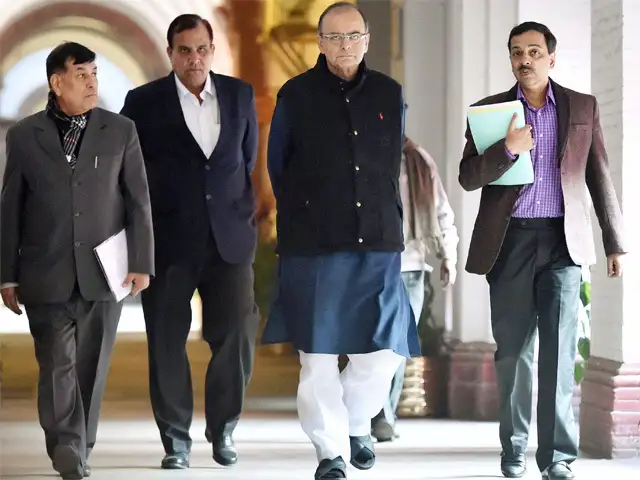
In Pic: Jaitley arrives at the Pre-Budget Consultation with the representatives of Trade Union, in New Delhi.
ET looks at the recent speeches of finance minister Arun Jaitley for clues to the budget for FY16. The budget is widely expected to lay down the agenda for the remaining four years of the Narendra Modi government.
In Pic: Jaitley arrives at the Pre-Budget Consultation with the representatives of Trade Union, in New Delhi.