The advanced date of this year’s budget robs the finance minister of valuable insights while the inclusion of Railway budget adds to the confusion
Perhaps no Indian finance minister in history would have ever presented a budget with so many global and local uncertainties, coupled with such sparse domestic economic data, as Arun Jaitley. He will be presenting this Union budget on February 1, barely three months after demonetisation—the biggest Black Swan event in recent national memory— whose impact is still unknown.
The country’s chief statistician has already revealed that the economy is slowing down; the prognosis based on numbers only until October and without factoring in effects of demonetisation. Union budgets usually have visibility of economic performance, including corporate balance sheets, at least until the end of December, and a tentative idea of how the last quarter of the fiscal year is shaping up.
The advanced date of this year’s budget robs the finance minister of those insights. To add to the confusion, the Railway budget, which was presented separately for the past 92 years, is being folded into the fiscal plan.
“This (2017-18) budget would be presented in most uncertain times and is unpredictable,” NR Bhanumurthy, professor at National Institute of Public Finance and Policy (NIPFP), told ET.
In 1991, a balance of payment crisis had made the finance minister’s job a difficult one. But the uncertainty at the time was about the future and the government then had a clear idea of its balance sheet. In 2008 and 2009 global headwinds buffeting the Indian economy had created uncertainty. Yet, Pranab Mukherjee, the then finance minister had enough headroom to provide a stimulus even though it derailed fiscal targets. And there was no dearth of domestic data.
But Jaitley will have none of these luxuries.
ADVERTISEMENT
Oil No Comfort Zone Since the Narendra Modi government took office, it has had the comforting cushion of depressed international commodity prices, especially oil. But these are now off their lows, moving up steadily. Oil prices dropped to a 12-year low of $28 for a barrel last year. They have since firmed up and Brent Crude was trading below $55 a barrel on January 23 on the Intercontinental Exchange.
Correspondingly, the Indian crude oil basket has risen from $39.88 in April 2016 to $54.24 in the first week of January, according to the oil ministry’s petroleum planning and analysis cell.
“We expect international oil prices to rise to near $60 in 2017 and about $65 in 2018,” an energy analyst with a foreign broking firm told ET on condition of anonymity.
ADVERTISEMENT
India imports more than 70% of its oil, and high international prices are the single biggest factor after monsoon rains that impact the economy. The volatile nature of both rains and oil prices are enough to give sleepless nights to finance ministers and can spoil the most meticulously planned budgets.
Every time the Organization of the Petroleum Exporting Countries (Opec) agrees to cut production to push up prices, the finance minister back in India loses a bit of headroom. When, in the second week of January, Jaitley jubilantly announced buoyant tax figures for the first three quarters, the biggest spike he reported was 43% in excise duty collections to Rs 2.79 lakh crore. About Rs 1.37 lakh crore of that would have come just from duties on petrol and diesel retail sales; customers pay Rs 21.48 per litre of petrol and Rs 17.33 for diesel in excise duties.
ADVERTISEMENT
PPAC data shows the sector as a whole contributed 80% of Rs 1.52 lakh crore excise duties collected in the fiscal’s first half. Retail prices of fuels are already near historic highs hit during the UPA regime.
Jaitley said that as on December 31, direct taxes were up 12% and indirect taxes 25% over the previous year. But that could be the end of good news, as the Central Statistics Office (CSO) had reported that GDP growth would slow down to 7.1% in fiscal 2017 from 7.6% the previous year. The CSO estimates used data up to end of October last year and did not take into account the demonetisation of Rs 500 and Rs 1,000 notes, which made up 86% of currency value in circulation.
Demonetisation Pangs No reliable data is available to estimate the real cost of the PM’s decision, whose objective was variously described as rooting out fake currency, fighting black money or pushing digital transactions. In what can be considered early impact indications, vehicle sales dropped 19% in December, the most for that month in 16 years.
Two-wheeler sales, which are an important pointer to rural demand, shrunk 22% — the sharpest contraction since Society of Indian Automobile Manufacturers started recording data two decades ago. “The last quarter of fiscal 2017 will be weak,’’ said Ajit Dange, head of portfolio management services, domestic business, at SBI Mutual Fund.
Dange expects an economic revival from the middle of 2017. Private data compiler, Centre for Monitoring Indian Economy (CMIE), has estimated transaction cost of demonetisation at Rs 1.28 lakh crore for the 50 day up to December 30. It estimated that 48% of the workforce had lost incomes during the period, affecting consumption and savings.
“This impact of lost wages, broken supply chains and lost businesses will be lasting,” said CMIE in a note of January 12. Bhanumurthy of NIPFP listed out unclear growth targets and ambiguity with regard to fiscal and monetary relationship among the many current macro-economic uncertainties. Instead of a specific target, the government should aim for a revenue deficit range.
Monetary policy having a flexible inflation target and fiscal policy having fixed deficit targets — as it is now — creates inconsistency, he said.
Tax Shift The biggest comfort for the finance minister has been buoyancy in tax collections. Incredibly, 2016-17 will be a year when economic growth would fall way short of estimates at the beginning of the year but federal government revenues will overshoot targets thanks to a relentless pursuit of evaders and amnesty schemes.
A voluntary income disclosure scheme yielded about Rs 30,000 crore in taxes and searches had unearthed another Rs 56,000 crore of unaccounted income, the finance minister had revealed in October. The chase is expected to continue the next year as well. The government is hoping to bring in a uniform goods and service tax (GST) from July, introducing more efficiency and compliance in tax collection.
SBI Mutul Fund’s Dange anticipates job losses as the shift to GST will shut down a number of small industries in the informal sector that employs over 90% of India’s workforce.
“Many of them (small industries) will be unable to evade taxes and will become uncompetitive. Tax evasion was the only source of profitability for many of them,” he said.
More revenues will give the Narendra Modi government leeway to spend more. Most economists ET spoke to agree that public spending on infrastructure is absolutely necessary to keep industry buoyant over the next several quarters. Disruption caused by GST would be close on the heels of the shake-up because of demonetisation.
Right now, it’s anybody’s guess how long a tail demonetisation has.
What India Inc expects from Budget 2017
1/7
On February 1, Finance minister Arun Jaitley is expected to present a tax-payer friendly 2017 Union Budget, given the fact that it comes within months of demonetisation.
With just few days to go for the annual financial plan, the Indian corporate sector has already started gearing up for it.
Here are some of the major expectations of India's business tycoons from budget 2017:
On February 1, Finance minister Arun Jaitley is expected to present a tax-payer friendly 2017 Union Budget, given the fact that it comes within months of demonetisation.
With just few days to go for..
Read More
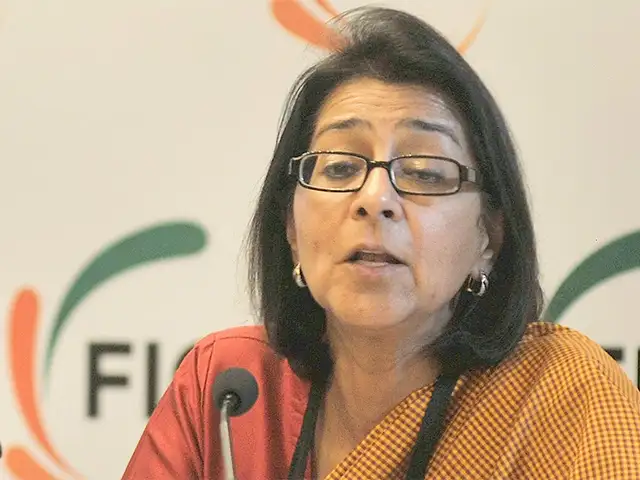
Naina Lal Kidwai, Former President at Federation of Indian Chambers of Commerce and Industry(FICCI), said growth should be a key element of Budget 2017 going forward.
She said: "I don't know how the robustness will stay in terms of overall numbers even while compliance goes up. So, near term clear impact is an issue. However, what we can hope for is that it clearly requires that growth is kick started again."
"Anything that goes into public sector spending which this government did extremely well in its first year, pushed a lot of GDP growth into the system. The second would be anything again to do with jobs because people who have lost jobs in the formal sector are going into NREGA and these pockets must see some benefits. And the third would be anything which helps consumption because that will help production come back," she added.
Naina Lal Kidwai, Former President at Federation of Indian Chambers of Commerce and Industry(FICCI), said growth should be a key element of Budget 2017 going forward.
She said: "I don't know how the..
Read More
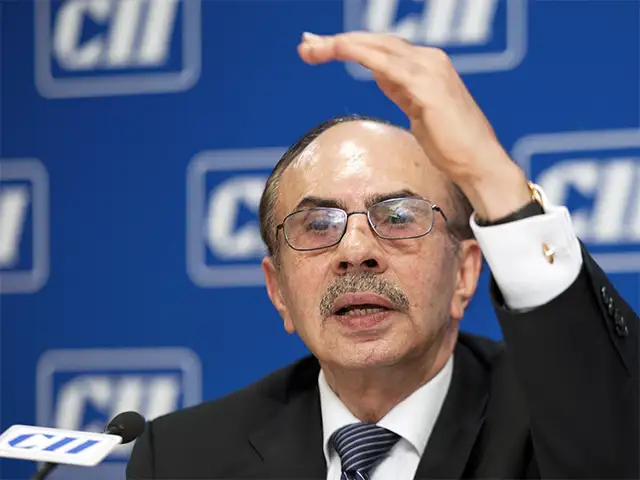
Adi Godrej, CMD at Godrej Consumer Products Limited, said GST will lead to tremendous boost in FMCG demand. It will, of course, lead to general boost to GDP growth in the country, as well, he said.
He said: "I expect individual tax rates will also be reduced and I think exemption levels will be increased in this budget because the government's fiscal position will be excellent for the next year. Of course, they don't have the exact numbers yet but there will be a tremendous collection from the huge deposits that have come in post demonetisation in to the banks. Many of them would lead to higher rates of taxes and the government collections in my view should be good."
Adi Godrej, CMD at Godrej Consumer Products Limited, said GST will lead to tremendous boost in FMCG demand. It will, of course, lead to general boost to GDP growth in the country, as well, he said.
..
Read More
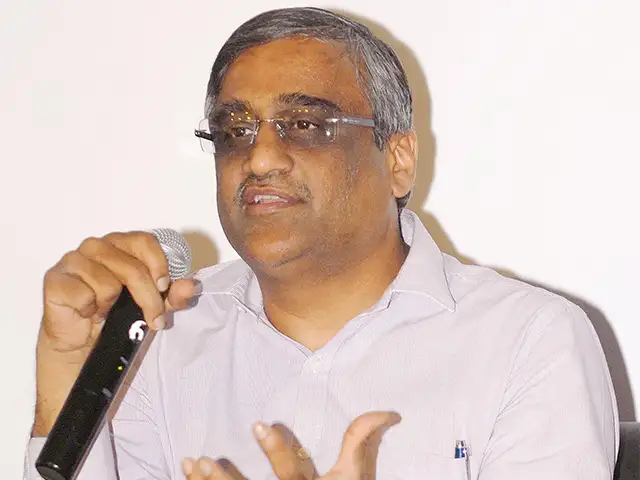
Kishore Biyani, Group CEO at Future Group, said that he's looking forward more to the GST than the budget, and in the budget, the government incentivising consumption is something which he is looking forward to.
"We are hoping for the GST more than the budget and in the budget, the government incentivising consumption is something which we are looking forward to. The savings rate interest might come down and consumption might be encouraged and that is what we are looking forward to," Biyani said.
Kishore Biyani, Group CEO at Future Group, said that he's looking forward more to the GST than the budget, and in the budget, the government incentivising consumption is something which he is looking..
Read More
Sunil Subramaniam, CEO at Sundaram Mutual, said the rural economy, infrastructure and banks riding piggyback will benefit from the budget thrust of the government.
"... the biggest challenge for the government is employment generation over two - three years. So, mega projects supporting employment generation in a big way will be a focus. The rural sector (will be a focus) partly because the two big states going to the elections -- Punjab and UP...And the third thing is the government's strong urge to make the demonetisation look successful."
"If you look at it from that perspective, they will definitely want to do a wide-ranging set of stuff which partly Modi announced on December 31st but they will carry through that momentum and there will be a lot of positive impact on several sectors," he added.
Sunil Subramaniam, CEO at Sundaram Mutual, said the rural economy, infrastructure and banks riding piggyback will benefit from the budget thrust of the government.
"... the biggest challenge for the..
Read More
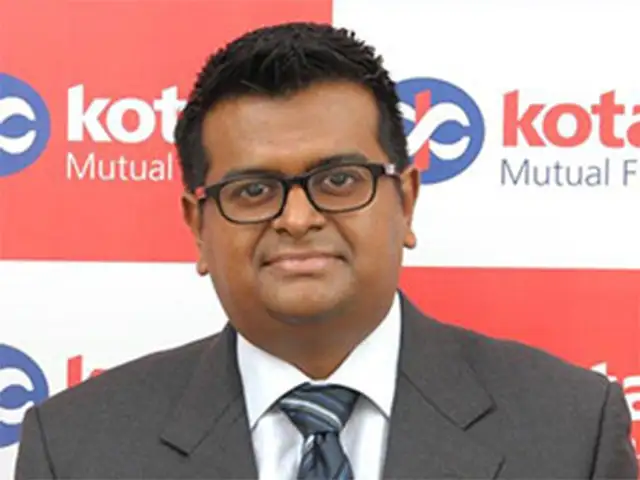
Harish Krishnan, Senior vice president and Fund Manager Equity at Kotak MF, said the domestic cycle is in a far better shape than the global cycle and therefore he would orient his portfolios more towards companies and sectors which are part of the domestic cycle.
"The government is possibly the only one with significant purse strings to loosen up at this point of time and our sense is that more of the allocation towards both infra and rural sector could well be on the way, given the chances that the government might want to try and appease these sections. That would be the other space that we are looking out for," Krishnan said.
Harish Krishnan, Senior vice president and Fund Manager Equity at Kotak MF, said the domestic cycle is in a far better shape than the global cycle and therefore he would orient his portfolios more to..
Read More
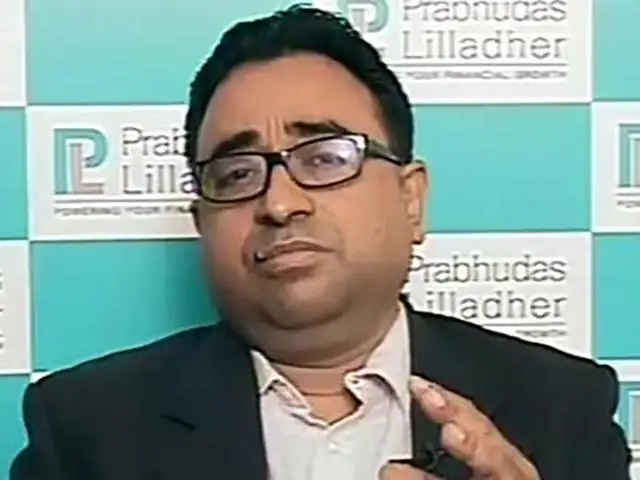
R Sreesankar, head institutional equities at Prabhudas Lilladher, believes this will be a government spending budget, especially because the country's November Index of Industrial Production and manufacturing took a hit.
"And if you don't see the capacity utilisation of the industries moving up, I don't expect a large amount of private investments. So, it will be the government spending which will drive the economic growth going forward and to facilitate that kind of growth, what will be the sops that will be there in the budget that is going to be key," Sreesankar said.
R Sreesankar, head institutional equities at Prabhudas Lilladher, believes this will be a government spending budget, especially because the country's November Index of Industrial Production and manu..