Industry welcomes new GST rates; Aam aadmi's grocery bill may not rise
Jaitley said he hoped the total indirect tax incidence on people would come down with seamless input tax credit that would reduce effective tax on goods.
By ET Bureau | Updated:

NEW DELHI: India finalised a four-tier Goods and Services Tax ( GST) structure – ranging from 5% to 28% – taking a significant step towards implementing the biggest reform of indirect taxes, which the government hopes will shield the common man from price shocks.
The fixing of rates by the GST Council marks a crucial milestone towards the rollout of the single tax that will replace various state and central levies and create a seamless national market for goods and services.
The four GST slabs are 5%, 12% 18% and 28%. The fifth rate for gold and precious metals, which was earlier proposed at 4%, will be decided later but is likely to be lower.
“We are moving as per schedule-…We have been able to finalise the GST tax structure,” Finance Minister Arun Jaitley told reporters at the end of the first day of the two-day GST Council meeting in New Delhi. Industry welcomed the decision on the GST rates, which it said was a mixed bag.
Also read: How pocket-friendly will GST be for you
“Over time, the government should commit to converge to one or two rates,” the Confederation of Indian Industry said in a statement. “It is also important that the bulk of goods and services should fall within the standard rate of 18% and only as exception to go to the higher rate of 28% and a lower rate for essential goods such as unprocessed food items.”
The government plans to roll out the new tax regime from April 1and will introduce a Bill in the upcoming winter session of Parliament to complete the legislative process.

The Centre’s original proposal of 6% as the threshold rate and 26% as the highest slab was tweaked after states including Kerala said they wanted the lowest slab at 5%, the current threshold rate for value-added tax in many states.
GST would be broadly tax-neutral, Jaitley said. The minister said he hoped the total indirect tax incidence on the people would come down with the seamless input tax credit that would reduce effective tax on goods.
Also read: Fast forward on tax reforms! How GST will impact your stock portfolio
AAM AADMI BURDEN
More than 50% of the items in the Consumer Price Index basket would be exempted under GST and the remainder placed in the lowest bracket. Exempted items won’t have the benefit of input tax credit.
Sports utility vehicles, aerated drinks, pan masala and tobacco products are unlikely to see any change in their overall tax burden with a new cess proposed on them.
Tobacco currently attracts a total tax of about 65% and for aerated drinks, the current rate is about 40%. These goods will be taxed at the highest rate of 28% and topped up with a cess to raise the effective tax.
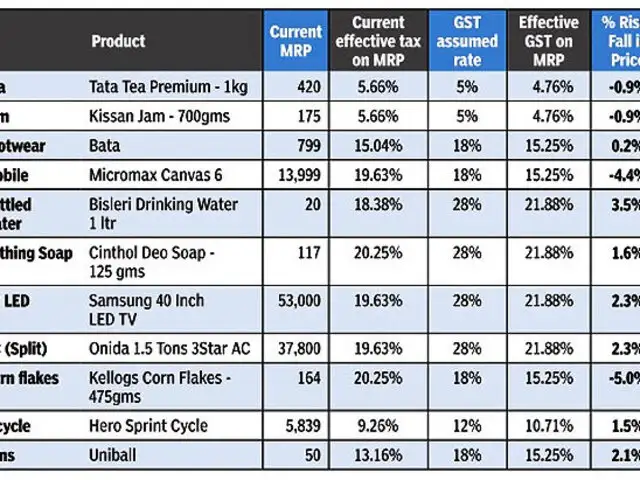
Soaps, oil, shaving kits, small cars and other goods consumed by the middle class, which faces higher tax incidence of 30-31% including state and central taxes, could become cheaper as they are likely to be placed in the lower tax slab of 18% and not the equivalent tax slab of 28%.
“...finally, the consensus is that these items with cascading effect of 30-31% will now be taxed at 28%, but with a rider. And the rider is that in this category there are several items which are now being used increasingly by a very large number of people, particularly the lower middle class. So for them, 28% or 30% or 31% will be higher and so we are transferring them to 18%,” said Jaitley, who chairs the council that has state ministers as members.
IMPACT ON INFLATION
Chief Economic Adviser Arvind Subramanian said the tweaking of the rate structure should help ease inflation. “On average, this should probably serve to lower inflation. If at all, the impact on inflation will be very small. Today’s change should probably bring it down,” he said.
The cess, which would be equal to the difference between the current tax rate and highest GST slab of 28%, would be used to create a Rs 50,000-crore fund to compensate states that lose revenue under the new tax regime.
A separate compensation pool would be created with a sunset clause of five years after which the levy would be reviewed by the Council, Jaitley said. He said Kerala had suggested that the highest tax slab of 28% be raised to 40%, but the proposal for the cess found wider acceptance in the Council as a higher tax would have increased the overall burden on taxpayers to Rs 1.72 lakh crore.
“Decisions were unanimous… Even finance ministers of Congress-ruled states supported the proposal,” Jaitley said.
SERVICES BRACKET
A decision on the services bracket would be taken later, although it would most likely attract the standard rate of 18%, Revenue Secretary Hasmukh Adhia said.
He added that some of the services that enjoy higher abatement would be put in the lower tax slabs of 12% or 5%, depending on their current overall tax incidence.
“A committee of officials would decide which items would go in which tax bracket, but it would be decided keeping in mind the overall tax incidence currently,” Adhia said. Exports and special economic zones would be zero-rated, he said.
Finance Secretary Ashok Lavasa said multiple rates had been decided keeping consumer interest in mind.
Such a structure was seen as inevitable to protect consumers even though they would complicate GST and open it to classification disputes. The Confederation of All India Traders, a body of retailers, pitched for administrative simplification.
“The Confederation of All India Traders has categorically demanded that irrespective of rates, there should be one single return and single authority to control the taxation system and only then the tax net will be widened and revenue will be increased,” it said in a statement.
The fixing of rates by the GST Council marks a crucial milestone towards the rollout of the single tax that will replace various state and central levies and create a seamless national market for goods and services.
The four GST slabs are 5%, 12% 18% and 28%. The fifth rate for gold and precious metals, which was earlier proposed at 4%, will be decided later but is likely to be lower.
“We are moving as per schedule-…We have been able to finalise the GST tax structure,” Finance Minister Arun Jaitley told reporters at the end of the first day of the two-day GST Council meeting in New Delhi. Industry welcomed the decision on the GST rates, which it said was a mixed bag.
Also read: How pocket-friendly will GST be for you
“Over time, the government should commit to converge to one or two rates,” the Confederation of Indian Industry said in a statement. “It is also important that the bulk of goods and services should fall within the standard rate of 18% and only as exception to go to the higher rate of 28% and a lower rate for essential goods such as unprocessed food items.”
ADVERTISEMENT
The government plans to roll out the new tax regime from April 1and will introduce a Bill in the upcoming winter session of Parliament to complete the legislative process.
The Centre’s original proposal of 6% as the threshold rate and 26% as the highest slab was tweaked after states including Kerala said they wanted the lowest slab at 5%, the current threshold rate for value-added tax in many states.
GST would be broadly tax-neutral, Jaitley said. The minister said he hoped the total indirect tax incidence on the people would come down with the seamless input tax credit that would reduce effective tax on goods.
ADVERTISEMENT
Also read: Fast forward on tax reforms! How GST will impact your stock portfolio
AAM AADMI BURDEN
ADVERTISEMENT
The aam aadmi’s grocery bill may not rise as the GST Council, the apex decision-making body for the tax, decided to exempt food items or keep most of them at the lowest rate of 5%.More than 50% of the items in the Consumer Price Index basket would be exempted under GST and the remainder placed in the lowest bracket. Exempted items won’t have the benefit of input tax credit.
Sports utility vehicles, aerated drinks, pan masala and tobacco products are unlikely to see any change in their overall tax burden with a new cess proposed on them.
Tobacco currently attracts a total tax of about 65% and for aerated drinks, the current rate is about 40%. These goods will be taxed at the highest rate of 28% and topped up with a cess to raise the effective tax.
Soaps, oil, shaving kits, small cars and other goods consumed by the middle class, which faces higher tax incidence of 30-31% including state and central taxes, could become cheaper as they are likely to be placed in the lower tax slab of 18% and not the equivalent tax slab of 28%.
“...finally, the consensus is that these items with cascading effect of 30-31% will now be taxed at 28%, but with a rider. And the rider is that in this category there are several items which are now being used increasingly by a very large number of people, particularly the lower middle class. So for them, 28% or 30% or 31% will be higher and so we are transferring them to 18%,” said Jaitley, who chairs the council that has state ministers as members.
IMPACT ON INFLATION
Chief Economic Adviser Arvind Subramanian said the tweaking of the rate structure should help ease inflation. “On average, this should probably serve to lower inflation. If at all, the impact on inflation will be very small. Today’s change should probably bring it down,” he said.
The cess, which would be equal to the difference between the current tax rate and highest GST slab of 28%, would be used to create a Rs 50,000-crore fund to compensate states that lose revenue under the new tax regime.
A separate compensation pool would be created with a sunset clause of five years after which the levy would be reviewed by the Council, Jaitley said. He said Kerala had suggested that the highest tax slab of 28% be raised to 40%, but the proposal for the cess found wider acceptance in the Council as a higher tax would have increased the overall burden on taxpayers to Rs 1.72 lakh crore.
“Decisions were unanimous… Even finance ministers of Congress-ruled states supported the proposal,” Jaitley said.
SERVICES BRACKET
A decision on the services bracket would be taken later, although it would most likely attract the standard rate of 18%, Revenue Secretary Hasmukh Adhia said.
He added that some of the services that enjoy higher abatement would be put in the lower tax slabs of 12% or 5%, depending on their current overall tax incidence.
“A committee of officials would decide which items would go in which tax bracket, but it would be decided keeping in mind the overall tax incidence currently,” Adhia said. Exports and special economic zones would be zero-rated, he said.
Finance Secretary Ashok Lavasa said multiple rates had been decided keeping consumer interest in mind.
Such a structure was seen as inevitable to protect consumers even though they would complicate GST and open it to classification disputes. The Confederation of All India Traders, a body of retailers, pitched for administrative simplification.
“The Confederation of All India Traders has categorically demanded that irrespective of rates, there should be one single return and single authority to control the taxation system and only then the tax net will be widened and revenue will be increased,” it said in a statement.
Download
The Economic Times Business News App for the Latest News in Business, Sensex, Stock Market Updates & More.
The Economic Times Business News App for the Latest News in Business, Sensex, Stock Market Updates & More.
Download
The Economic Times News App for Quarterly Results, Latest News in ITR, Business, Share Market, Live Sensex News & More.
The Economic Times News App for Quarterly Results, Latest News in ITR, Business, Share Market, Live Sensex News & More.
Related Articles
 Govt extends GST Appellate Tribunal appeal filing deadline to July 31 after portal rush2026-06-30T06:47:58Z
- Carmakers pare discounts as GST cut revives small-car demand2026-06-29T19:06:15Z
- Gaming founders appeal to GST Council for personal liability relief after Supreme Court ruling2026-06-29T18:35:52Z
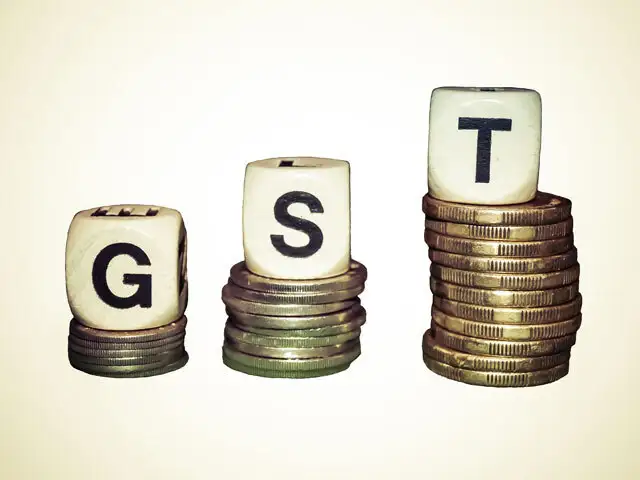
A 4-tier GST tax structure of 5, 12, 18 and 28 per cent, with lower rates for essential items and the highest for luxury and de-merits goods that would also attract an additional cess, has been agreed upon by the GST Council.
Essential items including food, which presently constitute 50 per cent of the consumer inflation basket, will be taxed at zero rate, in order to keep a check on inflation.
The schedule for goods and services under each slab rate has not been announced yet. According to Finance Minister Arun Jaitley, highest tax slab rate will be applicable to items currently taxed at 30% to 31% (excise duty plus VAT) will be taxed at a demerit rate of 28%.

ADVERTISEMENT


