How India's upcoming Budget can revolutionise the jobs market amid population spike
A budget soaked with the spirit of productivity and human capital building can sow the seeds for a massive boom in human capital productivity and go a long way in achieving this dream. The central budget presents a policy window to look at the o...
By ET CONTRIBUTORS | Updated:

Getty Images
By the time the Budget of India in calendar year 2024 is announced in about 14 months from now, it is estimated that the population of the country would have crossed that of China. India’s estimated population of 1.43 billion will make it the most populous country in the world by the end of 2023.
The milestone for India is both an ecstasy and pain. It is ecstasy because we would have improved our GDP from $32 billion in 1947 to about an estimated $4 trillion by then. However, it is also a pain because building economic prosperity and per capita GDP for a large mass is a complex problem.
However, we would like to make a case that a budget soaked with the spirit of productivity and human capital building can sow the seeds for a massive boom in human capital productivity and go a long way in achieving this dream.
So, here are the recommendations that Finance Minister Nirmala Sitharaman can look to incorporate in Budget 2023:
Bring forward the NEP implementation from 15 years to 3 years because it proposes a new education architecture that signifies learning by doing, learning while earning, learning with modularity, learning with flexibility and learning with high employer signalling value.
See Also: Key announcements FM Nirmala Sitharaman made in India's last Budget
Providing stimulus to skill development to help improve employability of the youth shall help bridge existing skill gaps. The world of organisations is changing fast owing to the developments in automation, digitalisation and advent of technologies like AI and ML. The new world of work needs employees who are multi-skilled and have cognitive skills apart from hard technical skills. A higher outlay by the government towards this will help the country make its youth better employable and globally competitive. A collaborative efforts between public and private sector entities will be useful in this re-skilling and upskilling initiative.
Providing social security to gig workers shall help promote the sharing economy; most employers believe that an enterprise focused, tech driven and platform based gig systems shall help them cut down on fixed costs and use the best experts for their projects.
The government, through its budget announcement, should bring formal regulations to help this booming sector grow, democratise and formalise. This will be critical for the growth of the economy and shall help provide a boost to this alternate form of employment.
Implementation of the four new labour codes in a methodical way; urgent framing of the labour rules by every state in alignment with the central rules shall help remove any ambiguity and a smooth roll out in the new fiscal. These labour codes should help establishments improving their human capital by replacing the 29 old labour laws. However, the government should create a team to look into combining these four codes into a single labour code by the following Budget.
The Indian economy has performed well in the face of severe global recessionary trends. However, this has started impacting the margins by slowing down exports driven by muted global demand. Improving public spending on physical and digital infrastructure by a minimum of 25%, attracting private investments through the right incentive model, providing additional sops for sectors and industries that create additional formal employment, continuing on the concessional tax regime for the manufacturing sector and helping promote the green economy shall help boost job creation for the country and can catapult the country into the next orbit of growth.
At this juncture of growth, India needs to think about where should it spend its capital, how is the capital financed rather than bothering about the quantum of money spent. No amount of subsidy can effect what a well-designed education program can for the nation. Our current model of domestic consumption and services has important implications that have not fully played out yet.
The central budget presents a policy window to look at the opportunity from the perspective of improving human capital; the rest will follow!
(The author is the founder and CEO of TeamLease EdTech)
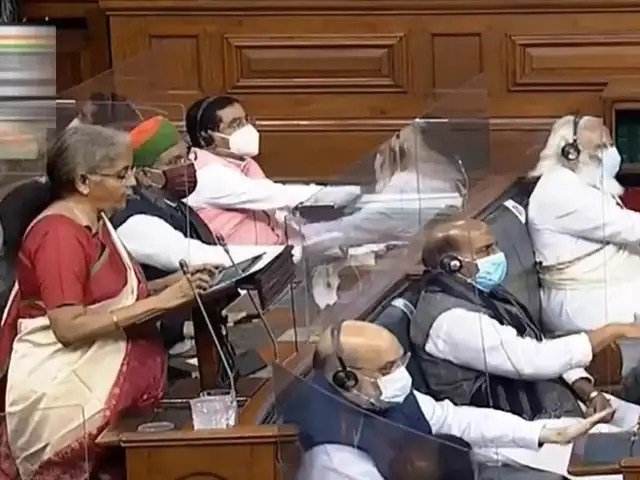
Article 112 of the Constitution requires the government to present to Parliament a statement of estimated receipts and expenditure in respect of every financial year - April 1 to March 31. This statement is the annual financial statement. This statement is the main budget document.
The milestone for India is both an ecstasy and pain. It is ecstasy because we would have improved our GDP from $32 billion in 1947 to about an estimated $4 trillion by then. However, it is also a pain because building economic prosperity and per capita GDP for a large mass is a complex problem.
However, we would like to make a case that a budget soaked with the spirit of productivity and human capital building can sow the seeds for a massive boom in human capital productivity and go a long way in achieving this dream.
The central budget presents a policy window to look at the opportunity from the perspective of improving human capital; the rest will follow-Shantanu Rooj, founder and CEO at TeamLease EdTech
So, here are the recommendations that Finance Minister Nirmala Sitharaman can look to incorporate in Budget 2023:
Bring forward the NEP implementation from 15 years to 3 years because it proposes a new education architecture that signifies learning by doing, learning while earning, learning with modularity, learning with flexibility and learning with high employer signalling value.
ADVERTISEMENT
Doing this would need massification of online learning by all Indian universities in partnership with employers to create innovative learning and education financing models. This shall also create the right habitat and the ecosystem that shall help us take our current 0.5M apprentices to 10 million apprentices in the next five years through the online degree apprenticeships offered by Indian universities in partnership with employers.See Also: Key announcements FM Nirmala Sitharaman made in India's last Budget
Providing stimulus to skill development to help improve employability of the youth shall help bridge existing skill gaps. The world of organisations is changing fast owing to the developments in automation, digitalisation and advent of technologies like AI and ML. The new world of work needs employees who are multi-skilled and have cognitive skills apart from hard technical skills. A higher outlay by the government towards this will help the country make its youth better employable and globally competitive. A collaborative efforts between public and private sector entities will be useful in this re-skilling and upskilling initiative.
Providing social security to gig workers shall help promote the sharing economy; most employers believe that an enterprise focused, tech driven and platform based gig systems shall help them cut down on fixed costs and use the best experts for their projects.
The government, through its budget announcement, should bring formal regulations to help this booming sector grow, democratise and formalise. This will be critical for the growth of the economy and shall help provide a boost to this alternate form of employment.
ADVERTISEMENT
Implementation of the four new labour codes in a methodical way; urgent framing of the labour rules by every state in alignment with the central rules shall help remove any ambiguity and a smooth roll out in the new fiscal. These labour codes should help establishments improving their human capital by replacing the 29 old labour laws. However, the government should create a team to look into combining these four codes into a single labour code by the following Budget.
The Indian economy has performed well in the face of severe global recessionary trends. However, this has started impacting the margins by slowing down exports driven by muted global demand. Improving public spending on physical and digital infrastructure by a minimum of 25%, attracting private investments through the right incentive model, providing additional sops for sectors and industries that create additional formal employment, continuing on the concessional tax regime for the manufacturing sector and helping promote the green economy shall help boost job creation for the country and can catapult the country into the next orbit of growth.
ADVERTISEMENT
At this juncture of growth, India needs to think about where should it spend its capital, how is the capital financed rather than bothering about the quantum of money spent. No amount of subsidy can effect what a well-designed education program can for the nation. Our current model of domestic consumption and services has important implications that have not fully played out yet.
The central budget presents a policy window to look at the opportunity from the perspective of improving human capital; the rest will follow!
(The author is the founder and CEO of TeamLease EdTech)





(Disclaimer: The opinions expressed in this column are that of the writer. The facts and opinions expressed here do not reflect the views of www.economictimes.com.)
Download
The Economic Times Business News App for the Latest News in Business, Sensex, Stock Market Updates & More.
The Economic Times Business News App for the Latest News in Business, Sensex, Stock Market Updates & More.
Download
The Economic Times News App for Quarterly Results, Latest News in ITR, Business, Share Market, Live Sensex News & More.
The Economic Times News App for Quarterly Results, Latest News in ITR, Business, Share Market, Live Sensex News & More.
Related Articles
 India Budget: Customs overhaul to cut costs, boost manufacturing
ADVERTISEMENT


