Economic Survey hints at demonetisation ‘windfall’ doles in Budget 2017
Even if limited to 45% of the population, Universal Basic Income initiative can cost 4.9% of GDP, far more than explicit central subsidies of 2% of GDP today.
By Swaminathan A Aiyar, ET Bureau |

The Economic Survey says demonetisation has hit India’s growth by 0.25-0.5% of GDP, but will yield a fiscal “windfall”. This hints at a big hand-out of the bonanza, possibly through Jan Dhan accounts, in Wednesday’s budget, burnishing BJP’s hopes in the coming state elections.
GDP growth is estimated at 6.75-7.5% next year, well below the “sweet spot” of over 8% that the Modi government started with. The Survey emphasises that 8-10% GDP growth needs 15-20% export growth, and right now exports are in poor shape. Brexit, Donald Trump’s election and other global trends suggest that the West’s “political capacity for openness” is falling, a major structural barrier.
The Survey estimates that even going by new real effective exchange rate giving high weights to India’s Asian competitors, the rupee has strengthened by 8.3-10.4% in the last two years. Urjit Patel, please take note. The Survey also suggests free trade pacts with the UK and European Union, estimating the gains at 1.5 million new jobs and $3 billion of extra exports per year.
It devotes much space to the possibility of a Universal Basic Income (UBI) for all. Yet, its enthusiastic tone is tempered by the admission that this is completely unaffordable. Even if limited to 45% of the population —and hence nowhere near universal — it will cost 4.9% of GDP, far more than explicit central subsidies of 2% of GDP today.
Costs apart, the digital financial architecture is insufficient, as shown in the partial failure of pilot schemes to substitute cash transfers for subsidised food in Chandigarh and Puducherry. However, existing schemes are also leaky and deficient, with the Centre alone having 950 pro-poor plans and states having many more that don’t reach the masses. So, the Survey seeks a debate on ways to phase in UBI gradually.
The coming fiscal year will face headwinds. Falling oil prices had yielded an opportunity to raise duties on petroleum products by 1% of GDP in the last two years, but prices are now rising. Rising interest rates in the US are one reason for the flight of $9.8 billion from Indian financial markets in November and December, of which two-thirds was from debt markets.
The shift to a goods and services tax is a notable achievement, and has huge long-term promise, yet will initially cause glitches and large revenue losses for the states, that have to be made good by New Delhi. The banking system has more bad debts than earlier expected and needs much more recapitalisation. This will limit the scope for budget freebies. The Survey sees the need for raising public investment to offset the continuing slack in private investment. But it also sees the need for fiscal restraint, especially since the fiscal deficits of the states have risen from 2.5% to 3.6% of GDP. One heartening feature is the sharp rise in foreign direct investment, running at an annual rate of $75 billion. This is comparable to FDI into China at a similar development phase.
Looking ahead, the Survey presents an economic vision for a “precocious, cleavaged India”. This makes India sound like a busty teenager aiming for Bollywood. What the Survey means is that India has instituted democratic rights far earlier than most countries in history, but is cloven by more regional, religious and caste distinctions than almost any other country.
The road ahead is marked by three metachallenges — ambivalent attitudes to the private sector, weak state capacity, and (as a corollary) inefficient redistribution to the needy. The World Values Survey shows that India is one of the most anti-business countries in the world. This explains the reluctance of successive governments to privatise state enterprises, or free agricultural marketing. Public sector banks are kept dominant since they are useful milch cows for political goodies to sundry vote banks.
Cleaning up bank balance sheets is proving difficult since any attempt to write off losses of big corporations may be interpreted as corruption. The perception of corruption has led to excessive caution and delay in decision-making, and to sub-optimal decisions (like auctioning spectrum at the highest price instead of providing low-cost spectrum to reach more people).
State capacity is dismal and unreformed. India is worse at delivering educational and health services than any other country at similar development levels. Absenteeism, corruption, clientism and red tape dominate. One consequence is inefficient redistribution to the poor. Hundreds of welfare schemes fail to reach the masses. The Survey presents research showing that the most backward districts, most in need of support, typically get far less from welfare schemes than the national average. This is because state capacity to deliver tends to be weakest in the poorest regions. One consequence of pathetic state delivery is that the middle class is progressively defecting to private institutions for education, health and other services. This further erodes the legitimacy of the state, leading to more defection and even less pressure on the state to improve services. India needs massive administrative reform to get out of this vicious cycle.
GDP growth is estimated at 6.75-7.5% next year, well below the “sweet spot” of over 8% that the Modi government started with. The Survey emphasises that 8-10% GDP growth needs 15-20% export growth, and right now exports are in poor shape. Brexit, Donald Trump’s election and other global trends suggest that the West’s “political capacity for openness” is falling, a major structural barrier.
The Survey estimates that even going by new real effective exchange rate giving high weights to India’s Asian competitors, the rupee has strengthened by 8.3-10.4% in the last two years. Urjit Patel, please take note. The Survey also suggests free trade pacts with the UK and European Union, estimating the gains at 1.5 million new jobs and $3 billion of extra exports per year.
It devotes much space to the possibility of a Universal Basic Income (UBI) for all. Yet, its enthusiastic tone is tempered by the admission that this is completely unaffordable. Even if limited to 45% of the population —and hence nowhere near universal — it will cost 4.9% of GDP, far more than explicit central subsidies of 2% of GDP today.
 |
Costs apart, the digital financial architecture is insufficient, as shown in the partial failure of pilot schemes to substitute cash transfers for subsidised food in Chandigarh and Puducherry. However, existing schemes are also leaky and deficient, with the Centre alone having 950 pro-poor plans and states having many more that don’t reach the masses. So, the Survey seeks a debate on ways to phase in UBI gradually.
The coming fiscal year will face headwinds. Falling oil prices had yielded an opportunity to raise duties on petroleum products by 1% of GDP in the last two years, but prices are now rising. Rising interest rates in the US are one reason for the flight of $9.8 billion from Indian financial markets in November and December, of which two-thirds was from debt markets.
ADVERTISEMENT
The shift to a goods and services tax is a notable achievement, and has huge long-term promise, yet will initially cause glitches and large revenue losses for the states, that have to be made good by New Delhi. The banking system has more bad debts than earlier expected and needs much more recapitalisation. This will limit the scope for budget freebies. The Survey sees the need for raising public investment to offset the continuing slack in private investment. But it also sees the need for fiscal restraint, especially since the fiscal deficits of the states have risen from 2.5% to 3.6% of GDP. One heartening feature is the sharp rise in foreign direct investment, running at an annual rate of $75 billion. This is comparable to FDI into China at a similar development phase.
Looking ahead, the Survey presents an economic vision for a “precocious, cleavaged India”. This makes India sound like a busty teenager aiming for Bollywood. What the Survey means is that India has instituted democratic rights far earlier than most countries in history, but is cloven by more regional, religious and caste distinctions than almost any other country.
The road ahead is marked by three metachallenges — ambivalent attitudes to the private sector, weak state capacity, and (as a corollary) inefficient redistribution to the needy. The World Values Survey shows that India is one of the most anti-business countries in the world. This explains the reluctance of successive governments to privatise state enterprises, or free agricultural marketing. Public sector banks are kept dominant since they are useful milch cows for political goodies to sundry vote banks.
Cleaning up bank balance sheets is proving difficult since any attempt to write off losses of big corporations may be interpreted as corruption. The perception of corruption has led to excessive caution and delay in decision-making, and to sub-optimal decisions (like auctioning spectrum at the highest price instead of providing low-cost spectrum to reach more people).
ADVERTISEMENT
State capacity is dismal and unreformed. India is worse at delivering educational and health services than any other country at similar development levels. Absenteeism, corruption, clientism and red tape dominate. One consequence is inefficient redistribution to the poor. Hundreds of welfare schemes fail to reach the masses. The Survey presents research showing that the most backward districts, most in need of support, typically get far less from welfare schemes than the national average. This is because state capacity to deliver tends to be weakest in the poorest regions. One consequence of pathetic state delivery is that the middle class is progressively defecting to private institutions for education, health and other services. This further erodes the legitimacy of the state, leading to more defection and even less pressure on the state to improve services. India needs massive administrative reform to get out of this vicious cycle.
Download
The Economic Times Business News App for the Latest News in Business, Sensex, Stock Market Updates & More.
The Economic Times Business News App for the Latest News in Business, Sensex, Stock Market Updates & More.
Download
The Economic Times News App for Quarterly Results, Latest News in ITR, Business, Share Market, Live Sensex News & More.
The Economic Times News App for Quarterly Results, Latest News in ITR, Business, Share Market, Live Sensex News & More.
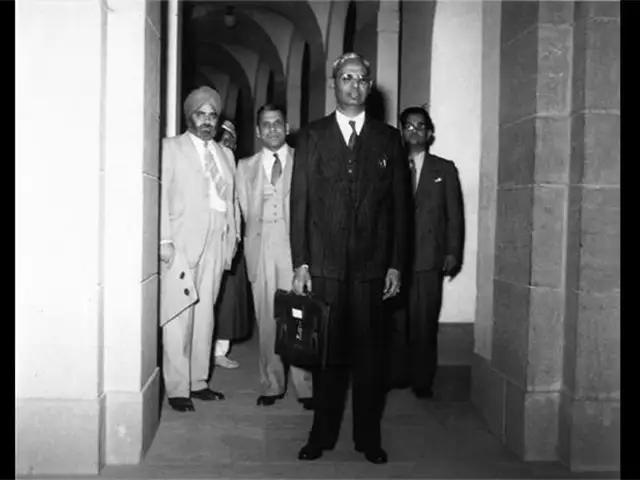
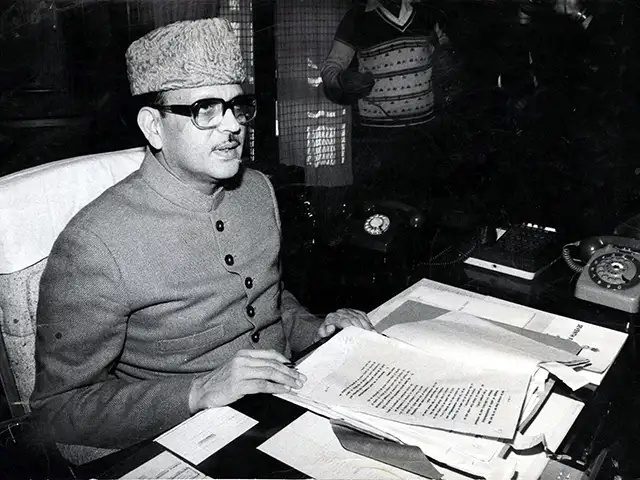
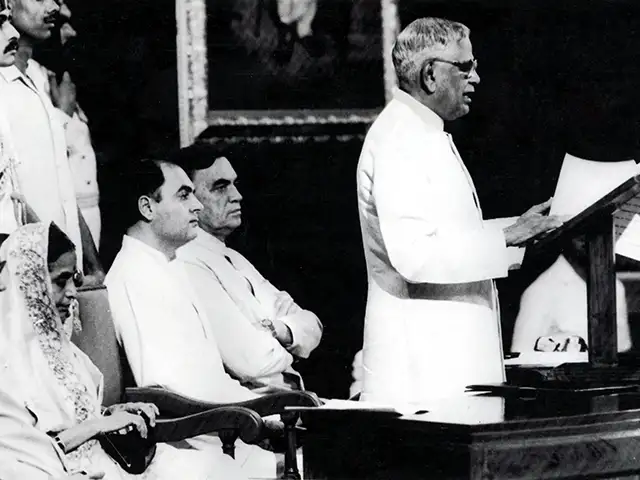
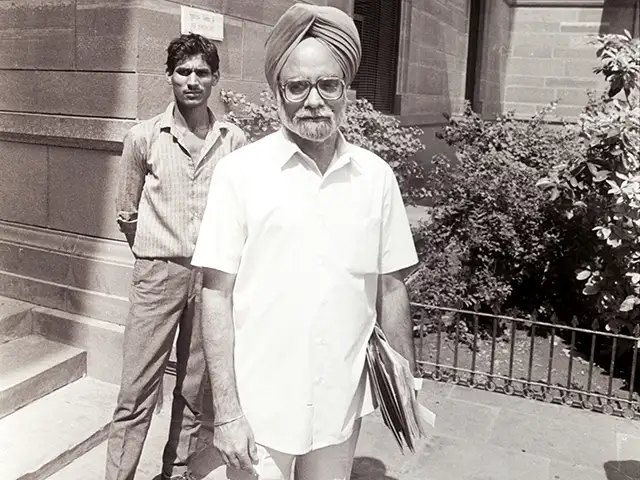
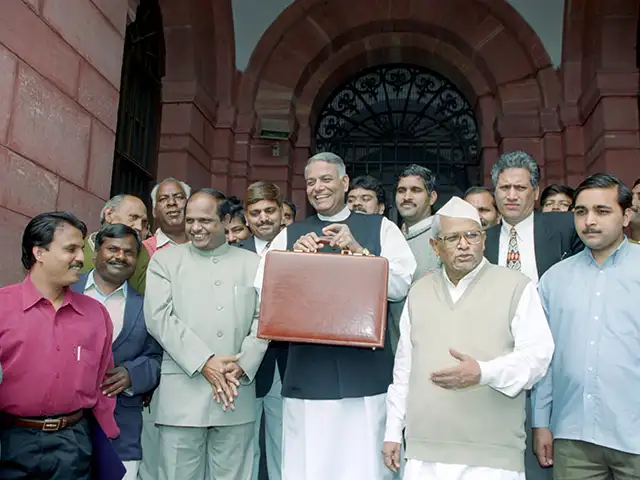
The first budget of Independent India was presented by the first finance minister R K Shanmukham Chetty. This was from the seven-and-a-half period from August 15, 1947 to March 31, 1948. The budget estimate for total revenues was a mere Rs 171.15 crore. A fiscal deficit was a paltry Rs 204.59 cr.

ADVERTISEMENT


