Centre, states working on new GST rate: Revenue Secy Shaktikanta Das
As the government gears up to roll out GST by April 2016, the Centre and the states are working on a new revenue neutral rate, which is currently pegged at 27 per cent.
By PTI | Updated:

NEW DELHI: As the government gears up to roll out Goods and Services tax (GST) by April 2016, the Centre and the states are working on a new revenue neutral rate, which is currently pegged at 27 per cent.
"The RNR is being recalculated and once the RNR is recalculated, then what will be the GST rate will be a matter to be decided by the GST Council under the Constitutional Amendment," Revenue Secretary Shaktikanta Das told.
The Revenue Neutral Rate is the one at which there will be no revenue loss to the states after GST implementation.
Das said the recalculation of is necessary as at present it does not take into account the taxation of petroleum products as also the 1 per cent additional tax which states can levy as part of the GST Bill, which was tabled in the Lok Sabha in December.
While liquor has been completely kept out of the GST, petroleum products like petrol and diesel will be part of the new regime from a date to be decided at a future date by the GST Council, which will have two-third of its members from states. All decisions in the Council will require 75 per cent votes.
Also, the states where goods originate can levy 1 per cent additional tax over GST to make up for any revenue loss for the first two years.
"The earlier RNR has to be changed because there have been many changes thereafter relating to GST... On petroleum, VAT and excise will continue for some time. Additional 1 per cent tax on inter-state supply of goods is also a new concept. The old number does not hold good anymore," Das said.
A sub-committee on GST had in November 2014 suggested that the RNR of GST be pegged at about 27 per cent. The sub panel had suggested states GST at 13.91 per cent and Central GST at 12.77 per cent.
"The RNR is being recalculated and once the RNR is recalculated, then what will be the GST rate will be a matter to be decided by the GST Council under the Constitutional Amendment," Revenue Secretary Shaktikanta Das told.
The Revenue Neutral Rate is the one at which there will be no revenue loss to the states after GST implementation.
Das said the recalculation of is necessary as at present it does not take into account the taxation of petroleum products as also the 1 per cent additional tax which states can levy as part of the GST Bill, which was tabled in the Lok Sabha in December.
While liquor has been completely kept out of the GST, petroleum products like petrol and diesel will be part of the new regime from a date to be decided at a future date by the GST Council, which will have two-third of its members from states. All decisions in the Council will require 75 per cent votes.
Also, the states where goods originate can levy 1 per cent additional tax over GST to make up for any revenue loss for the first two years.
ADVERTISEMENT
"The earlier RNR has to be changed because there have been many changes thereafter relating to GST... On petroleum, VAT and excise will continue for some time. Additional 1 per cent tax on inter-state supply of goods is also a new concept. The old number does not hold good anymore," Das said.
A sub-committee on GST had in November 2014 suggested that the RNR of GST be pegged at about 27 per cent. The sub panel had suggested states GST at 13.91 per cent and Central GST at 12.77 per cent.
The new tax regime is scheduled to be rolled out from April 1, 2016, after carrying out the necessary constitutional amendment in the ongoing session of Parliament.
Finance Minister Arun Jaitley had last week said that the implementation of the landmark GST regime would increase India's GDP by one to two per cent.
A single rate GST will replace central excise, state VAT, entertainment tax, octroi, entry tax, luxury tax and purchase tax on goods and services to ensure seamless transfer and end of "inspector raj" as well as "tax on tax," he had said. GST will be single most tax reform after 1947.
Download
The Economic Times Business News App for the Latest News in Business, Sensex, Stock Market Updates & More.
The Economic Times Business News App for the Latest News in Business, Sensex, Stock Market Updates & More.
Download
The Economic Times News App for Quarterly Results, Latest News in ITR, Business, Share Market, Live Sensex News & More.
The Economic Times News App for Quarterly Results, Latest News in ITR, Business, Share Market, Live Sensex News & More.
Related Articles
 GST on subscription ride-hailing platforms like Rapido and Bharat Taxi may hit driver earnings: Report2026-07-02T07:18:02Z
- Growth engine revving as GST, auto sales rise despite global roadblocks2026-07-02T00:00:00Z
- Cut GST on smartphones below Rs 25,000 to 5%: GT Bharat-PWIF report2026-07-01T17:21:50Z
Text: ET Bureau
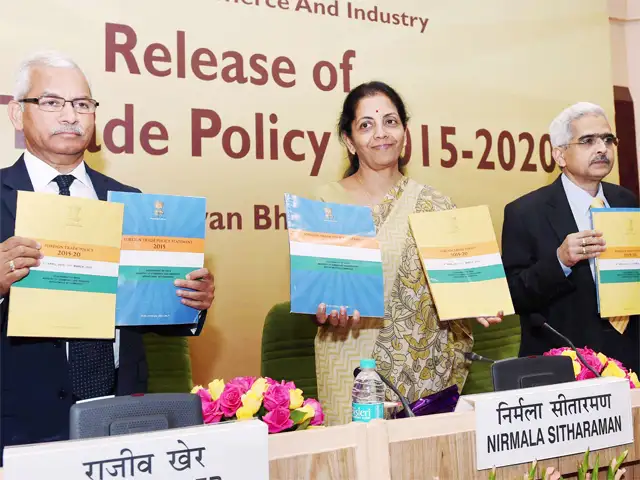
With an aim to make India a significant partner in global trade by 2020, the government on Wednesday unveiled a new Foreign Trade Policy (FTP).
Talking about the new policy, which aims at boosting India's exports, Commerce Minister Nirmala Sitharaman said that PM Narendra Modi's pet projects, 'Make in India' and 'Digital India' will be integrated with the new Foreign Trade Policy.
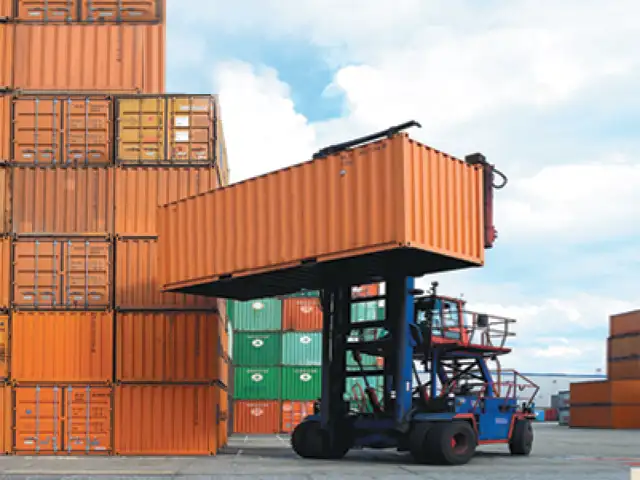
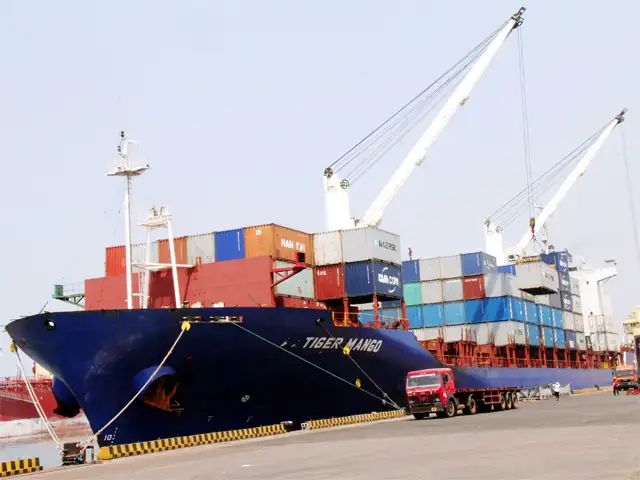
The government is pitching India as a friendly destination for manufacturing and exporting goods, and the new policy is being seen as an important step towards realising that goal.
We take a look at some key features of the new Foreign Trade Policy:
Image: Minister of State for Commerce & Industry (Independent Charge), Nirmala Sitharaman with Revenue Secretary Shaktikanta Das and Commerce Secretary, Rajeev Kher releasing the “Foreign Trade Policy 2015-2020” in New Delhi on April 1, 2015.
With an aim to make India a significant partner in global trade by 2020, the government on Wednesday unveiled a new Foreign Trade Policy (FTP).
Talking about the new policy, which aims at boosting India's exports, Commerce Minister Nirmala Sitharaman said that PM Narendra Modi's pet projects, 'Make in India' and 'Digital India' will be integrated with the new Foreign Trade Policy.
The government is pitching India as a friendly destination for manufacturing and exporting goods, and the new policy is being seen as an important step towards realising that goal.
We take a look at some key features of the new Foreign Trade Policy:
Image: Minister of State for Commerce & Industry (Independent Charge), Nirmala Sitharaman with Revenue Secretary Shaktikanta Das and Commerce Secretary, Rajeev Kher releasing the “Foreign Trade Policy 2015-2020” in New Delhi on April 1, 2015.




ADVERTISEMENT


