Budget's digital push to make India transparent economy: Ravi Shankar Prasad

The Budget has proposed a slew of initiatives for digitisation including expansion of optical fibre network, launch of 'Digi Gaon' initiative aimed at providing telemedicine, education and skills through use of technology.

Budget's digital push to make India transparent economy: Ravi Shankar Prasad
NEW DELHI: Terming the Budget as "digitally empowering", IT Minister Ravi Shankar Prasad today said that technology-backed initiatives announced today will help India become a more transparent economy.

The Budget has proposed a slew of initiatives for digitisation including expansion of optical fibre network, launch of ' Digi Gaon' initiative aimed at providing telemedicine, education and skills through use of technology, and new schemes to promote the use of mobile app BHIM.

In a bid to push digital payments, the Budget has also proposed duty exemption on POS machines and Iris readers.

"There is a big digital push in this Budget ... From expanding the optical fibre support system to Digi Gaon ... to using digital connect in a big way for taking 50,000 gram panchayats out of poverty," Prasad told PTI.

He added that the Budget proposals are transformational and designed to make India a transparent economy.

"It is a very transformational Budget designed to make India a transparent economy, rewarding the compliant and penalising the deviant," he said.
ADVERTISEMENT

Highlighting the underlying thrust of technology on programmes across-the-board including those relating to rural India, the Minister said, "rural also has to become a part of the digital transformation".

"The real aspiration now lies in the rural economy of India, which is waiting to be tapped for extraordinary growth," he said.

"It is a transformational, inclusive budget, digitally empowering Budget, designed to make India an honest country," he added.
Download
The Economic Times Business News App
for the Latest News in Business, Sensex, Stock Market Updates & More.
Download
The Economic Times News App
for Quarterly Results, Latest News in ITR, Business, Share Market, Live Sensex News & More.
The remarkable history of Budgets
1/11
Text compiled by Vikram Doctor

From being highly secretive to occasionally satirical & exceedingly lucid, Budgets have had a remarkable history. Here is a look at the Budgets in the past.
Text compiled by Vikram Doctor From being highly secretive to occasionally satirical & exceedingly lucid, Budgets have had a remarkable history. Here is a look at the Budgets in the past.
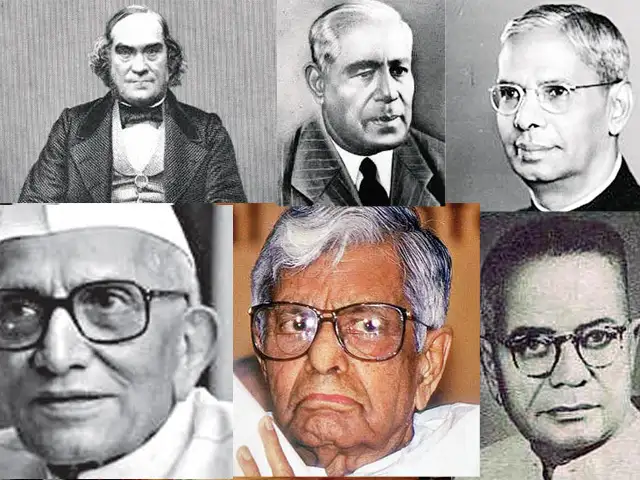
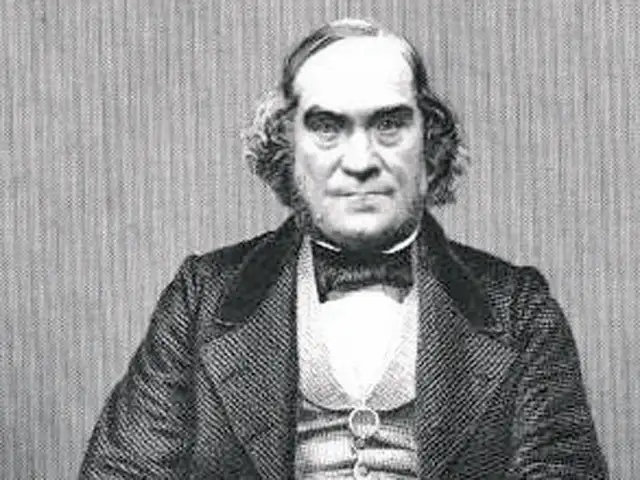
The first Indian Budget was presented by James Wilson on February 18, 1869. Wilson, whose designation was Finance Member of the India Council that advised the Indian Viceroy, was also the founder of The Economist and described by Karl Marx as an “economical mandarin of high standing.”

But he was also a largely selftaught man who had worked in his family occupation making and selling hats, before becoming a scholar and a writer largely based on his brilliance and knowledge of economics and commerce.
The first Indian Budget was presented by James Wilson on February 18, 1869. Wilson, whose designation was Finance Member of the India Council that advised the Indian Viceroy, was also the founder of ..
Read More
Our Budget follows the UK Budget in many ways, including, for many years, timing, since it used to be held at 5:30 pm which was noon in the UK, and extreme secrecy, which may have been reinforced here by a scandal that broke out in the UK just as RK Shanmukham Chetty — the first FM — was preparing his first Budget.

On Budget Day in the UK in 1947, Hugh Dalton, the British Chancellor of the Exchequer, met a journalist when he walked into Parliament and mentioned a few details on tax changes he was planning. The journalist broke the story before the Speech.

Dalton had to resign and this might have made Chetty all the more determined to maintain secrecy.
Our Budget follows the UK Budget in many ways, including, for many years, timing, since it used to be held at 5:30 pm which was noon in the UK, and extreme secrecy, which may have been reinforced her..
Read More
Chetty was succeeded by John Mathai who, in 1949-50, delivered the most lucid Budget Speech as he took the decision not to read out all the details telling members that a White Paper with all details was being circulated. He then gave a mini lecture on inflation and economic policy.

It was the first Budget for a really united India, since it included the financial statements for former Princely States and where the biggest news was the news of forming of Planning Commission and the need for having five-year plans
Chetty was succeeded by John Mathai who, in 1949-50, delivered the most lucid Budget Speech as he took the decision not to read out all the details telling members that a White Paper with all details..
Read More
The biggest problem for his successor, CD Deshmukh, was finding money for the Plans which meant higher taxes. In one Budget Speech he tried to buck up taxpayers with the story of a letter he claimed he had got from a villager who paid no taxes, but wanted to help.

Deshmukh said, “He has remitted a sum of Rs 5 to me and has promised to remit a similar sum every year… so long as the common run of our people can produce men and women with this spirit, this country can face the future, however difficult it may be, with confidence.”

It is not recorded if this made taxpayers happier to pay rather more than Rs 5.
The biggest problem for his successor, CD Deshmukh, was finding money for the Plans which meant higher taxes. In one Budget Speech he tried to buck up taxpayers with the story of a letter he claimed ..
Read More
Budgets don’t deal with issues like foreign relations, yet some sign of India’s tilt towards Russia can be seen in the Budgets of the 1950s. Foreign aid inflows to help the new nation were a major source of revenue, and at the start of the decade these were mostly from the US and UK.

But over the decade, aid from the USSR and its allies, like Czechoslovakia and Romania, become more important, culminating in the Bhilai Steel Plant project in 1959.
Budgets don’t deal with issues like foreign relations, yet some sign of India’s tilt towards Russia can be seen in the Budgets of the 1950s. Foreign aid inflows to help the new nation were a major so..
Read More
TT Krishnamachari, who replaced Deshmukh was an industrialist who, strangely enough, had a lot of enthusiasm for taxation.

In 1957, he invented two new levies, a wealth tax and anexpenditure tax, and sternly told those who had to pay these to display some patriotic spirit: “I am one of those who also believe that the greatest advances towards economic equality and positive social improvement are made in difficult times when the conscience and the solidarity of a people are raised to the highest pitch.”
TT Krishnamachari, who replaced Deshmukh was an industrialist who, strangely enough, had a lot of enthusiasm for taxation. In 1957, he invented two new levies, a wealth tax and anexpenditure tax, an..
Read More
Morarji Desai relished levying taxes. In 1968 he said: “I now come to the much dreaded part of my Budget speech. I trust Honourable Members will not take me to task if the proposals do not fulfill the expectations of dread…

A deficit of this kind is usually an invitation to an FM to sharpen his knife...I propose to engage myself essentially in a minor operation of plastic surgery-taking out a little flesh here and adding a little bit there.”

Desai was the first to make the Budget into a big opportunity for publicity for the FM and also the first FM with serious aspirations for PM’s seat.
Morarji Desai relished levying taxes. In 1968 he said: “I now come to the much dreaded part of my Budget speech. I trust Honourable Members will not take me to task if the proposals do not fulfill th..
Read More
C Subramaniam is also the first recorded FM to end his speech with the words, “I now commend the Budget for the acceptance of this House.”

Some variation on this has been the usual way to end the Budget. He was also the first Chidambaram to hold the post – that’s what the ‘C’ in his name stands for.
C Subramaniam is also the first recorded FM to end his speech with the words, “I now commend the Budget for the acceptance of this House.” Some variation on this has been the usual way to end the Bu..
Read More
Madhu Dandavate was one of the first to start making rather laboured puns to introduce his specific excise proposals.

In 1990, he quipped: “I propose to remove excise duty on pickles altogether in the hope that this will lend some flavour and spice to my budget.”
Madhu Dandavate was one of the first to start making rather laboured puns to introduce his specific excise proposals. In 1990, he quipped: “I propose to remove excise duty on pickles altogether in t..
Read More
READ MORE
ADVERTISEMENT

READ MORE:

LOGIN & CLAIM

50 TIMESPOINTS

Full coverage on Budget

More from our Partners

Loading next story
Business News › News › Economy › Policy › Budget's digital push to make India transparent economy: Ravi Shankar Prasad
Text Size:AAA
Success
This article has been saved

*

+