Budget 2015: Meet PM Narendra Modi's core team of top officials
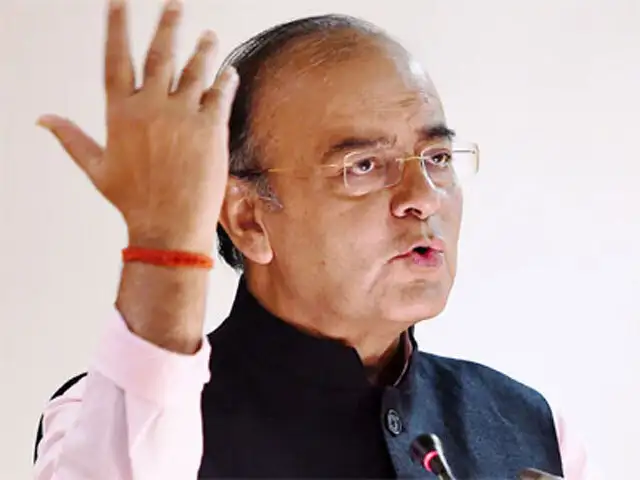
ET profiles the Budget Team that’s drafting the document that finance minister Arun Jaitley will stand up to read in Parliament in 26 days.
By Deepshikha Sikarwar, ET Bureau | Updated:

A core team of top, trusted officials is sequestered deep in North Block, working feverishly towards meeting the monthend deadline for the presentation of the budget in Parliament on February 28. One of the most anticipated in recent times, the budget that will lay down the framework of the Narendra Modi government’s economic rejuvenation plan is also one of the most complex as it will have to accommodate the high fund transfers suggested by the 14th Finance Commission, adjust for the demise of the Planning Commission, and find more funds for public spending to revive investments without compromising fiscal goals.
ET profiles the Budget Team that’s drafting the document that finance minister Arun Jaitley will stand up to read in Parliament in 26 days.
Arvind Subramanian (CHIEF ECONOMIC ADVISOR)
Subramanian, a fellow at the Peterson Institute for International Economics and at the Center for Global Development, made it to the short list of candidates for chief economic advisor for several years before getting the post in October 2014. Known for speaking his mind, Subramanian has already sparked a debate about raising public spending to boost growth in the mid-year economic review published two months after he took over. Will he be able to get this idea going in the budget? “It is widely accepted that there was a smoke-and-mirrors aspect to the numbers in the interim budget crafted by the previous government, which artificially reduced or deferred expenditures by up to 0.3% of GDP,” he’d written before assuming the post. He would want ensure there is no such subterfuge in this budget. A day ahead of the budget presentation, his division will issue the Economic Survey on the health of the country’s economy in the past year as also policy prescriptions for future.

Shaktikanta Das (SECRETARY, DEPARTMENT OF REVENUE)
This Tamil Nadu cadre officer is an old finance ministry hand who was brought in just 25 days ahead of the budget last year by the new government. He knows budget making like no one else. He has been able to drive the government’s non-adversarial tax measures and successfully negotiate with Switzerland a much better deal to track down black money. He holds the keys to some of the measures that can lift investor sentiment. The scrapping of the controversial retrospective tax amendment, deferral of Gaar (general anti-avoidance rules), forward movement on goods and services tax—some of the key benchmarks that are likely to determine whether this budget is bold or timid--all fall within his department’s remit.
Rattan P Watal (SECRETARY, DEPARTMENT OF EXPENDITURE)
He is the only official from the previous regime retained by the new government. The Andhra Pradesh cadre IAS officer saw India’s first wave of liberalisation from close quarters as private secretary to former Prime Minister PV Narasimha Rao. His job has only become tougher with Finance Commission and Expenditure Management Commission recommendations ready for implementation. Can he create room for Jaitley to set aside more funds for public spending?
Aradhna Johri (SECRETARY, DEPARTMENT OF DISINVESTMENT)
She just oversaw the biggest public offer in India—the 10% stake sale in Coal India that netted the government Rs 22,500 crore, a substantial part of the record disinvestment target for FY15. If she can also get the sale of a 5% stake in ONGC done, she may just become the first disinvestment secretary to achieve the stake-sale target this year, that too in record time. She doesn’t reveal much, preferring to surprise the market so that stocks are not manipulated ahead of any stake sale. Next year could be a bigger challenge if the government decides the only way it can fund greater public spending is through a bigger disinvestment effort.
Rajiv Mehrishi (FINANCE SECRETARY AND SECRETARY, DEPARTMENT OF ECONOMIC AFFAIRS)
Mehrishi, a 1978 Rajasthan cadre Indian Administrative Service officer, was brought in to steer the department of economic affairs--the nerve centre of the government’s economic policies--in one of the most high-profile bureaucratic reshuffles by the new government. His appointment may have drawn much attention but Mehrishi has stuck to keeping a low profile. He has a reputation to protect, having won kudos for a series of reforms by the Rajasthan government. Mehrishi has his plate full as the new budget will be keenly watched to see if it breaks the mould and offers a reform blueprint to take the country to a high-growth trajectory.
ET profiles the Budget Team that’s drafting the document that finance minister Arun Jaitley will stand up to read in Parliament in 26 days.
Arvind Subramanian (CHIEF ECONOMIC ADVISOR)
Subramanian, a fellow at the Peterson Institute for International Economics and at the Center for Global Development, made it to the short list of candidates for chief economic advisor for several years before getting the post in October 2014. Known for speaking his mind, Subramanian has already sparked a debate about raising public spending to boost growth in the mid-year economic review published two months after he took over. Will he be able to get this idea going in the budget? “It is widely accepted that there was a smoke-and-mirrors aspect to the numbers in the interim budget crafted by the previous government, which artificially reduced or deferred expenditures by up to 0.3% of GDP,” he’d written before assuming the post. He would want ensure there is no such subterfuge in this budget. A day ahead of the budget presentation, his division will issue the Economic Survey on the health of the country’s economy in the past year as also policy prescriptions for future.
Shaktikanta Das (SECRETARY, DEPARTMENT OF REVENUE)
ADVERTISEMENT
This Tamil Nadu cadre officer is an old finance ministry hand who was brought in just 25 days ahead of the budget last year by the new government. He knows budget making like no one else. He has been able to drive the government’s non-adversarial tax measures and successfully negotiate with Switzerland a much better deal to track down black money. He holds the keys to some of the measures that can lift investor sentiment. The scrapping of the controversial retrospective tax amendment, deferral of Gaar (general anti-avoidance rules), forward movement on goods and services tax—some of the key benchmarks that are likely to determine whether this budget is bold or timid--all fall within his department’s remit.
Rattan P Watal (SECRETARY, DEPARTMENT OF EXPENDITURE)
He is the only official from the previous regime retained by the new government. The Andhra Pradesh cadre IAS officer saw India’s first wave of liberalisation from close quarters as private secretary to former Prime Minister PV Narasimha Rao. His job has only become tougher with Finance Commission and Expenditure Management Commission recommendations ready for implementation. Can he create room for Jaitley to set aside more funds for public spending?
ADVERTISEMENT
Aradhna Johri (SECRETARY, DEPARTMENT OF DISINVESTMENT)
She just oversaw the biggest public offer in India—the 10% stake sale in Coal India that netted the government Rs 22,500 crore, a substantial part of the record disinvestment target for FY15. If she can also get the sale of a 5% stake in ONGC done, she may just become the first disinvestment secretary to achieve the stake-sale target this year, that too in record time. She doesn’t reveal much, preferring to surprise the market so that stocks are not manipulated ahead of any stake sale. Next year could be a bigger challenge if the government decides the only way it can fund greater public spending is through a bigger disinvestment effort.
ADVERTISEMENT
Rajiv Mehrishi (FINANCE SECRETARY AND SECRETARY, DEPARTMENT OF ECONOMIC AFFAIRS)
Mehrishi, a 1978 Rajasthan cadre Indian Administrative Service officer, was brought in to steer the department of economic affairs--the nerve centre of the government’s economic policies--in one of the most high-profile bureaucratic reshuffles by the new government. His appointment may have drawn much attention but Mehrishi has stuck to keeping a low profile. He has a reputation to protect, having won kudos for a series of reforms by the Rajasthan government. Mehrishi has his plate full as the new budget will be keenly watched to see if it breaks the mould and offers a reform blueprint to take the country to a high-growth trajectory.
Hasmukh Adhia (SECRETARY, DEPARTMENT OF FINANCIAL SERVICES)
Adhia, a 1981 batch IAS officer, was additional chief secretary, finance, in the Gujarat government before he was summoned by his former boss to steer the banking sector. Adhia, an avid yoga practitioner, will have to ensure calm returns to the badly stressed banking sector. Can there be a big-bang plan to resolve the NPA (non-performing assets) issue and give state-run banks a fresh start to trigger a new wave of investment?
Anita Kapur (CHAIRMAN, CENTRAL BOARD OF DIRECT TAXES)
Kapur, a 1978 batch Indian Revenue Service officer, has extensive experience in tax policy having worked in the tax policy and legislation (TPL) division. She is known for taking tough calls and has already demonstrated that by advising the government against appealing the Bombay High Court ruling in the Vodafone and Shell cases. She, along with the team in the TPL division, would not only have to work toward simplification of tax measures but also help with suggestions on raising resources.
ADVERTISEMENT
Rajat Bhargava (JOINT SECRETARY, BUDGET)
This 1990 Andhra Pradesh batch IAS officer will marshal the entire budget-making exercise. The joint secretary, budget, is responsible for maintaining the blue sheet, a summary of the budget that’s highly secret and needs to be updated with the latest data. He also has to be ensure the timely and errorfree printing of all budget documents and that those working in the ‘dungeons— the printing press in North Block’s basement--are well taken care of.
Kaushal Srivastava (CHAIRMAN, CENTRAL BOARD OF EXCISE AND CUSTOMS)
ADVERTISEMENT
Srivastava, a 1978 batch Indian Revenue Service officer, was member, budget, on the board before taking over as chairman. With the government keen to roll out the goods and services tax (GST) in the next two years, Srivastava along with the team at the Tax Research Unit would have to ensure the spade work begins in this budget itself.Download
The Economic Times Business News App for the Latest News in Business, Sensex, Stock Market Updates & More.
The Economic Times Business News App for the Latest News in Business, Sensex, Stock Market Updates & More.
Download
The Economic Times News App for Quarterly Results, Latest News in ITR, Business, Share Market, Live Sensex News & More.
The Economic Times News App for Quarterly Results, Latest News in ITR, Business, Share Market, Live Sensex News & More.
Text: ET Bureau
Finance minister Arun Jaitley will present the NDA govt’s second budget, one of the most anticipated in recent times, on February 28. Calls for a big-bang budget are getting louder and stock markets are doing their bit to raise expectations. ET takes a look at the challenges the FM faces:
Finance minister Arun Jaitley will present the NDA govt’s second budget, one of the most anticipated in recent times, on February 28. Calls for a big-bang budget are getting louder and stock markets are doing their bit to raise expectations. ET takes a look at the challenges the FM faces:






ADVERTISEMENT


