Budget 2015: Economists want PM Modi to step up public spending
The idea that public spending needs to be increased was mooted by CEA Arvind Subramanian in the mid-year economy review in December.
By ET Bureau |

NEW DELHI: India needs to unleash public spending urgently without worrying too much about what the credit-rating agencies might think about the government veering off the road to fiscal consolidation— that’s the advice economists gave Prime Minister Narendra Modi and Finance Minister Arun Jaitley on Friday, three weeks before the budget is to be unveiled in Parliament.
The suggestion is in stark contrast with the prevailing wisdom. The administration is increasingly convinced that sticking to the fiscal deficit target over the next few years is almost an article of faith — 4.1% of GDP in FY15, 3.6% in the next year and 3% in the one after that. Jaitley, who will present the budget on February 28, reiterated as much at a separate event on Friday. Meeting fiscal targets could fetch greater dividends though a credit rating upgrade and further reduction in interest rates, is the latest government thinking.
But in the meeting in New Delhi held under the aegis of the Arvind Panagariya-led Niti Aayog, a number of economists asked the Modi government to step up public spending by readjusting the fiscal road map.
 The idea that public spending needs to be increased had been mooted by chief economic advisor Arvind Subramanian in the mid-year review of the economy released in December. He argued that the stressed private sector was not in a position to invest and the government needed to step in.
“Though it was a divided house, many supported the view that fiscal strings could be loosened to prop up growth,” said one of the persons who attended the meeting, without wanting to be named.
But economists also sounded a note of caution, saying any enhancement in expenditure should not be frittered away on revenue spending and instead be directed in a focused manner toward capital spending, said two persons aware of the deliberations.
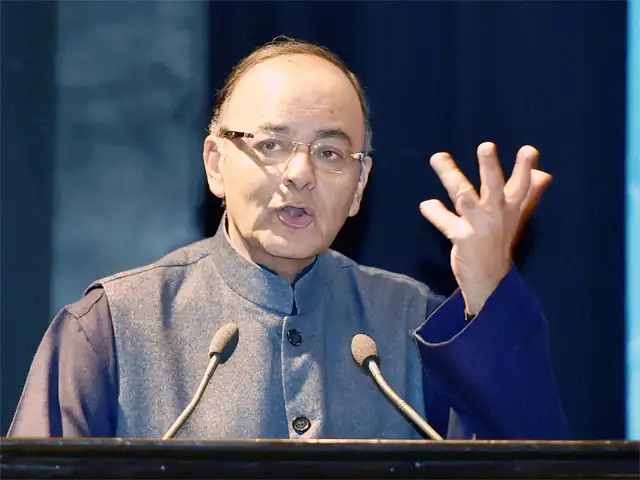
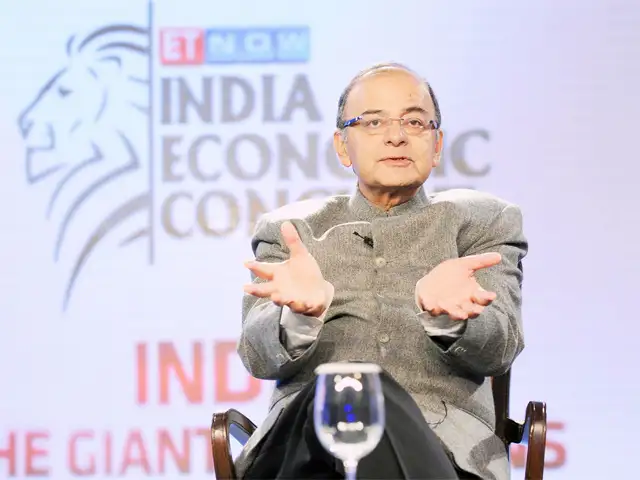
The suggestion may create a policy dilemma for the government this close to the budget. “The whole concept of spending beyond your means and leaving the next generation in debt to repay what we are overspending today is never a prudent fiscal policy,” Jaitley said by videoconference in an address to a seminar on making Mumbai a global financial hub on Friday.
This didn’t mean that the government would neglect development spending but would seek to innovate. “We will now have to enter a new age where all models of financing… infrastructure will have to be explored. A particular model can be created,” Jaitley said.
Shifting the milestones established by Jaitley as part of a medium-term fiscal plan in July would mean pushing the 3% milestone beyond FY17. Jaitley had stuck to the target of 4.1% of GDP for FY15 despite clamour from many quarters ahead of the budget, including Niti Aayog vice-chairman Panagariya, that the government should pause fiscal consolidation.
Apart from Panagariya, the Friday meeting was attended by two full-time Niti Aayog members, Bibek Debroy and VK Saraswat, and its CEO Sindhushre Khullar. Also present were Jaitley, planning minister Rao Inderjit Singh, chief economic advisor Subramanian and cabinet secretary Ajit Seth.
Other attendees included Vijay Kelkar, Nitin Desai, Bimal Jalan, Rajiv Lall, R Vaidyanathan, Subir Gokaran, Parthasarathi Shome, P Balakrishnan, Rajiv Kumar, Ashok Gulati, Mukesh Bhutani and GN Bajpai. “Niti Aayog had today organised a meeting with some very eminent economists with regard to the state of economy and steps required to boost investment, growth and even specific suggestions with regard to the Union Budget,” Jaitley told reporters after the meeting.
Stating the Aayog is also a thinktank, Jaitley said the suggestions were mainly related to the highgrowth road map for the Indian economy. The Niti Aayog has replaced the Planning Commission.
The latest data showed fixed capital formation rose only 3% in FY14 after contracting 0.3% in the year before. The argument against fiscal expansion is that credit-rating agencies would take a negative view of this and it could also delay monetary easing.
Some of those at the Friday Niti Aayog meeting felt the danger of a rating downgrade had been overstated and pointed that the agencies would take a holistic view of steps taken to boost the economy and not just one parameter.
The suggestion is in stark contrast with the prevailing wisdom. The administration is increasingly convinced that sticking to the fiscal deficit target over the next few years is almost an article of faith — 4.1% of GDP in FY15, 3.6% in the next year and 3% in the one after that. Jaitley, who will present the budget on February 28, reiterated as much at a separate event on Friday. Meeting fiscal targets could fetch greater dividends though a credit rating upgrade and further reduction in interest rates, is the latest government thinking.
But in the meeting in New Delhi held under the aegis of the Arvind Panagariya-led Niti Aayog, a number of economists asked the Modi government to step up public spending by readjusting the fiscal road map.
The idea that public spending needs to be increased had been mooted by chief economic advisor Arvind Subramanian in the mid-year review of the economy released in December. He argued that the stressed private sector was not in a position to invest and the government needed to step in.“Though it was a divided house, many supported the view that fiscal strings could be loosened to prop up growth,” said one of the persons who attended the meeting, without wanting to be named.
But economists also sounded a note of caution, saying any enhancement in expenditure should not be frittered away on revenue spending and instead be directed in a focused manner toward capital spending, said two persons aware of the deliberations.
ADVERTISEMENT
The suggestion may create a policy dilemma for the government this close to the budget. “The whole concept of spending beyond your means and leaving the next generation in debt to repay what we are overspending today is never a prudent fiscal policy,” Jaitley said by videoconference in an address to a seminar on making Mumbai a global financial hub on Friday.
This didn’t mean that the government would neglect development spending but would seek to innovate. “We will now have to enter a new age where all models of financing… infrastructure will have to be explored. A particular model can be created,” Jaitley said.
Shifting the milestones established by Jaitley as part of a medium-term fiscal plan in July would mean pushing the 3% milestone beyond FY17. Jaitley had stuck to the target of 4.1% of GDP for FY15 despite clamour from many quarters ahead of the budget, including Niti Aayog vice-chairman Panagariya, that the government should pause fiscal consolidation.
Apart from Panagariya, the Friday meeting was attended by two full-time Niti Aayog members, Bibek Debroy and VK Saraswat, and its CEO Sindhushre Khullar. Also present were Jaitley, planning minister Rao Inderjit Singh, chief economic advisor Subramanian and cabinet secretary Ajit Seth.
ADVERTISEMENT
Other attendees included Vijay Kelkar, Nitin Desai, Bimal Jalan, Rajiv Lall, R Vaidyanathan, Subir Gokaran, Parthasarathi Shome, P Balakrishnan, Rajiv Kumar, Ashok Gulati, Mukesh Bhutani and GN Bajpai. “Niti Aayog had today organised a meeting with some very eminent economists with regard to the state of economy and steps required to boost investment, growth and even specific suggestions with regard to the Union Budget,” Jaitley told reporters after the meeting.
Stating the Aayog is also a thinktank, Jaitley said the suggestions were mainly related to the highgrowth road map for the Indian economy. The Niti Aayog has replaced the Planning Commission.
ADVERTISEMENT
The latest data showed fixed capital formation rose only 3% in FY14 after contracting 0.3% in the year before. The argument against fiscal expansion is that credit-rating agencies would take a negative view of this and it could also delay monetary easing.
Some of those at the Friday Niti Aayog meeting felt the danger of a rating downgrade had been overstated and pointed that the agencies would take a holistic view of steps taken to boost the economy and not just one parameter.
Some economists termed the upcoming budget as a “make or break” opportunity that could alter shape of the economy and take the country back to a high-growth trajectory. Economists also urged the government to carry out reforms to improve tax administration and suggested that the budget should avoid imposing revenue targets on field officials, which led to them being needlessly aggressive. “It was an in-depth discussion covering many aspects,” said the second person.
A statement issued by the Prime Minister’s Office said Modi had noted in his opening remarks that one of the objectives of the Niti Aayog was to establish a dynamic institutional mechanism where eminent individuals outside the government system could contribute to policymaking.
“The economists emphasised on the need for the government to work towards high growth, predictable tax regime, fiscal prudence and rapid infrastructure development,” the statement said.
Jaitley added: “These were also in relation to the financing of infrastructure, how to attract investment, how to boost domestic savings and the state of the agricultural sector was particularly discussed. Besides, there were suggestions with regard to effective implementation of several flagship schemes of the government and how poverty levels can be brought down.”
Khullar told reporters the economists gave suggestions on questions related to state of the economy, ways to increase revenue generation and expenditure rationalisation. “Their suggestions will be complied by the Aayog and sent to the finance ministry,” she said.
Download
The Economic Times Business News App for the Latest News in Business, Sensex, Stock Market Updates & More.
The Economic Times Business News App for the Latest News in Business, Sensex, Stock Market Updates & More.
Download
The Economic Times News App for Quarterly Results, Latest News in ITR, Business, Share Market, Live Sensex News & More.
The Economic Times News App for Quarterly Results, Latest News in ITR, Business, Share Market, Live Sensex News & More.
Text: ET Bureau
ET looks at the recent speeches of finance minister Arun Jaitley for clues to the budget for FY16. The budget is widely expected to lay down the agenda for the remaining four years of the Narendra Modi government.
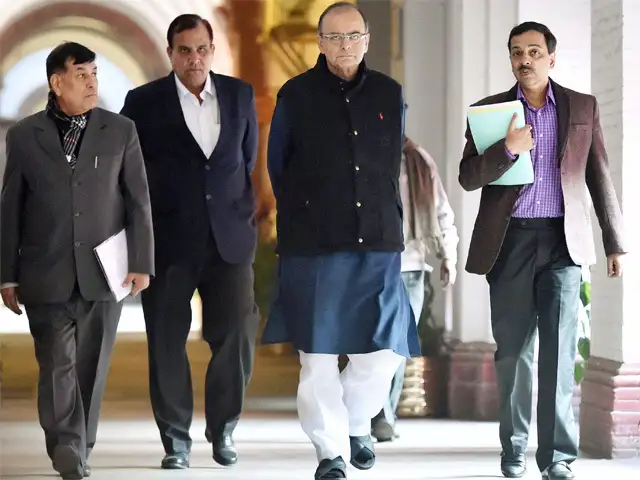
In Pic: Jaitley arrives at the Pre-Budget Consultation with the representatives of Trade Union, in New Delhi.
ET looks at the recent speeches of finance minister Arun Jaitley for clues to the budget for FY16. The budget is widely expected to lay down the agenda for the remaining four years of the Narendra Modi government.
In Pic: Jaitley arrives at the Pre-Budget Consultation with the representatives of Trade Union, in New Delhi.