Lower crude prices to boost Asia-Pacific sovereigns: Moody's
Moody's said lower crude oil prices since June last will benefit most Asia-Pacific sovereigns, including India, as the region is a net oil importer.
By PTI | Updated:

MUMBAI: Global rating agency Moody's today said lower global crude oil prices since June last will benefit most Asia-Pacific sovereigns, including India, as the region is a net oil importer.
Crude prices more than halved between June 2014 and January 2015, reflecting higher-than-expected oil and shale gas production in the US and lower demand in emerging markets coupled with OPEC's refusal to lower output.
In the December quarter alone crude prices have fell around 60 per cent.
The government and the RBI have said the lower oil prices will help the country save at least USD 50 billion this year in crude imports, which stood at over USD 150 billion last fiscal.
According to RBI the lower import bill help the country contain CAD at 1.3 per cent of GDP this fiscal.
"As long as oil prices remain low, the direct effects will be positive on trade balances and downward on inflation in most Asian countries," Moody's senior vice-president for Asia-Pacific and Middle East Thomas Byrne said.
"Lower inflation and import costs, in turn, will likely support growth by raising consumer purchasing power, lowering investment input costs and increasing monetary policy flexibility," Moody's senior vice president Atsi Seth said.
However, growth acceleration may be checked by lower global growth and international financial uncertainty in 2015, she added.
The rating agency said lower oil prices which led to fuel subsidy reforms supports sovereign ratings of India (Baa3 stable), Malaysia (A3 positive) and Indonesia (Baa3).
However, it said in Indonesia and Malaysia, lower hydrocarbon-related government revenues will erode the impact of these gains on the budget balance.
The rating agency has lowered its price assumptions for Brent crude to USD 55 per barrel through 2015 and USD 65 per barrel in 2016.
While it expects oil prices to eventually rebound as demand increases and low prices create an eventual supply response as producers reduce their capital spending, this supply response will not be meaningful until at least 2016.
Crude prices more than halved between June 2014 and January 2015, reflecting higher-than-expected oil and shale gas production in the US and lower demand in emerging markets coupled with OPEC's refusal to lower output.
In the December quarter alone crude prices have fell around 60 per cent.
The government and the RBI have said the lower oil prices will help the country save at least USD 50 billion this year in crude imports, which stood at over USD 150 billion last fiscal.
According to RBI the lower import bill help the country contain CAD at 1.3 per cent of GDP this fiscal.
"As long as oil prices remain low, the direct effects will be positive on trade balances and downward on inflation in most Asian countries," Moody's senior vice-president for Asia-Pacific and Middle East Thomas Byrne said.
ADVERTISEMENT
"Lower inflation and import costs, in turn, will likely support growth by raising consumer purchasing power, lowering investment input costs and increasing monetary policy flexibility," Moody's senior vice president Atsi Seth said.
However, growth acceleration may be checked by lower global growth and international financial uncertainty in 2015, she added.
The rating agency said lower oil prices which led to fuel subsidy reforms supports sovereign ratings of India (Baa3 stable), Malaysia (A3 positive) and Indonesia (Baa3).
However, it said in Indonesia and Malaysia, lower hydrocarbon-related government revenues will erode the impact of these gains on the budget balance.
ADVERTISEMENT
The rating agency has lowered its price assumptions for Brent crude to USD 55 per barrel through 2015 and USD 65 per barrel in 2016.
While it expects oil prices to eventually rebound as demand increases and low prices create an eventual supply response as producers reduce their capital spending, this supply response will not be meaningful until at least 2016.
Download
The Economic Times Business News App for the Latest News in Business, Sensex, Stock Market Updates & More.
The Economic Times Business News App for the Latest News in Business, Sensex, Stock Market Updates & More.
Download
The Economic Times News App for Quarterly Results, Latest News in ITR, Business, Share Market, Live Sensex News & More.
The Economic Times News App for Quarterly Results, Latest News in ITR, Business, Share Market, Live Sensex News & More.
Related Articles
 Moody's upgrades Reliance Industries rating to Baa1, now 2 notches above India's sovereign rating2026-05-29T13:42:36Z
- Indian banks more exposed to West Asia crisis among APAC region: Moody's2026-05-27T13:59:29Z
- Elevated energy prices to weigh on near-term credit conditions of Indian cos: Moody's2026-05-25T12:18:17Z
Text: ET Bureau
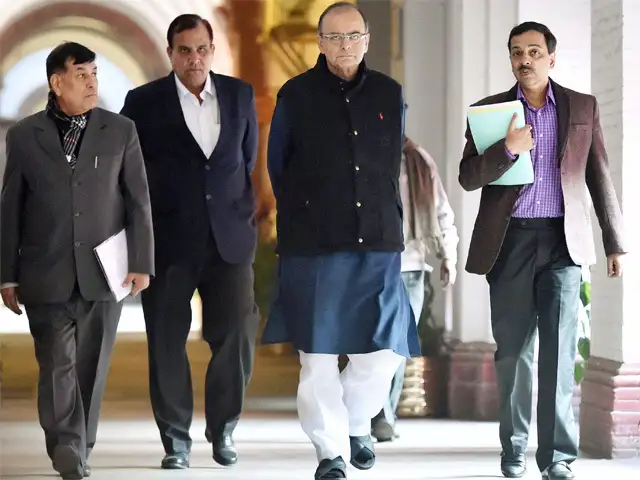
ET looks at the recent speeches of finance minister Arun Jaitley for clues to the budget for FY16. The budget is widely expected to lay down the agenda for the remaining four years of the Narendra Modi government.
In Pic: Jaitley arrives at the Pre-Budget Consultation with the representatives of Trade Union, in New Delhi.
ET looks at the recent speeches of finance minister Arun Jaitley for clues to the budget for FY16. The budget is widely expected to lay down the agenda for the remaining four years of the Narendra Modi government.
In Pic: Jaitley arrives at the Pre-Budget Consultation with the representatives of Trade Union, in New Delhi.