15 Asian nations sign China-backed RCEP trade pact
The Regional Comprehensive Economic Partnership (RCEP) -- which includes 10 Southeast Asian economies along with China, Japan, South Korea, New Zealand and Australia -- is the world's largest trade pact in terms of GDP, analysts say.
By Reuters | Updated:
AFP
The Regional Comprehensive Economic Partnership, or RCEP, is to be signed virtually on Sunday on the sidelines of the annual summit of the 10-nation Association of Southeast Asian Nations.
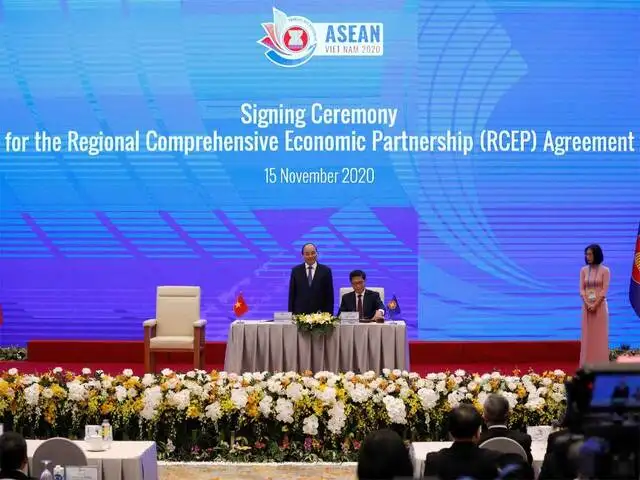
HANOI: Fifteen Asia-Pacific economies formed the world's largest free trade bloc on Sunday, a China-backed deal that excludes the United States, which had left a rival Asia-Pacific grouping under President Donald Trump.
The signing of the Regional Comprehensive Economic Partnership (RCEP) at a regional summit in Hanoi, is a further blow to the group pushed by former U.S. president Barack Obama, which his successor Trump exited in 2017.
Amid questions over Washington's engagement in Asia, RCEP may cement China's position more firmly as an economic partner with Southeast Asia, Japan and Korea, putting the world's second-biggest economy in a better position to shape the region's trade rules.
The United States is absent from both RCEP and the successor to the Obama-led Trans-Pacific Partnership (TPP), leaving the world's biggest economy out of two trade groups that span the fastest-growing region on earth.
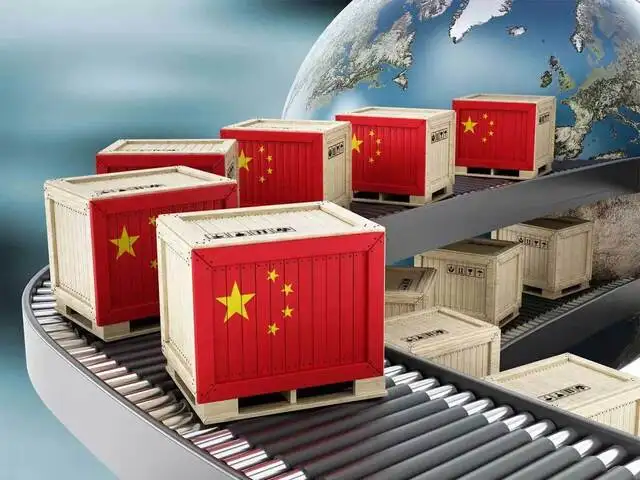
By contrast, RCEP could help Beijing cut its dependence on overseas markets and technology, a shift accelerated by a deepening rift with Washington, said Iris Pang, ING chief economist for Greater China.
ADVERTISEMENT
RCEP groups the 10-member Association of Southeast Asian Nations (ASEAN), China, Japan, South Korea, Australia and New Zealand. It aims in coming years to progressively lower tariffs across many areas.
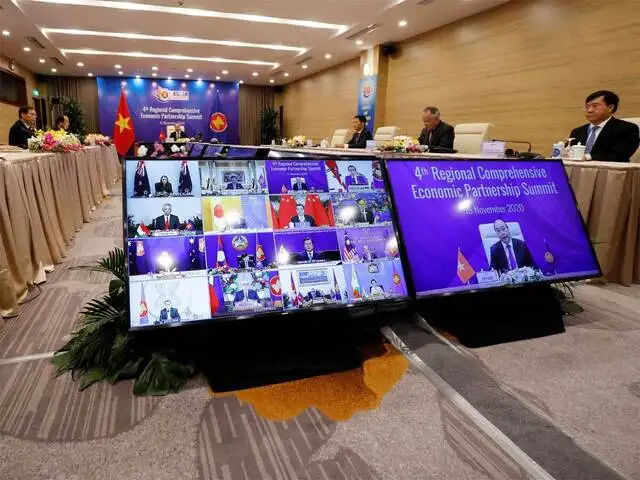
The deal was signed on the sidelines of an online ASEAN summit held as Asian leaders address tensions in the South China Sea and tackle plans for a post-pandemic economic recovery in a region where U.S.-China rivalry has been rising.
In an unusual ceremony, held virtually because of the coronavirus pandemic, leaders of RCEP countries took turns standing behind their trade ministers who, one by one, signed copies of the agreement, which they then showed triumphantly to the cameras.
"RCEP will soon be ratified by signatory countries and take effect, contributing to the post-COVID pandemic economic recovery," said Nguyen Xuan Phuc, prime minister of Vietnam, which hosted the ceremony as ASEAN chair.
ADVERTISEMENT
RCEP will account for 30% of the global economy, 30% of the global population and reach 2.2 billion consumers, Vietnam said.
'HISTORICAL BREAKTHROUGH' China's finance ministry said the new bloc's promises include eliminating some tariffs within the group, including some immediately and others over 10 years.
ADVERTISEMENT
There were no details on which products and which countries would see immediate reduction in tariffs.
"For the first time, China and Japan reached a bilateral tariff reduction arrangement, achieving a historic breakthrough," the ministry said in a statement, without giving further details.
The deal marks the first time rival East Asian powers China, Japan and South Korea have been in a single free trade agreement.
Despite being outside RCEP and having been in the administration that propelled the TPP, President-elect Joe Biden - Obama's vice president - is unlikely to rejoin the TPP anytime soon, analysts said, as his government will have to prioritise handling the COVID-19 outbreak at home.
"I'm not sure that there will be much focus on trade generally, including efforts to rejoin" the TPP successor grouping, "for the first year or so because there will be such a focus on COVID relief," Charles Freeman, senior vice president for Asia at the U.S. Chamber of Commerce said this month.
RCEP "will help reduce or remove tariffs on industrial and agricultural products and set out rules for data transmission," said Luong Hoang Thai, head of the Multilateral Trade Policy Department at Vietnam's Ministry of Industry and Trade.
The pact will take effect once enough participating countries ratify the agreement domestically within the next two years, Indonesia's trade minister said last week.
For China, the new group, including many U.S. allies, is a windfall largely resulting from Trump's retreat from the TPP, said ING's Pang.
India pulled out of RCEP talks in November last year, but ASEAN leaders said the door remained open for it to join.
For China, the new group, including many U.S. allies, is a windfall largely resulting from Trump's retreat from the TPP, said ING's Pang.
India pulled out of RCEP talks in November last year, but ASEAN leaders said the door remained open for it to join.
Why did India opt out of RCEP, one of the world's largest free trade agreements?
1/5
According to a report by Reuters, fifteen Asia-Pacific economies signed what could become the world's largest free trade agreement on Sunday, covering nearly a third of the global population and about 30% of its global gross domestic product. The Regional Comprehensive Economic Partnership (RCEP) will progressively lower tariffs and aims to counter protectionism, boost investment and allow freer movement of goods within the region.
According to a report by Reuters, fifteen Asia-Pacific economies signed what could become the world's largest free trade agreement on Sunday, covering nearly a third of the global population and abou..
Read More
RCEP includes China, Japan, South Korea, Australia, New Zealand and the 10 members of the Association of SouthEast Asian Nations (ASEAN): Brunei, Vietnam, Laos, Cambodia, Thailand, Myanmar, Malaysia, Singapore, Indonesia and the Philippines.
RCEP includes China, Japan, South Korea, Australia, New Zealand and the 10 members of the Association of SouthEast Asian Nations (ASEAN): Brunei, Vietnam, Laos, Cambodia, Thailand, Myanmar, Malaysia,..
Read More
India was involved in early discussions but opted out last year over concerns related to cheap Chinese imports. Member states have said there is still room for India to join RCEP, however. Anyone can join RCEP 18 months after it comes into force but India, as one of the original negotiating partners, can join at any time once the deal comes into effect.
India was involved in early discussions but opted out last year over concerns related to cheap Chinese imports. Member states have said there is still room for India to join RCEP, however. Anyone can..
Read More
According to a TOI report, India pulled out of the China-backed trade agreement as negotiations failed to address its core concerns. These were threats of circumvention of rules of origin due to tariff differential, inclusion of fair agreement to address the issues of trade deficits and opening of services. The deal would have brought down import duties on 80% to 90% of the goods, along with easier service and investment rules. Some in Indian industry feared that reduced customs duty would result in a flood of imports, especially from China with which it has a massive trade deficit. India’s trade deficit with other RCEP countries was also rising.
According to a TOI report, India pulled out of the China-backed trade agreement as negotiations failed to address its core concerns. These were threats of circumvention of rules of origin due to tari..
Read More
India would have the third biggest economy in the RCEP. Analysts believe that India might lose investments while its consumers may end up paying more than they should, especially when global trade, investment and supply chains face unprecedented challenges due to the Covid-19 pandemic. Countries in the RCEP agreement would also lose out on an opportunity to access the Indian market that is notoriously hard to get into especially during the current global economic situation.
For India, it will be an opportunity to strengthen its domestic industries and move towards its dream of becoming self-reliant. A large number of sectors including dairy, agriculture, steel, plastics, copper, aluminium, machine tools, paper, automobiles, chemicals and others had expressed serious apprehensions on RCEP citing dominance of cheap foreign goods would dampen its businesses.
India would have the third biggest economy in the RCEP. Analysts believe that India might lose investments while its consumers may end up paying more than they should, especially when global trade, i..



 PM takes stock of RCEP trade pact amid concerns

