
The story of Harshad Mehta and five ways it changed Dalal Street

1/8
Banking loopholes
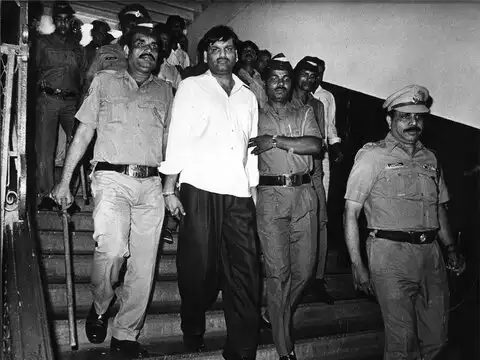
Harshad Mehta changed the way one looks at the stock market and how brokers trade. The securities scam of 1992, involving Mehta, led to sweeping stock market reforms and exposed loopholes in the country's banking system.
2/8
Securities scam
Mehta was often referred to as the 'Big Bull' of Dalal Street or the 'Amitabh Bachchan' of the Indian stock market. He manipulated stocks by illegally obtaining money from several banks using fake bank receipts. He created a cycle of fraud involving big banks like the State Bank of India (SBI) and the National Housing Bank (NHB).

3/8
Changing D-Street
Following the fraud of around Rs 4,000 crore, ‘Securities Scam’, the Securities Laws (Amendments) Act was passed in 1995, which widened the jurisdiction of the Securities and Exchange Board of India. It allowed SEBI to regulate depositories, FIIs, venture capital funds, and credit rating agencies.Here are five ways the Indian stock markets have changed since 1992...
Amazon Top Deals
POWERED BY

Crompton Ozone 75 Litres Desert Air Cooler for home | Large & Easy Clean Ice Chamber | 4-Way Air Deflection | High Density Honeycomb Pads | Everlast Pump | Auto Fill| 3 Year Brand Warranty
₹9,798Buy Now43%
OFF

atomberg Studio Smart+ 1200mm BLDC Ceiling Fan with IoT & Remote | BEE 5 star Rated Energy Efficient Ceiling Fan | High Air Delivery with LED Indicators | 3 Year Warranty (Earth Brown)
₹5,882Buy Now36%
OFF

LG 32 L Convection Microwave Oven (MC3286BRUM, Black, 360° Motorised Rotisserie for Bar-be-queing, 301 Auto Cook Menu, Stainless steel cavity, Indian Cuisine, Tandoor Se, Steam Clean & Diet Fry)
₹19,340Buy Now19%
OFF
4/8
Settlement cycle
Settlement cycle is the time within which brokers have to pay full money and take delivery of stocks or deliver stocks if sold. In 1992 the cycle was 14 days. Now, it is two days, and SEBI is hinting at a 1-day cycle soon.

5/8
Minimum balance
In 1992, there was no rule over maintenance of minimum balance that a customer needs to ensure to buy stocks. Now, a customer can’t buy stocks without the minimum balance in the account or sell without stocks in their Demat account.

6/8
Trading process
Before 1992, all the trades were placed through dealers and hence they carried a huge execution risk. Now, most of the trades are executed by customers on their own.

7/8
Settlement of trades
Before 1992, settlement of trades was done through paper, making counter-party risk evident. Now, all transactions are electronic and all settlement of trades happens through clearing corporations.

8/8
Brokerage fee
In 1992, customers paid at least 1 percent as brokerage for equity delivery trades. No charges are levied now.