Budget 2015: Government’s intention to implement GST in April 2016 is welcome, says Harishankar Subramanian
"The finance minister's affirmation of the government’s intention to implement GST in April 2016 is indeed welcome and will go a long way in creating a common market."
Updated:

By Harishankar Subramanian, Partner & National Leader, Indirect Tax, EY India
This budget has delivered what was largely expected from an indirect tax perspective — incentivise manufacturing to promote the policy thrust of ‘Make in India’ and broaden the services base as a precursor to GST.
The finance minister's affirmation of the government’s intention to implement GST in April 2016 is indeed welcome and will go a long way in creating a common market and ease cascading, though the distortionary 1% additional non-creditable origin tax proposal still needs to be debated. The budget has addressed the sector specific issues of inverted duty structure by reduction of basic customs duty on inputs/intermediates to ensure more competitive manufacturing.
Reduction of SAD from 4% to nil on inputs/components required for end use manufacturing of ITA products and LEDs, and from 4% to 2% in case of metal and chemical industries was another welcome step. This would help in removing accumulation of input credits due to value addition constraints in these sectors.
We have also seen a significant increase in customs duty of 6.5% on import of goods like mobile phones due to increase in excise duties. Now, a local manufacturer in the domestic tariff area will incur 2% excise duty including NCCD without availment of credits versus imports, potentially promoting more domestic manufacturing. Excise duty has been increased to 12.5% with consolidation of all cesses/surcharges.
However, the increase in service tax rate to 14% creating a variance with excise duty rate will create complexities for certain sectors, which could have been avoided. The increase in service tax rate to 14% with an enabling provision to further incrementally increase by 2% to 16% by a Swachh Bharat Cess clearly indicates a two rate GST structure with the standard rates likely to be in the range of 18 to 20%.
There has also been a conscious effort to broaden the base of service tax by pruning the negative list as a precursor to GST. Going forward, services provided by the government to business entities, intermediate job work for manufacture of potable liquor, activities of lottery like promotion, marketing, organisation, selling of lottery, facilitation etc will all be covered, besides amusement and entertainment events (exemption is now restricted only to specified activities).
The fine print in the budget has also brought several changes across customs, excise and service tax by rationalising penal provisions with a view to provide a choice to taxpayers to opt for such routes to avoid protracted tax litigations. Another welcome step has been an increase in the period of Cenvat credit from six months to a year.
This budget has delivered what was largely expected from an indirect tax perspective — incentivise manufacturing to promote the policy thrust of ‘Make in India’ and broaden the services base as a precursor to GST.
The finance minister's affirmation of the government’s intention to implement GST in April 2016 is indeed welcome and will go a long way in creating a common market and ease cascading, though the distortionary 1% additional non-creditable origin tax proposal still needs to be debated. The budget has addressed the sector specific issues of inverted duty structure by reduction of basic customs duty on inputs/intermediates to ensure more competitive manufacturing.
Reduction of SAD from 4% to nil on inputs/components required for end use manufacturing of ITA products and LEDs, and from 4% to 2% in case of metal and chemical industries was another welcome step. This would help in removing accumulation of input credits due to value addition constraints in these sectors.
We have also seen a significant increase in customs duty of 6.5% on import of goods like mobile phones due to increase in excise duties. Now, a local manufacturer in the domestic tariff area will incur 2% excise duty including NCCD without availment of credits versus imports, potentially promoting more domestic manufacturing. Excise duty has been increased to 12.5% with consolidation of all cesses/surcharges.
However, the increase in service tax rate to 14% creating a variance with excise duty rate will create complexities for certain sectors, which could have been avoided. The increase in service tax rate to 14% with an enabling provision to further incrementally increase by 2% to 16% by a Swachh Bharat Cess clearly indicates a two rate GST structure with the standard rates likely to be in the range of 18 to 20%.
ADVERTISEMENT
There has also been a conscious effort to broaden the base of service tax by pruning the negative list as a precursor to GST. Going forward, services provided by the government to business entities, intermediate job work for manufacture of potable liquor, activities of lottery like promotion, marketing, organisation, selling of lottery, facilitation etc will all be covered, besides amusement and entertainment events (exemption is now restricted only to specified activities).
The fine print in the budget has also brought several changes across customs, excise and service tax by rationalising penal provisions with a view to provide a choice to taxpayers to opt for such routes to avoid protracted tax litigations. Another welcome step has been an increase in the period of Cenvat credit from six months to a year.
Download
The Economic Times Business News App for the Latest News in Business, Sensex, Stock Market Updates & More.
The Economic Times Business News App for the Latest News in Business, Sensex, Stock Market Updates & More.
Download
The Economic Times News App for Quarterly Results, Latest News in ITR, Business, Share Market, Live Sensex News & More.
The Economic Times News App for Quarterly Results, Latest News in ITR, Business, Share Market, Live Sensex News & More.
Related Articles
 CII president R Mukundan projects 7% growth for India, seeks GST Council-like body to drive reforms2026-06-23T19:25:10Z
- GST wins India Inc's vote, but businesses seek faster refunds and smarter reforms: Deloitte2026-06-23T08:04:59Z
- GST@9: Building a more seamless, certainty-driven input tax credit framework2026-06-13T05:20:53Z
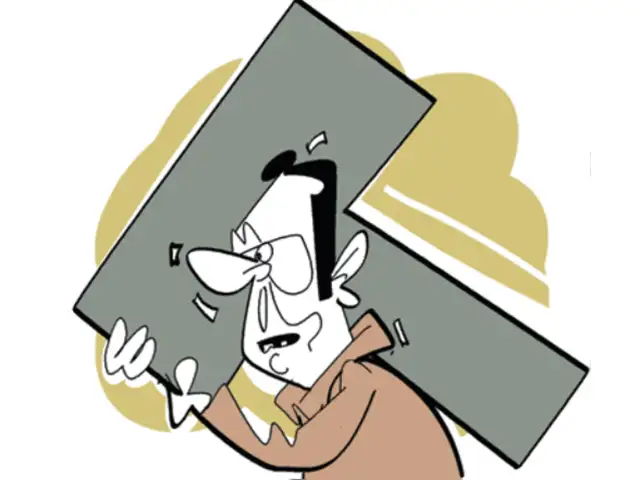
The limit of reduction of health insurance premium was enhanced from Rs 15,000 to Rs 25,000. For senior citizens this limit has been increased from Rs 20,000 to Rs 30,000.
"For senior citizen above the age of 80 years, not eligible to take health insurance, deduction is allowed for Rs 30,000 toward medical expenditure. Deduction limit of Rs 60,000 on expenditure on account of specified diseases is enhanced to Rs 80,000 in the case of senior citizens," Jaitley said.
Additional deduction of Rs 25,000 is allowed for differently-abled persons, increasing the limit from Rs 50,000 to Rs 75,000. It is also proposed to increase the limit of deduction from Rs 1 lakh to Rs 1.25 lakh in case of severe disability.
Jaitley also proposed to provide that investment in Sukanya Samriddhi Scheme will be eligible for deduction under section 80C of the income-tax and any payment from the scheme shall not be liable to tax.
Limit on deduction on account of contribution to a pension fund and the new pension scheme is proposed to be increased from Rs 1 lakh to Rs 1.5 lakh.
Additional deduction of Rs 50,000 will be allowed for contribution to the new pension scheme u/s 80 CCD increasing from Rs 1 lakh to Rs 1.5 lakh.
"For senior citizen above the age of 80 years, not eligible to take health insurance, deduction is allowed for Rs 30,000 toward medical expenditure. Deduction limit of Rs 60,000 on expenditure on account of specified diseases is enhanced to Rs 80,000 in the case of senior citizens," Jaitley said.
Additional deduction of Rs 25,000 is allowed for differently-abled persons, increasing the limit from Rs 50,000 to Rs 75,000. It is also proposed to increase the limit of deduction from Rs 1 lakh to Rs 1.25 lakh in case of severe disability.
Jaitley also proposed to provide that investment in Sukanya Samriddhi Scheme will be eligible for deduction under section 80C of the income-tax and any payment from the scheme shall not be liable to tax.
Limit on deduction on account of contribution to a pension fund and the new pension scheme is proposed to be increased from Rs 1 lakh to Rs 1.5 lakh.
Additional deduction of Rs 50,000 will be allowed for contribution to the new pension scheme u/s 80 CCD increasing from Rs 1 lakh to Rs 1.5 lakh.



ADVERTISEMENT


