South China Sea is now a 'core interest' of Beijing and that's a problem for its neighbours
In years past, China's core interests were believed to mean specific and limited territorial matters, such as those regarding Taiwan and Tibet.
By Business Insider | Updated:

By Christopher Woody
China's aggressive posture toward the South China Sea has been stirring tensions in the region, and a new national security law passed by the Chinese government suggests that Beijing is just getting started.
The new law calls for security to be maintained in all fields, including culture, education, and cyberspace.
Moreover, as reported by The New York Times, the law's passage indicates that there has also been a meaningful shift in how Chinese leaders view their country's "core interests."
In years past, China's core interests were believed to mean specific and limited territorial matters, such as those regarding Taiwan and Tibet, that the communist country determined to be internal matters.
The new law is reportedly an indication that the "core interests" have been stretched.
"In 2010, Chinese and foreign officials and scholars began debating whether the South China Sea was now a core interest," The Times' Beijing bureau chief Edward Wong writes.
"Under the new definition ... the term does encompass the South China Sea and any other sovereignty issues of importance to China (think Arunachal Pradesh in India, and the islands in the East China Sea that Japan calls the Senkaku and China calls the Diaoyu)."
If the shipping channels and islands of the South China Sea are now counted as "core interests" by China, then it is likely to continue to push for greater control over the sea and the $5 trillion in shipping that passes through it each year.
US officials, for their part, have repudiated China's posture toward the region.
"As China seeks to make sovereign land out of sandcastles and redraw maritime boundaries, it is eroding regional trust and undermining investor confidence," said US Deputy Secretary of State Antony Blinken in late May.
In recent months, Chinese ships have clashed with vessels from Vietnam, with both governments naming the other as aggressor in several incidents.
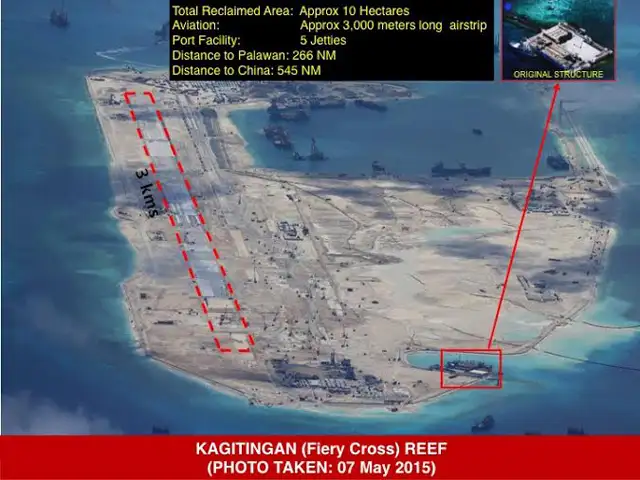
Chinese dredging vessels are purportedly seen in the waters around Fiery Cross Reef in the disputed Spratly Islands in this still image from video taken by a P-8A Poseidon surveillance aircraft provided by the United States Navy May 21, 2015.
The Philippines has also reported confrontations with Chinese ships in disputed waters. China has accused the Philippines of escalating the situation.
"Certain countries are roping in countries from outside the region to get involved in the South China Sea issue ... deliberately exaggerating the tense atmosphere ..." Chinese Defense Ministry spokesman Yang Yujun said in late June.
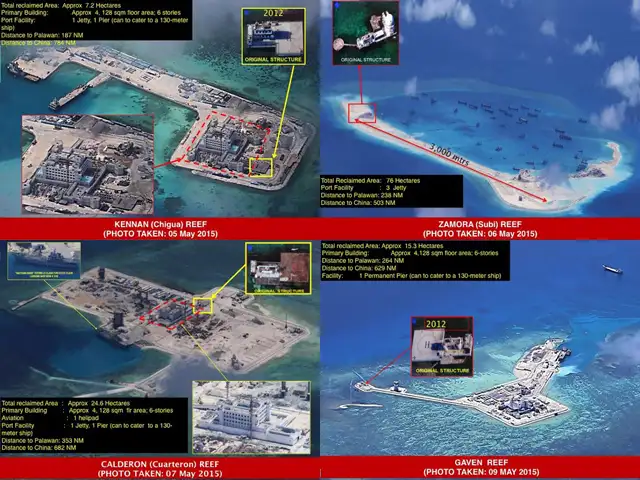
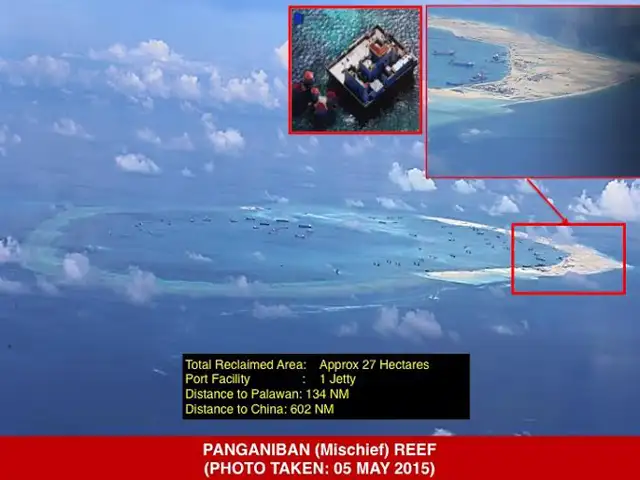
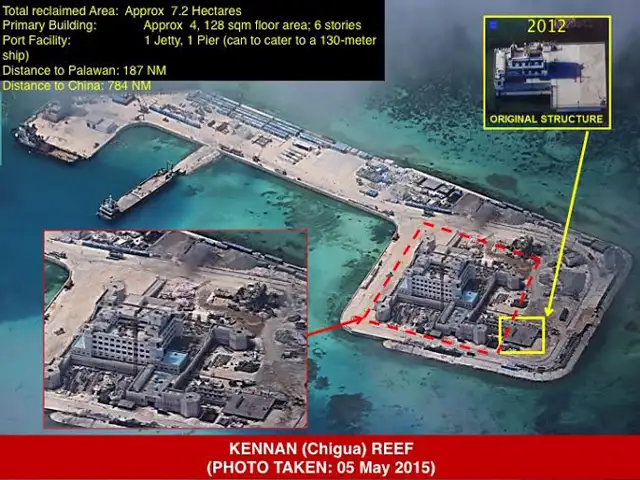
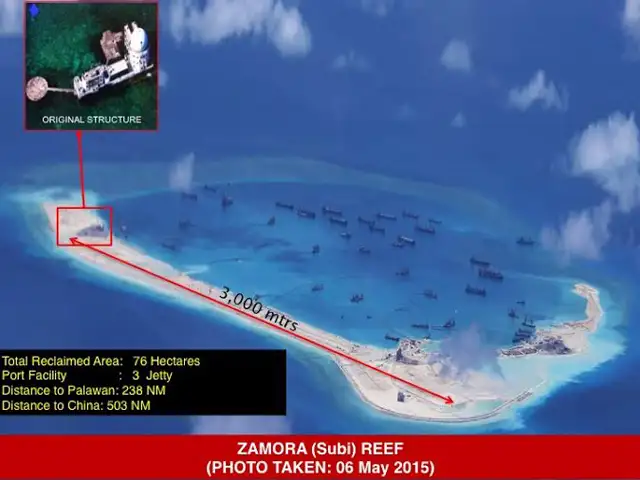
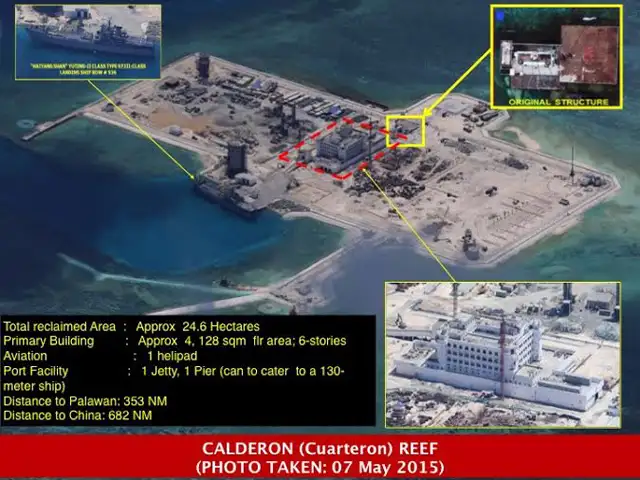
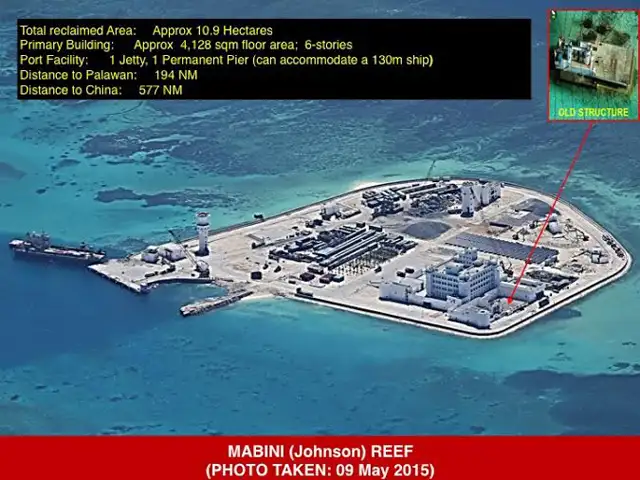
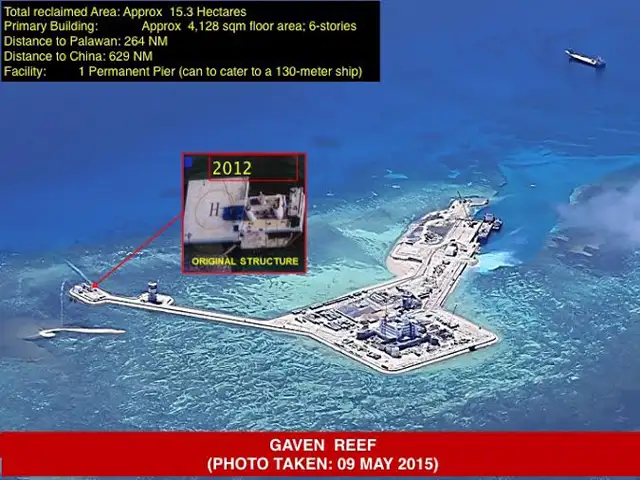
At the center of those disputed waters, land reclamation projects on the Spratly Islands, started by China last year, have begun to reach completion, producing 1,500 acres of land in just in 2015.
"[China's] behavior threatens to set a new precedent whereby larger countries are free to intimidate smaller ones, and that provokes tensions, instability and can even leader to conflict," Blinken said.
China's new security law will only amplify those concerns.
China's aggressive posture toward the South China Sea has been stirring tensions in the region, and a new national security law passed by the Chinese government suggests that Beijing is just getting started.
The new law calls for security to be maintained in all fields, including culture, education, and cyberspace.
Moreover, as reported by The New York Times, the law's passage indicates that there has also been a meaningful shift in how Chinese leaders view their country's "core interests."
In years past, China's core interests were believed to mean specific and limited territorial matters, such as those regarding Taiwan and Tibet, that the communist country determined to be internal matters.
The new law is reportedly an indication that the "core interests" have been stretched.
ADVERTISEMENT
"In 2010, Chinese and foreign officials and scholars began debating whether the South China Sea was now a core interest," The Times' Beijing bureau chief Edward Wong writes.
"Under the new definition ... the term does encompass the South China Sea and any other sovereignty issues of importance to China (think Arunachal Pradesh in India, and the islands in the East China Sea that Japan calls the Senkaku and China calls the Diaoyu)."
If the shipping channels and islands of the South China Sea are now counted as "core interests" by China, then it is likely to continue to push for greater control over the sea and the $5 trillion in shipping that passes through it each year.
US officials, for their part, have repudiated China's posture toward the region.
ADVERTISEMENT
"As China seeks to make sovereign land out of sandcastles and redraw maritime boundaries, it is eroding regional trust and undermining investor confidence," said US Deputy Secretary of State Antony Blinken in late May.
In recent months, Chinese ships have clashed with vessels from Vietnam, with both governments naming the other as aggressor in several incidents.
ADVERTISEMENT
Chinese dredging vessels are purportedly seen in the waters around Fiery Cross Reef in the disputed Spratly Islands in this still image from video taken by a P-8A Poseidon surveillance aircraft provided by the United States Navy May 21, 2015.
The Philippines has also reported confrontations with Chinese ships in disputed waters. China has accused the Philippines of escalating the situation.
"Certain countries are roping in countries from outside the region to get involved in the South China Sea issue ... deliberately exaggerating the tense atmosphere ..." Chinese Defense Ministry spokesman Yang Yujun said in late June.
At the center of those disputed waters, land reclamation projects on the Spratly Islands, started by China last year, have begun to reach completion, producing 1,500 acres of land in just in 2015.
"[China's] behavior threatens to set a new precedent whereby larger countries are free to intimidate smaller ones, and that provokes tensions, instability and can even leader to conflict," Blinken said.
China's new security law will only amplify those concerns.
Download
The Economic Times Business News App for the Latest News in Business, Sensex, Stock Market Updates & More.
The Economic Times Business News App for the Latest News in Business, Sensex, Stock Market Updates & More.
Download
The Economic Times News App for Quarterly Results, Latest News in ITR, Business, Share Market, Live Sensex News & More.
The Economic Times News App for Quarterly Results, Latest News in ITR, Business, Share Market, Live Sensex News & More.
Related Articles
 Nepal seeks reset with China as Foreign Minister Khanal holds wide-ranging talks in Beijing2026-06-16T09:51:02Z
- In 1929, archaeologist Pei Wenzhong uncovered a skullcap in a cave near Beijing: Peking Man forced the world to take Asia’s deep human past seriously2026-06-11T11:57:05Z
- India, China should stick to 'right strategic perception' of being cooperative partners, not rivals: Beijing2026-06-08T10:24:09Z
Dipanjan Roy Chaudhury, ET Bureau
India and US discussed the situation in the South China Sea region and measures that could lead to stability in the area with fresh reports of new artificial islands being built by China raising tensions in Southeast Asia.
ET is in possession of images, released by Philippines, of new construction activities by China in SCS.
India and US discussed the situation in the South China Sea region and measures that could lead to stability in the area with fresh reports of new artificial islands being built by China raising tensions in Southeast Asia.
ET is in possession of images, released by Philippines, of new construction activities by China in SCS.

ADVERTISEMENT


