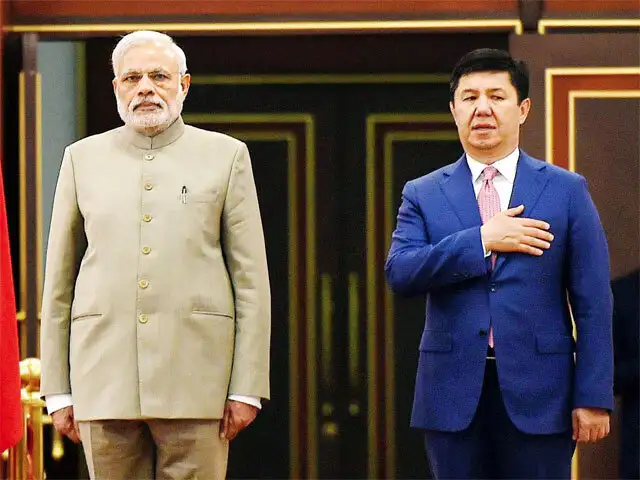
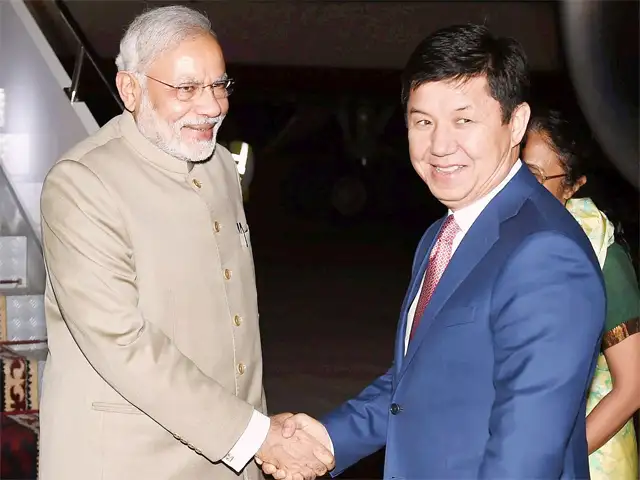
PM Modi's Central Asia tour brings region back into focus
Nearly a quarter-of-a-century after its 'independence from Soviet Russia', Delhi has not developed on these relationships to take them to the next level of partnership.

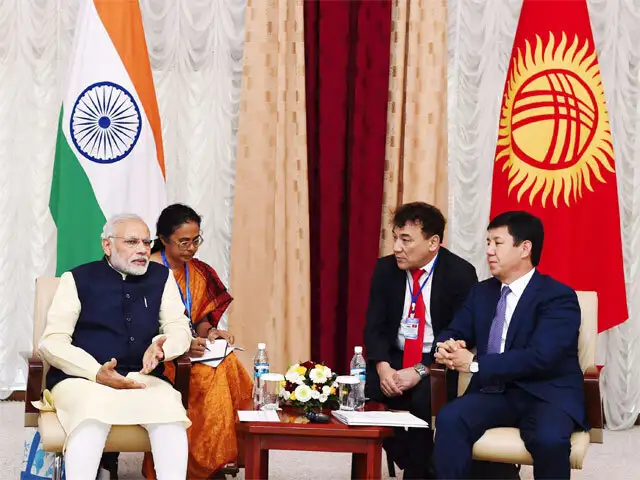
Six days, five nations. Given the geographical contiguity of the five countries in Central Asia, it was judicious for Prime Minister Narendra Modi to visit them in a back-to-back trip to bring to the forefront the region’s strategic importance for India.
Central Asia not only has historical connections with Delhi but also has contemporary goodwill. Each of the five countries — Kazakhstan, Uzbekistan, Kyrgyzstan, Turkmenistan and Tajikistan — have a natural affinity towards India built on Soviet legacy. While Indologists are sought after in Uzbekistan, the most populous country of the region, love for India in the region’s biggest republic Kazakhstan is palpable on the streets of its capital Astana.
Besides Bollywood, Hindi TV soaps are growing in popularity. Learning Hindi is also on the rise.
But nearly a quarter-of-a-century after its 'independence from Soviet Russia', Delhi has not developed on these relationships to take them to the next level of partnership.
There is a common Islamic heritage of both India and Central Asian countries that rejects extremist ideology. It would be wise for New Delhi, in this context, to promote its soft power to embrace the region more closely by opening more cultural centres beyond the existing three.
Abundance of natural resources in countries like Kazakhstan is not the only reason that India is thinking of beefing up its relations with Kazakhstan and the other four Central Asian republics. Close security ties and related geopolitics of the region have also influenced Delhi to look at the region closely. Cross-border terrorism and the rapid growth of the Islamic State (IS) have emerged as common threat.
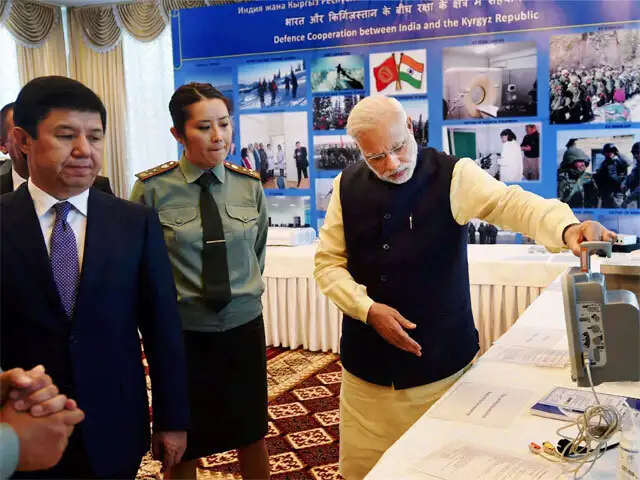
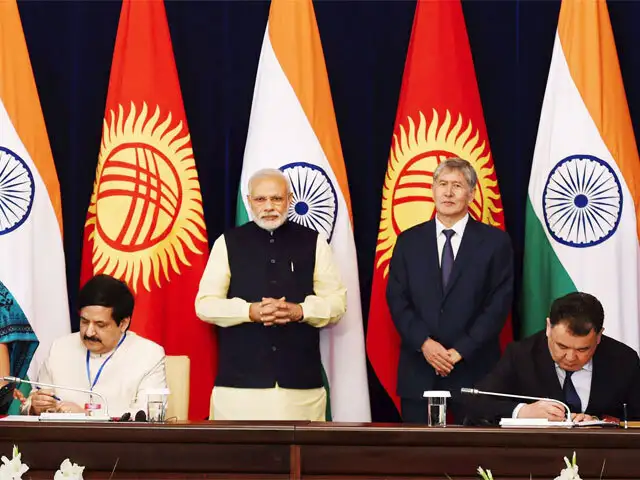
Slowly but steadily, India's defence ties with the region are on rise. Not many are aware that there is a defence attache in each of Indian embassies of the five Central Asian republics. Joint exercises have been quietly conducted with some of them. The recentlyconcluded defence agreement with Kazakhstan has the potential to become a far-reaching comprehensive security partnership.
It was imperative that an Indian prime minister visits all the five countries, some of which have limited international engagement, for India's power projection in a region where China has made deep inroads by pumping money, laying railway lines, pipelines and building roads.
And India's full membership in the Shanghai Cooperation Organisation will allow it to position itself at an advantageous position as a regional player. The landlocked Central Asian republics have wanted India to play a larger strategic role for a while now. India's support for Kabul, as well as safeguarding its own strategic interests, could be better served by a larger Indian presence in some of these countries that share direct borders with Afghanistan.
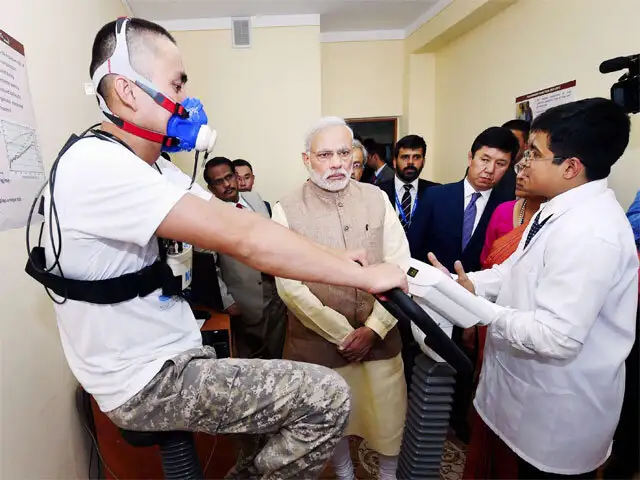
Centres of Excellence in Information and Communication Technology have been set up by India. Delhi must explore to have more such projects that will not only further development processes in the Central Asian republics but also enhance people-to-people contacts. Coupled with this, tourism should also be actively promoted.
Central Asia is a region of immense resources, talent, rapid growth and a strategic location. India is willing to work jointly not only in the minerals and energy sectors, but also in pharmaceuticals, textiles, engineering, and small and medium enterprises. It can also invest in refineries, petrochemicals and fertiliser plants in the region.
But the biggest geographical disadvantage is the lack of direct connectivity between India and Central Asia, coupled with Pakistan's unwillingness to provide direct transit. In most of his public remarks in Central Asia and Russia, Narendra Modi harped on harnessing transport corridors and ports via Iran and Turkmenistan, apart for the Kazakh-Turkmen-Iran rail link, to realise untapped economic potential.
The success of connectivity through and across Central Asia is important. In an age of globalisation, Asia cannot remain fragmented. And Central Asia cannot remain distant and disconnected from India. China's New Silk Route strategy that would cross through the Central Asian republics is not the only option for making the region prosperous.
India can provide another alternative to landlocked Central Asia to connect with the rest of the world.
The Economic Times Business News App for the Latest News in Business, Sensex, Stock Market Updates & More.
The Economic Times News App for Quarterly Results, Latest News in ITR, Business, Share Market, Live Sensex News & More.