Pathankot and Afghanistan attacks: The obvious and not-so-obvious takeaways
Here's a radical thought – how about the US take the long-term view and set the stage for, even push Pakistan to accept the LoC as the border by, let's say, sending John Kerry to visit J&K.
Updated:

By Seema Sirohi
The takeaways from the twin attacks on the Pathankot airbase and the Indian consulate in Afghanistan are many, some obvious as day and others not so.
Were they acts of war? Most countries would consider attacks on an airbase and a consulate as acts of war and there is little doubt India does too. But they will get filed under "terrorism" since Pakistan army's fingerprints won't be easy to lift even though more than enough evidence points to Jaish-e-Mohammad, revived by the deep state over the past few years. The scope, the training, the dry runs all point in a certain direction.
Follow @ETDefence Twitter handle for comprehensive coverage on other buzzing Defence stories
Newton's Law at work? That every action has an equal and opposite reaction certainly applies in the volatile world of Indo-Pak relations. Attempts at peace are followed by attempts at war by other means. The famous Lahore bus ride gave Kargil in 1999, the Agra summit in 2001 was followed by an attack on the Indian Parliament, Zardari government's overtures ended with the Mumbai attacks in 2008, Nawaz Sharif attending Narendra Modi's swearing-in was coupled with an attack on an Indian consulate in Herat in Afghanistan, Ufa was followed by Gurdaspur and now Modi's Lahore visit by Pathankot and Mazar-e-Sharif.
A win-win for Pakistan? The Pathankot attack was big enough to rile India but not deadly enough to spark a military response. It was a carefully planned jab to test India's red lines, as Christine Fair, a Pakistan expert, has pointed out. The loss of seven Indian security personnel is embarrassing, the haphazard response more so.
Denialistan no more? The fact that the Sharif government didn't deny the attackers came from Pakistan is a sign of progress. The statements expressing an intent to investigate and get to the crux of the matter, too, is progress on the usually benighted scale of Indo-Pak relations. Of course, a section of the Pakistan media claimed the Pathankot attack was a "false flag" operation, meaning Indian forces attacked and killed themselves. Moeed Pirzada, who describes himself as "TV Anchor, Columnist & Blogger, Editor Strategic Affairs, Dunya News, Dreamer for a EU style South Asia & a better world," vigorously promoted the idea on his programme.
ISI Rogues did it? Although it is a line of argument sometimes used even by Pakistani liberals, facts show otherwise. Scholars who have studied Pakistan's military-jihadi-ISI complex say things are structured and terrorist groups have army majors assigned to them for training and resources. Operations are designed for plausible deniability in the ageold tradition of intelligence agencies.
Mind the (security) gap? India's response to the Pathankot attack despite realtime intelligence information was shockingly slow and confused. Too many agencies were deployed with no clear command structure. And the less said about security around the airbase, the better. Lessons from the plentiful study material available have yet to be learnt. Investment in developing deterrence is key.
To talk or not to talk? That remains the eternal question. Those who support talks say "katti" with Pakistan is not a policy, for it allows terrorists and by extension the Pakistan army a veto on the future. Dialogue will bolster the civilian government against the army in the long run. Those against the talks equally credibly say the futile exercise of talks-terror-breakup-talks gets India no closer to peace. It is a giant waste of national energy, which would be better spent on making India a real economic power. India's Pakistan policy should be a high growth rate. Besides, the Pakistan army doesn't favour normalisation because it would undercut a big reason for its being.
Finally, can the US help? As the primary patron of the Pakistan army, Washington can exercise more influence than it chooses to. Instead of blandly calling for dialogue after every terrorist attack from Pakistan and thus granting equal status to the victim and perpetrator, it could try imposing costs on the sponsors of terrorism. The policy of appeasement has failed. To change the army's hearts and minds, successive US administrations have studded its arsenal with sophisticated toys, including four types of missiles, 2000-pound bombs, Cobra attack helicopters, and of course, the F-16s to name just a few. The Obama administration even explored a possible nuclear deal under the ongoing rewards programme.
Here's a radical thought – how about the US take the long-term view and set the stage for, even push Pakistan to accept the LoC as the border by, let's say, sending John Kerry to visit J&K.
The takeaways from the twin attacks on the Pathankot airbase and the Indian consulate in Afghanistan are many, some obvious as day and others not so.
Were they acts of war? Most countries would consider attacks on an airbase and a consulate as acts of war and there is little doubt India does too. But they will get filed under "terrorism" since Pakistan army's fingerprints won't be easy to lift even though more than enough evidence points to Jaish-e-Mohammad, revived by the deep state over the past few years. The scope, the training, the dry runs all point in a certain direction.
Follow @ETDefence Twitter handle for comprehensive coverage on other buzzing Defence stories
Newton's Law at work? That every action has an equal and opposite reaction certainly applies in the volatile world of Indo-Pak relations. Attempts at peace are followed by attempts at war by other means. The famous Lahore bus ride gave Kargil in 1999, the Agra summit in 2001 was followed by an attack on the Indian Parliament, Zardari government's overtures ended with the Mumbai attacks in 2008, Nawaz Sharif attending Narendra Modi's swearing-in was coupled with an attack on an Indian consulate in Herat in Afghanistan, Ufa was followed by Gurdaspur and now Modi's Lahore visit by Pathankot and Mazar-e-Sharif.
A win-win for Pakistan? The Pathankot attack was big enough to rile India but not deadly enough to spark a military response. It was a carefully planned jab to test India's red lines, as Christine Fair, a Pakistan expert, has pointed out. The loss of seven Indian security personnel is embarrassing, the haphazard response more so.
ADVERTISEMENT
Denialistan no more? The fact that the Sharif government didn't deny the attackers came from Pakistan is a sign of progress. The statements expressing an intent to investigate and get to the crux of the matter, too, is progress on the usually benighted scale of Indo-Pak relations. Of course, a section of the Pakistan media claimed the Pathankot attack was a "false flag" operation, meaning Indian forces attacked and killed themselves. Moeed Pirzada, who describes himself as "TV Anchor, Columnist & Blogger, Editor Strategic Affairs, Dunya News, Dreamer for a EU style South Asia & a better world," vigorously promoted the idea on his programme.
ISI Rogues did it? Although it is a line of argument sometimes used even by Pakistani liberals, facts show otherwise. Scholars who have studied Pakistan's military-jihadi-ISI complex say things are structured and terrorist groups have army majors assigned to them for training and resources. Operations are designed for plausible deniability in the ageold tradition of intelligence agencies.
Mind the (security) gap? India's response to the Pathankot attack despite realtime intelligence information was shockingly slow and confused. Too many agencies were deployed with no clear command structure. And the less said about security around the airbase, the better. Lessons from the plentiful study material available have yet to be learnt. Investment in developing deterrence is key.
To talk or not to talk? That remains the eternal question. Those who support talks say "katti" with Pakistan is not a policy, for it allows terrorists and by extension the Pakistan army a veto on the future. Dialogue will bolster the civilian government against the army in the long run. Those against the talks equally credibly say the futile exercise of talks-terror-breakup-talks gets India no closer to peace. It is a giant waste of national energy, which would be better spent on making India a real economic power. India's Pakistan policy should be a high growth rate. Besides, the Pakistan army doesn't favour normalisation because it would undercut a big reason for its being.
ADVERTISEMENT
Finally, can the US help? As the primary patron of the Pakistan army, Washington can exercise more influence than it chooses to. Instead of blandly calling for dialogue after every terrorist attack from Pakistan and thus granting equal status to the victim and perpetrator, it could try imposing costs on the sponsors of terrorism. The policy of appeasement has failed. To change the army's hearts and minds, successive US administrations have studded its arsenal with sophisticated toys, including four types of missiles, 2000-pound bombs, Cobra attack helicopters, and of course, the F-16s to name just a few. The Obama administration even explored a possible nuclear deal under the ongoing rewards programme.
Here's a radical thought – how about the US take the long-term view and set the stage for, even push Pakistan to accept the LoC as the border by, let's say, sending John Kerry to visit J&K.
ADVERTISEMENT
Download
The Economic Times Business News App for the Latest News in Business, Sensex, Stock Market Updates & More.
The Economic Times Business News App for the Latest News in Business, Sensex, Stock Market Updates & More.
Download
The Economic Times News App for Quarterly Results, Latest News in ITR, Business, Share Market, Live Sensex News & More.
The Economic Times News App for Quarterly Results, Latest News in ITR, Business, Share Market, Live Sensex News & More.
Related Articles
 Dharamshala weather disrupts IND vs AFG 1st ODI: Toss delayed as rain washes out India's match against Afghanistan. Check hourly updates2026-06-13T07:14:30Z
- Pakistan says carried out air strikes at terror hideouts in Afghanistan, 26 killed2026-06-10T11:32:53Z
- Hardik Pandya ruled out of Afghanistan ODIs due to injury: Sources2026-06-10T05:15:14Z
Text: PTI & Agencies
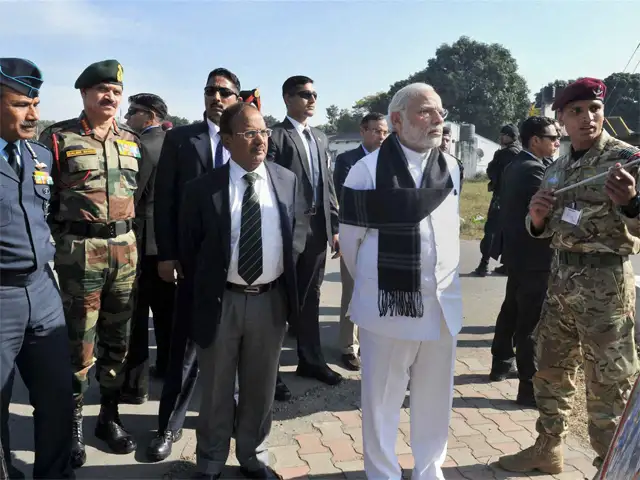
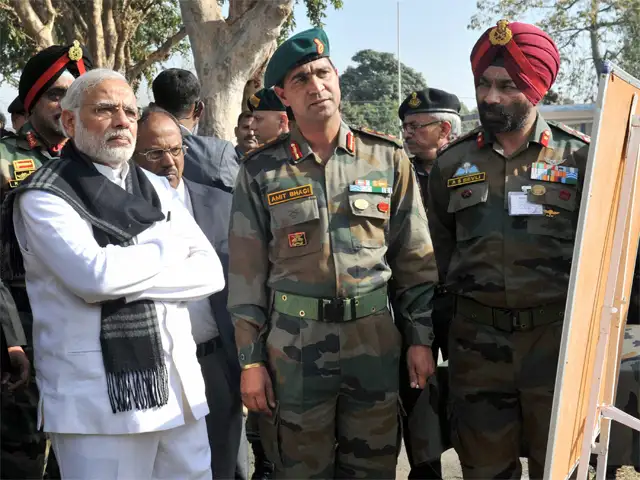
Accompanied by NSA Ajit Doval, PM Narendra Modi on Saturday visited the Pathankot air base and voiced satisfaction over the counter offensive mounted by the security forces to eliminate the perpetrators.
Modi visited the facility where he was briefed about the attack and security measures put in place in its aftermath.
In pic: PM Modi watching a presentation on counter-terrorist and combing operation by the Defence Forces, at Pathankot Airbase.
Accompanied by NSA Ajit Doval, PM Narendra Modi on Saturday visited the Pathankot air base and voiced satisfaction over the counter offensive mounted by the security forces to eliminate the perpetrators.
Modi visited the facility where he was briefed about the attack and security measures put in place in its aftermath.
In pic: PM Modi watching a presentation on counter-terrorist and combing operation by the Defence Forces, at Pathankot Airbase.

ADVERTISEMENT


