It is time to analyze OROP with our head, not our heart
Army enjoys so much support from our civilian population. Our local culture, films and songs show the Army in a positive light (unlike the police and politicians).
Updated:

By Chetan Bhagat
Few government professions in India enjoy as much public goodwill as our defence forces. Mention the Indian Army (for the purpose of this article, Army includes all forces -Air Force and Navy as well) and our chests swell with pride.
The Army works well, stays quiet, is apolitical and does a great job protecting our borders from some of our not-so-friendly neighbours. Even in times of domestic trouble, such as riots or floods, the Army is called in and things begin to get better.
In times of war, or during terrorist acts, our soldiers lay down their lives or suffer grievous injuries in the line of duty. With all this selfless sacrifice, it is not difficult to see why the Army enjoys so much support from our civilian population. Our local culture, films and songs show the Army in a positive light (unlike the police and politicians).
Media coverage, too, focuses on their sacrifice and hard work.
While this positive image is great, it can cloud an objective analysis of how we manage our defence resources in certain situations. One such issue is the OROP scheme. While OROP means `one rank, one pension', it is a bit of a misnomer. It actually means one rank, the latest, highest pension for that rank, irrespective of when you retired.
Army veterans essentially want an upward pension revision sys tem for all past veterans or their surviving spouses, estimated to be around 3.2 million in number. There are several reasons why their demand is justified. Pension discrepancy between an officer who retired in 1990, versus an equal-ranked officer who retired in 2015 can be dramatic.
A certain consistency was required, especially since the Army intrinsically believes in the concept of rank, and even allows one to keep it after retirement. Most political parties had also promised OROP in their election manifestos, so the government had to deliver at some point. Popular and social media also sided with the veterans, with arguments ranging from “they guard our borders so we should give them what they want“ to “how can we disrespect our soldiers?“
Somewhere in all this, things became too simplistic. The Army was good and the veterans were always right. The political class and the government were all stingy, greedy and insensitive. After all, those who protect our borders must be treated well. OROP was seen as something that meant soldiers were treated well. Hence, you better give OROP , and now!
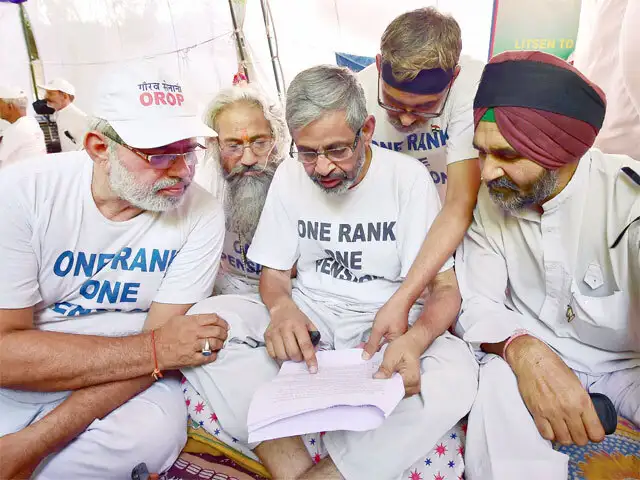
People who wanted to do an objective analysis had to scurry and hide in a corner. For nobody could hear a word against OROP , and with the veterans protesting in the Capital, even the government was pushed to a corner. OROP was announced. The government estimated a liability of around Rs 12,000 crore per year to just implement this one recommendation. However, the veterans were not happy . As you read this, other protests are being organized as the veterans feel many of their demands are not met.
What should we do? Should we still maintain the Army Good, Politician Bad' argument? Should we still say `give them whatever they want because they guard our borders' (by the way , the Border Security Force, or BSF, does not get OROP)? Or should we now at least look at various aspects of OROP and, dare we say , its pros and cons?
We should. For, in a country of limited resources like India, an expense as big as OROP must be examined carefully , and kept in limits. At present, our defence budget is Rs 250,000 crore. In addition, we pay defence pensions of around Rs 60,000 crore per year. OROP will add another Rs 12,000 crore to it annually. Note that these pensions are, by definition, for services al ready rendered. These funds are given out with no output obtained in return. While we all agree we should treat Army personnel well, what's better? To pay the veterans more, or to pay new hires in the Army more? To pay the officers more or the jawans more? To pay more to get better talent, or pay more and create more jobs?
Should more money be spent on pensions, or more hospitals for veterans? Should war-affected veteran families be paid differently from those who retired safe and sound? As a solution to increased pen sion expense, can veterans be re-hired in certain jobs useful to the economy? Also, if we have OROP for de fence, why not for our paramilitary and police? Can we afford to pay them all?
All these issues make OROP more complex than it seems, and it is about time we have a sane, objective debate about it rather than an emotional, army-is amazing-so-just-give-it-everything one. Forget OROP , many sectors don't even have pensions. Sure, a certain form of rank and pay equalization needs to exist so things don't fall too far apart. However, it has to be done in the context of what is possible, affordable, and after analyzing what alternative welfare those funds can provide and the precedent it will set for others.
Only then will we reach a good conclusion on OROP .
We love our Army with all our heart, but it's time we also think about issues related to it with our head.
Few government professions in India enjoy as much public goodwill as our defence forces. Mention the Indian Army (for the purpose of this article, Army includes all forces -Air Force and Navy as well) and our chests swell with pride.
The Army works well, stays quiet, is apolitical and does a great job protecting our borders from some of our not-so-friendly neighbours. Even in times of domestic trouble, such as riots or floods, the Army is called in and things begin to get better.
In times of war, or during terrorist acts, our soldiers lay down their lives or suffer grievous injuries in the line of duty. With all this selfless sacrifice, it is not difficult to see why the Army enjoys so much support from our civilian population. Our local culture, films and songs show the Army in a positive light (unlike the police and politicians).
Media coverage, too, focuses on their sacrifice and hard work.
While this positive image is great, it can cloud an objective analysis of how we manage our defence resources in certain situations. One such issue is the OROP scheme. While OROP means `one rank, one pension', it is a bit of a misnomer. It actually means one rank, the latest, highest pension for that rank, irrespective of when you retired.
ADVERTISEMENT
Army veterans essentially want an upward pension revision sys tem for all past veterans or their surviving spouses, estimated to be around 3.2 million in number. There are several reasons why their demand is justified. Pension discrepancy between an officer who retired in 1990, versus an equal-ranked officer who retired in 2015 can be dramatic.
A certain consistency was required, especially since the Army intrinsically believes in the concept of rank, and even allows one to keep it after retirement. Most political parties had also promised OROP in their election manifestos, so the government had to deliver at some point. Popular and social media also sided with the veterans, with arguments ranging from “they guard our borders so we should give them what they want“ to “how can we disrespect our soldiers?“
Somewhere in all this, things became too simplistic. The Army was good and the veterans were always right. The political class and the government were all stingy, greedy and insensitive. After all, those who protect our borders must be treated well. OROP was seen as something that meant soldiers were treated well. Hence, you better give OROP , and now!
People who wanted to do an objective analysis had to scurry and hide in a corner. For nobody could hear a word against OROP , and with the veterans protesting in the Capital, even the government was pushed to a corner. OROP was announced. The government estimated a liability of around Rs 12,000 crore per year to just implement this one recommendation. However, the veterans were not happy . As you read this, other protests are being organized as the veterans feel many of their demands are not met.
ADVERTISEMENT
What should we do? Should we still maintain the Army Good, Politician Bad' argument? Should we still say `give them whatever they want because they guard our borders' (by the way , the Border Security Force, or BSF, does not get OROP)? Or should we now at least look at various aspects of OROP and, dare we say , its pros and cons?
We should. For, in a country of limited resources like India, an expense as big as OROP must be examined carefully , and kept in limits. At present, our defence budget is Rs 250,000 crore. In addition, we pay defence pensions of around Rs 60,000 crore per year. OROP will add another Rs 12,000 crore to it annually. Note that these pensions are, by definition, for services al ready rendered. These funds are given out with no output obtained in return. While we all agree we should treat Army personnel well, what's better? To pay the veterans more, or to pay new hires in the Army more? To pay the officers more or the jawans more? To pay more to get better talent, or pay more and create more jobs?
ADVERTISEMENT
Should more money be spent on pensions, or more hospitals for veterans? Should war-affected veteran families be paid differently from those who retired safe and sound? As a solution to increased pen sion expense, can veterans be re-hired in certain jobs useful to the economy? Also, if we have OROP for de fence, why not for our paramilitary and police? Can we afford to pay them all?
All these issues make OROP more complex than it seems, and it is about time we have a sane, objective debate about it rather than an emotional, army-is amazing-so-just-give-it-everything one. Forget OROP , many sectors don't even have pensions. Sure, a certain form of rank and pay equalization needs to exist so things don't fall too far apart. However, it has to be done in the context of what is possible, affordable, and after analyzing what alternative welfare those funds can provide and the precedent it will set for others.
Only then will we reach a good conclusion on OROP .
We love our Army with all our heart, but it's time we also think about issues related to it with our head.
Download
The Economic Times Business News App for the Latest News in Business, Sensex, Stock Market Updates & More.
The Economic Times Business News App for the Latest News in Business, Sensex, Stock Market Updates & More.
Download
The Economic Times News App for Quarterly Results, Latest News in ITR, Business, Share Market, Live Sensex News & More.
The Economic Times News App for Quarterly Results, Latest News in ITR, Business, Share Market, Live Sensex News & More.
Related Articles
 Quote of the Day by William Shakespeare: 'It is a wise father that knows his own...'- Timeless lessons on parenting, family values, fatherhood, responsibility and the value of understanding your child’s heart by the greatest dramatist of all time2026-06-19T20:38:53Z
- Quote of the day by Blaise Pascal: 'The heart has its reasons which reason knows nothing of' - French philosopher and mathematician on how love goes beyond logic2026-06-19T09:38:20Z
- Quote of the day by American novelist Nicholas Sparks: 'The emotion that can break your heart is sometimes the one that heals it.' A life lesson on growth through heartbreak2026-06-18T08:48:09Z
Text: ECONOMICTIMES.COM
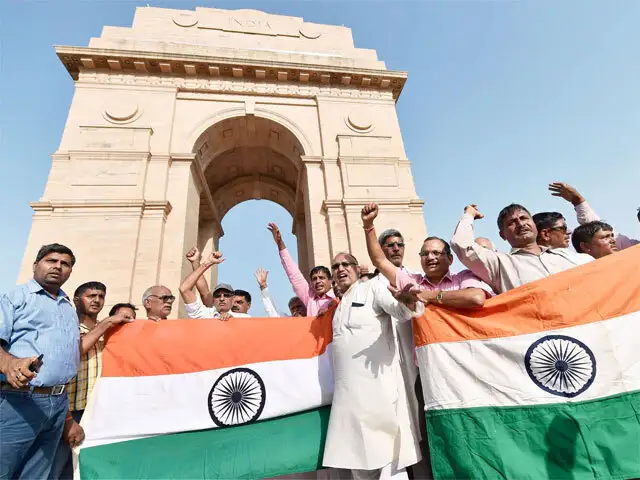
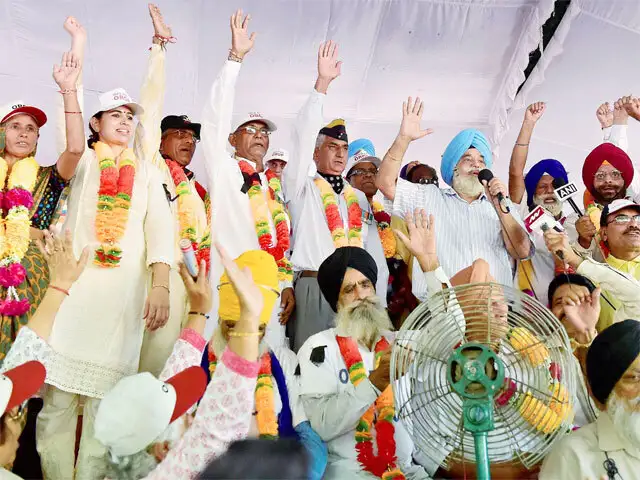
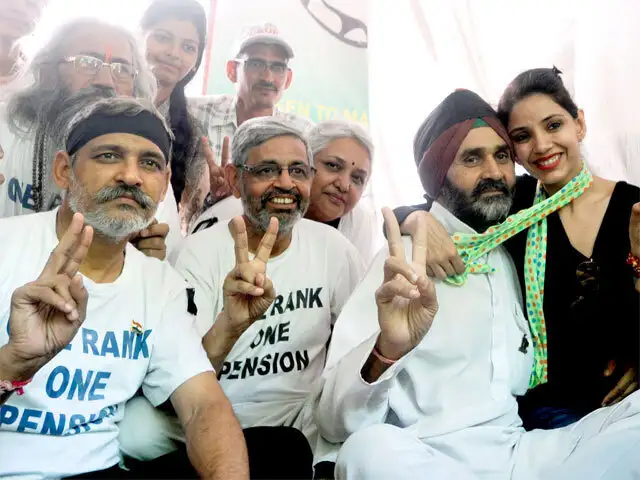
Ending a four decade long wait of veterans, Prime Minister Narendra Modi-led NDA government on Saturday announced the 'One Rank One Pension' scheme for ex-servicemen.
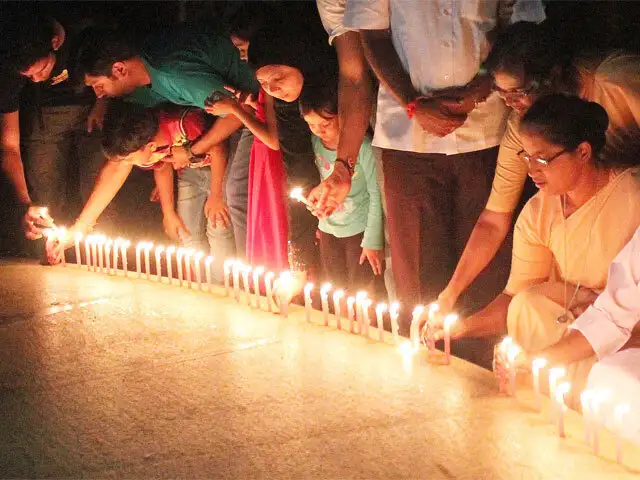
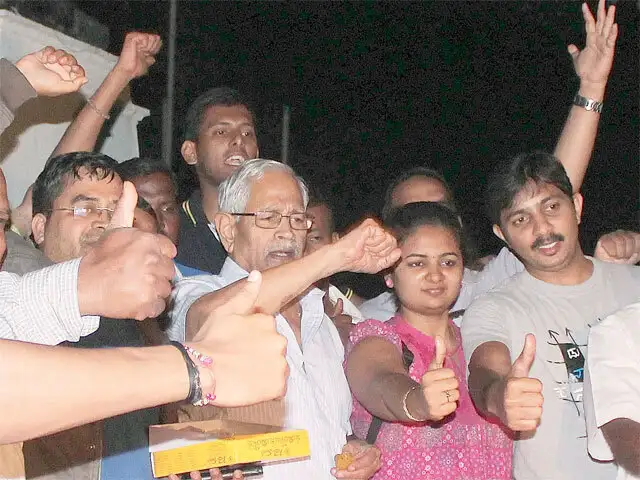
In pic: Ex-servicemen celebrate at the India Gate after the government announced the implementation of One Rank One Pension (OROP) scheme, in New Delhi on Saturday.
Ending a four decade long wait of veterans, Prime Minister Narendra Modi-led NDA government on Saturday announced the 'One Rank One Pension' scheme for ex-servicemen.
In pic: Ex-servicemen celebrate at the India Gate after the government announced the implementation of One Rank One Pension (OROP) scheme, in New Delhi on Saturday.

ADVERTISEMENT


