Army chief General Suhag says India needs to be ready for short wars
Recent incidents of terrorist violence are clear pointers to the attempt to extend the arc of violence to other areas," Army chief General Dalbir Singh Suhag said on Tuesday.
By Rajat Pandit, TNN | Updated:

NEW DELHI: Slamming Pakistan for using "new methods" to create unrest in Jammu and Kashmir as well as spread the "arc of violence" to other areas, the Indian Army on Tuesday said it was ready for short wars which could be swiftly unleashed without much warning.
"The border remains alive and active due to the frequency of ceasefire violations and infiltration bids by our western neighbour. Recent incidents of terrorist violence are clear pointers to the attempt to extend the arc of violence to other areas," Army chief General Dalbir Singh Suhag said on Tuesday.
"In that context, we are acutely aware that the swift, short nature of future wars is likely to offer limited warning time. This calls for maintaining very high levels of operational preparedness at all times. This is something that has now become inherent in our operational strategy," he added, speaking at the tri-Service seminar organised as part of the 1965 war's golden jubilee celebrations.
The veiled acknowledgement of the risk of having to face a blitzkrieg comes in the backdrop of the Army conducting a series of major combat exercises over the last several years -- including the recent 'Brahmashira' exercise by the 2 'Kharga' Strike Corps in Rajasthan -- to practice "swift multiple offensives deep into enemy territory" under its "Pro-Active Conventional War Strategy". This mobilise-fast and hit-hard doctrine, informally called 'Cold Start', emerged from the lessons learnt from Operation Parakram in 2002, launched in response to the terrorist attack on Parliament, which exposed the Indian Army's operational gaps as well as inability to launch swift punishing strikes across the border, as reported by TOI earlier.
India's slow troop mobilisation also gave the international community, especially the US, enough time to intervene. Since then, the Army has also progressively rejigged its formations along the western front to ensure rapid mobilization of self-contained "battle groups" built around the T-90S main-battle tanks.
"If it took a month for the Army strike formations to mobilize during Operation Parakram, it will now take just four-five days for the battle groups to get going. Fine-tuning the strategy is a constant endeavour," said an officer.
Pakistan, of course, has for long been perturbed by India's pro-active war strategy, even complaining to the US about it in the past. Moreover, while India may believe that nuclear weapons are not war-fighting weapons, Pakistan has no such compulsions. It frequently flaunts its tactical 'Nasr' nuclear missile as a battlefield weapon to effectively deter any Indian conventional armoured thrust into its territory.
Speakers at the seminar on Tuesday, ranging from Vice-President Hamid Ansari and defence minister Manohar Parrikar to the three Service chiefs, acknowledged that threats and challenges had become much more complex since India thwarted Pakistan's designs of wresting Kashmir by force in the 1965 war.
"A cursory analysis of the 1965 war highlights the fact that a nation's entire military establishment must constantly refine its capabilities and processes in order to ensure territorial integrity and counter any hostile actions," Parrikar said.
"The present day environment also requires a similar approach, with alertness and readiness, so that we can deter any such action, and ensure a peaceful environment... the security environment today is complex and nuanced. We, therefore, need to be vigilant, taking into account all dimensions, so that all emerging challenges are suitably addressed," he added.
"The border remains alive and active due to the frequency of ceasefire violations and infiltration bids by our western neighbour. Recent incidents of terrorist violence are clear pointers to the attempt to extend the arc of violence to other areas," Army chief General Dalbir Singh Suhag said on Tuesday.
"In that context, we are acutely aware that the swift, short nature of future wars is likely to offer limited warning time. This calls for maintaining very high levels of operational preparedness at all times. This is something that has now become inherent in our operational strategy," he added, speaking at the tri-Service seminar organised as part of the 1965 war's golden jubilee celebrations.
The veiled acknowledgement of the risk of having to face a blitzkrieg comes in the backdrop of the Army conducting a series of major combat exercises over the last several years -- including the recent 'Brahmashira' exercise by the 2 'Kharga' Strike Corps in Rajasthan -- to practice "swift multiple offensives deep into enemy territory" under its "Pro-Active Conventional War Strategy". This mobilise-fast and hit-hard doctrine, informally called 'Cold Start', emerged from the lessons learnt from Operation Parakram in 2002, launched in response to the terrorist attack on Parliament, which exposed the Indian Army's operational gaps as well as inability to launch swift punishing strikes across the border, as reported by TOI earlier.
India's slow troop mobilisation also gave the international community, especially the US, enough time to intervene. Since then, the Army has also progressively rejigged its formations along the western front to ensure rapid mobilization of self-contained "battle groups" built around the T-90S main-battle tanks.
"If it took a month for the Army strike formations to mobilize during Operation Parakram, it will now take just four-five days for the battle groups to get going. Fine-tuning the strategy is a constant endeavour," said an officer.
ADVERTISEMENT
Pakistan, of course, has for long been perturbed by India's pro-active war strategy, even complaining to the US about it in the past. Moreover, while India may believe that nuclear weapons are not war-fighting weapons, Pakistan has no such compulsions. It frequently flaunts its tactical 'Nasr' nuclear missile as a battlefield weapon to effectively deter any Indian conventional armoured thrust into its territory.
Speakers at the seminar on Tuesday, ranging from Vice-President Hamid Ansari and defence minister Manohar Parrikar to the three Service chiefs, acknowledged that threats and challenges had become much more complex since India thwarted Pakistan's designs of wresting Kashmir by force in the 1965 war.
"A cursory analysis of the 1965 war highlights the fact that a nation's entire military establishment must constantly refine its capabilities and processes in order to ensure territorial integrity and counter any hostile actions," Parrikar said.
"The present day environment also requires a similar approach, with alertness and readiness, so that we can deter any such action, and ensure a peaceful environment... the security environment today is complex and nuanced. We, therefore, need to be vigilant, taking into account all dimensions, so that all emerging challenges are suitably addressed," he added.
ADVERTISEMENT
Download
The Economic Times Business News App for the Latest News in Business, Sensex, Stock Market Updates & More.
The Economic Times Business News App for the Latest News in Business, Sensex, Stock Market Updates & More.
Download
The Economic Times News App for Quarterly Results, Latest News in ITR, Business, Share Market, Live Sensex News & More.
The Economic Times News App for Quarterly Results, Latest News in ITR, Business, Share Market, Live Sensex News & More.
Related Articles
 Vice Chief Lt Gen Dhiraj Seth named next Army Chief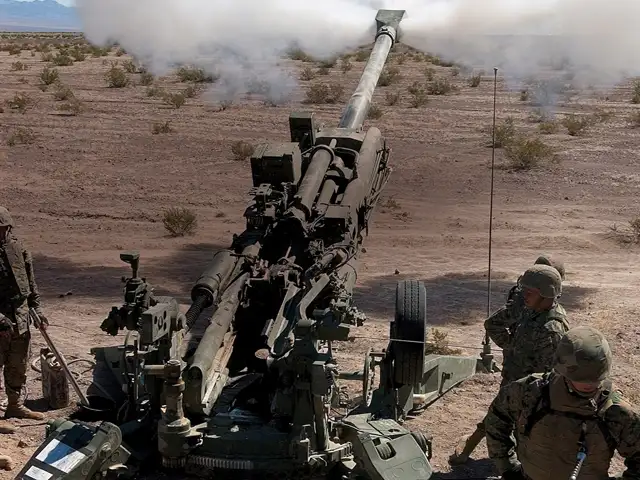
ET Bureau & Agencies
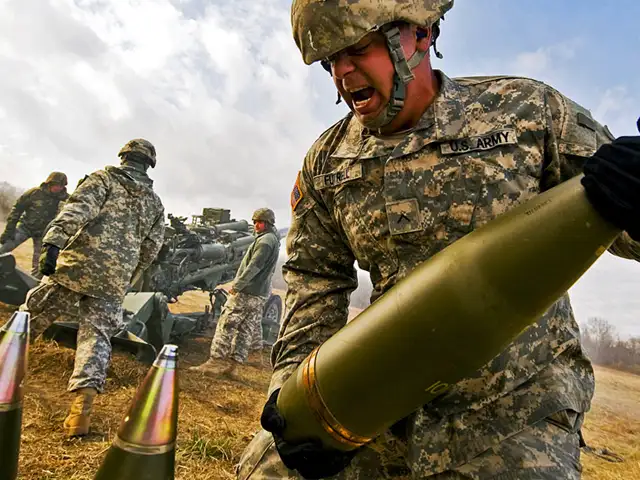
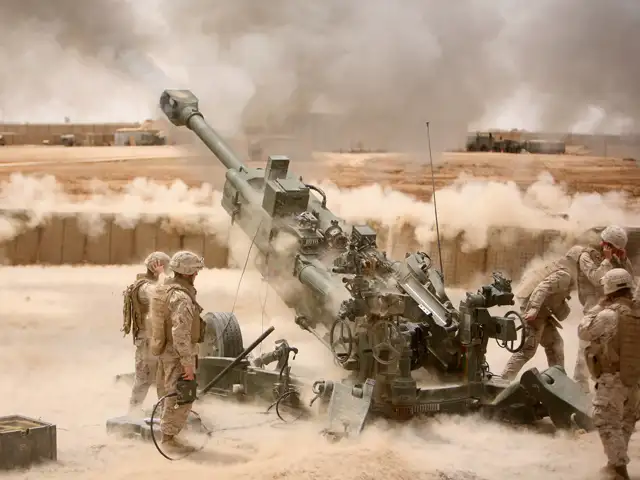
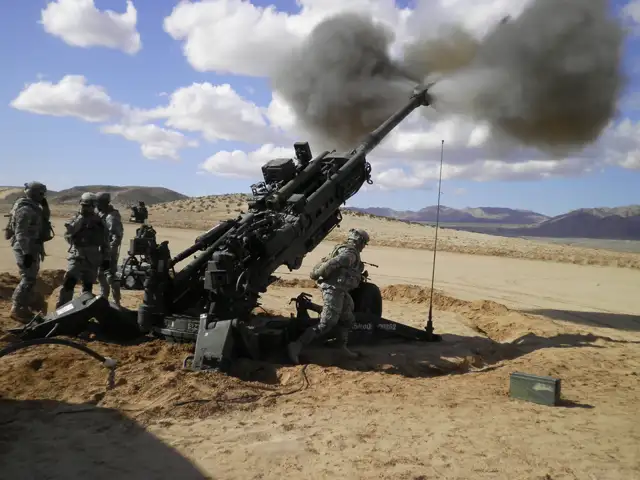
In what will be a major fillip to the private defence manufacturing sector, the government has cleared three 'Make in India' contracts worth $3.4 billion, including a project to procure US-origin M777 artillery guns.
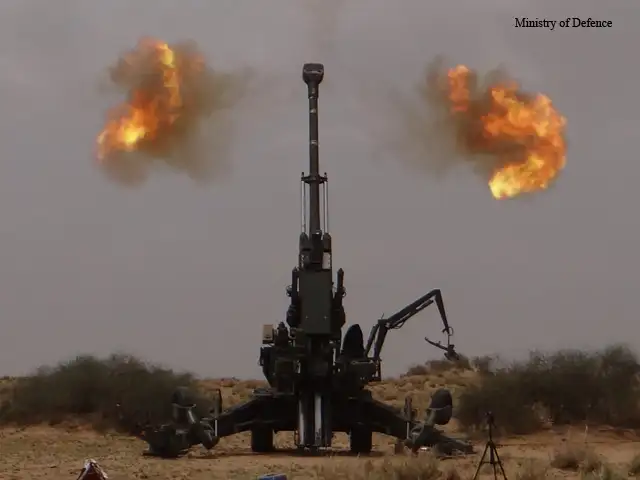
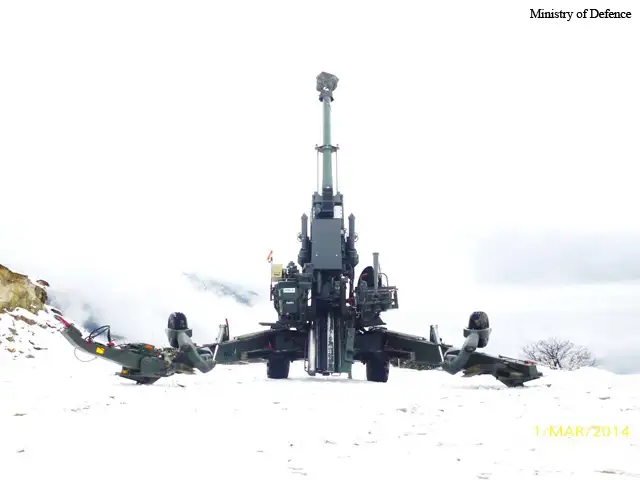
India's Ordnance Factory Board has already developed the electronically upgraded desi version of the original Swedish 155mm Bofors howitzer, and the guns are currently at the trial stage. DRDO is also developing an advanced all-electric gun system.
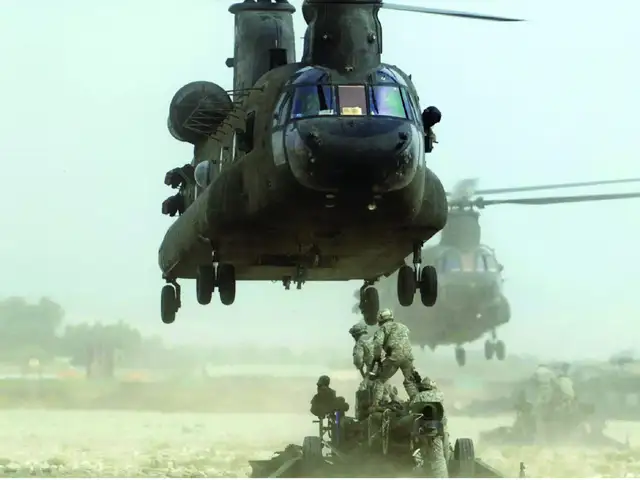
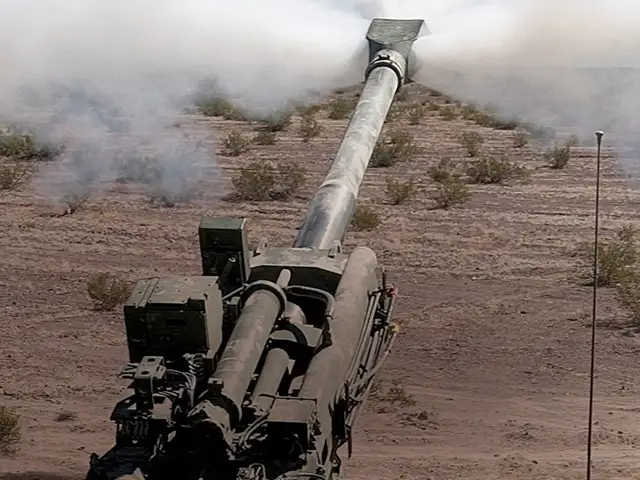
We take a look at the M777 artillery guns that India is looking to procure:
BAE Systems photo
In what will be a major fillip to the private defence manufacturing sector, the government has cleared three 'Make in India' contracts worth $3.4 billion, including a project to procure US-origin M777 artillery guns.
India's Ordnance Factory Board has already developed the electronically upgraded desi version of the original Swedish 155mm Bofors howitzer, and the guns are currently at the trial stage. DRDO is also developing an advanced all-electric gun system.
We take a look at the M777 artillery guns that India is looking to procure:
BAE Systems photo

ADVERTISEMENT
READ MORE:
LOGIN & CLAIM
50 TIMESPOINTS
More from our Partners

Loading next story

Cancel
