Abdul Kalam: Rocket scientist who was a healer at heart
"Kalam was curious about everything, and he wanted to know why stents (small tubes used to keep arteries from clogging) were prohibitively costly," says Dr Raju.
By Arun Ram, TNN | Updated:

CHENNAI: We know APJ Abdul Kalam the teacher, the scientist, the President. He was also a healer.
When many questioned India's spending on rockets and missiles when it couldn't properly feed half its population, Kalam showed the caring side of rocket science by facilitating the development of at least two products that revolutionized healthcare: A stent that made heart surgeries affordable and calipers that made walking easier for polio-affected children.
Hyderabad-based cardiologist Dr B Soma Raju remembers that sometime in 1985 when Kalam, then the Defence Research and Development Laboratory director, visited Nizam's Institute of Medical Sciences (NIMS) to see a colleague.
"Kalam was curious about everything, and he wanted to know why stents (small tubes used to keep arteries from clogging) were prohibitively costly," says Dr Raju. "When I explained that we are importing them, he suggested why don't we collaborate with DRDO to produce an indigenous stent."
DRDO provided the high-grade steel used in missiles, Dr Raju's team designed the stent and carried out tests. About five years later, they were ready with the Kalam-Raju stent that brought down the price from Rs 75,000 to Rs 10,000. "He was emotional," recollects Dr Raju. "He said for years he was developing missiles that kill people; now towards the fag-end of his career he was developing something that would save lives."
While working on Agni and Prithvi missiles, Kalam found use for carboncarbon composites to alleviate polioaffected people's pain. This led to the development of calipers that weigh as less as 400g instead of the earlier 4kg.
When many questioned India's spending on rockets and missiles when it couldn't properly feed half its population, Kalam showed the caring side of rocket science by facilitating the development of at least two products that revolutionized healthcare: A stent that made heart surgeries affordable and calipers that made walking easier for polio-affected children.
Hyderabad-based cardiologist Dr B Soma Raju remembers that sometime in 1985 when Kalam, then the Defence Research and Development Laboratory director, visited Nizam's Institute of Medical Sciences (NIMS) to see a colleague.
"Kalam was curious about everything, and he wanted to know why stents (small tubes used to keep arteries from clogging) were prohibitively costly," says Dr Raju. "When I explained that we are importing them, he suggested why don't we collaborate with DRDO to produce an indigenous stent."
DRDO provided the high-grade steel used in missiles, Dr Raju's team designed the stent and carried out tests. About five years later, they were ready with the Kalam-Raju stent that brought down the price from Rs 75,000 to Rs 10,000. "He was emotional," recollects Dr Raju. "He said for years he was developing missiles that kill people; now towards the fag-end of his career he was developing something that would save lives."
While working on Agni and Prithvi missiles, Kalam found use for carboncarbon composites to alleviate polioaffected people's pain. This led to the development of calipers that weigh as less as 400g instead of the earlier 4kg.
Download
The Economic Times Business News App for the Latest News in Business, Sensex, Stock Market Updates & More.
The Economic Times Business News App for the Latest News in Business, Sensex, Stock Market Updates & More.
Download
The Economic Times News App for Quarterly Results, Latest News in ITR, Business, Share Market, Live Sensex News & More.
The Economic Times News App for Quarterly Results, Latest News in ITR, Business, Share Market, Live Sensex News & More.
Related Articles
 Life Advice of the Day by the 'Missile Man of India' Dr. A.P.J. Abdul Kalam: 'Dream, Dream, Dream...' – The incredible power of turning thoughts into action2026-06-03T20:44:53Z
- How APJ Abdul Kalam warned India about an energy crisis 20 years before today’s fuel anxiety2026-03-13T05:50:39Z
- Quote of the Day by Dr APJ Abdul Kalam: 'Don’t read success stories, you will only get a message. Read failure stories, you will get some ideas to achieve success'2026-01-18T12:47:25Z
Text: PTI, TNN
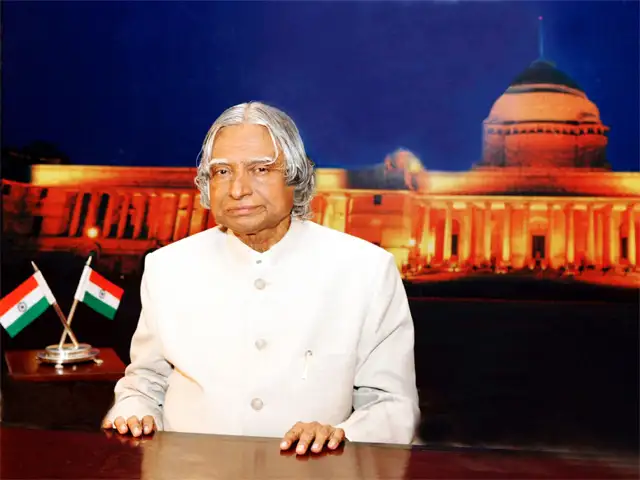
Popularly called the "Missile Man" of India, Dr APJ Abdul Kalam rose from humble beginnings and earned the reputation of being the "people's President" who endeared himself to all sections, especially the young.
A devout Muslim and son of a boatowner, Avul Pakir Jainulabdeen Abdul Kalam, who assumed office as the 11th President on July 18, 2002, was seen as a figurehead who could help heal some of the scars of the communal riots which broke out in Gujarat just a few months before.
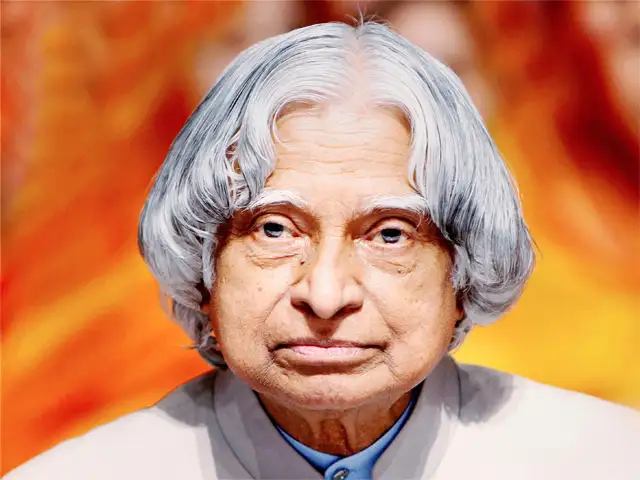
The country's first bachelor President, Kalam, whose flowing grey hair is seen as being at odds with what Indians thought a president ought to look like, was one amongst the most respected people of the country who contributed immensely both as a scientist and as a president.
On July 27, India's Missile Man-turned-People's President went as suddenly-at a youthful 83-as he had arrived centre stage to become a national icon.
Kalam collapsed while delivering a lecture at the Indian Institute of Management, Shillong at around 6.30pm. He was rushed to Bethany Hospital but the doctors couldn't save him. His body is being flown to Delhi this morning.
Popularly called the "Missile Man" of India, Dr APJ Abdul Kalam rose from humble beginnings and earned the reputation of being the "people's President" who endeared himself to all sections, especially the young.
A devout Muslim and son of a boatowner, Avul Pakir Jainulabdeen Abdul Kalam, who assumed office as the 11th President on July 18, 2002, was seen as a figurehead who could help heal some of the scars of the communal riots which broke out in Gujarat just a few months before.
The country's first bachelor President, Kalam, whose flowing grey hair is seen as being at odds with what Indians thought a president ought to look like, was one amongst the most respected people of the country who contributed immensely both as a scientist and as a president.
On July 27, India's Missile Man-turned-People's President went as suddenly-at a youthful 83-as he had arrived centre stage to become a national icon.
Kalam collapsed while delivering a lecture at the Indian Institute of Management, Shillong at around 6.30pm. He was rushed to Bethany Hospital but the doctors couldn't save him. His body is being flown to Delhi this morning.

ADVERTISEMENT


