15 steps government has taken to attract investment from domestic private sector in defence
According to a Ministry of Defence release, since the opening of private sector participation in defence sector, a total of 287 industrial licenses have been issued till date.
By ET Online | Updated:

NEW DELHI: In a bid to encourage private sector participation in the defence sector, the government has undertaken a slew of initiatives, especially with the view to promote the 'Make in India' initiative.
According to a Ministry of Defence release, since the opening of private sector participation in defence sector, a total of 287 industrial licenses have been issued till date. "Further, the FDI amounting to $5.02 million has been received in the defence industry sector so far," the release states.
In a written reply in Lok Sabha, Minister of State for Defence Rao Inderjit Singh recently highlighted the major initiatives taken by the government to attract investment from domestic private sector companies in defence production. These are:
1) The FDI policy for the defence sector has been reviewed and as per the revised policy, the composite foreign investment up to 49% is allowed through government route (FIPB) and beyond 49% with the approval of the Cabinet Committee on Security (CCS) on case-to-case basis wherever it is likely to result in access to modern and state-of-the art technology in the country.
Besides, the restrictions such as single largest Indian shareholder to hold at least 51% equity and complete restriction on Foreign Institutional Investor (FII) existing in the earlier policy have also been removed to facilitate investment in the sector.
2) Preference to 'Buy (Indian)', 'Buy & Make (Indian)' & 'Make' categories of acquisition over 'Buy (Global)' category, thereby giving preference to Indian industry in procurement.
3) To establish a level-playing field between Indian private sector and the public sector, the anomalies in excise duty/ custom duty have been removed. As per the revised policy, all Indian industries (public and private) are subjected to the same kind of excise and custom duty levies.
4) The Defence products list for the purpose of issuing industrial licences (ILs) under IDR Act has been revised and most of the components, parts, sub-systems, testing equipment, production equipment have been removed from the list, so as to reduce the entry barriers for the industry, particularly small & medium segment.
5) Process of applying for Industrial License (IL) and Industrial Entrepreneur Memorandum (IEM) has been made completely online and this service is now available to entrepreneurs on 24X7 basis at eBiz website without human interface.
6) Guidelines have been issued to streamline the processing of applications for grant of extension of validity of Industrial License. The initial validity of the Industrial Licence granted under the IDR Act has been increased from 3 years to 7 years with a provision to further extend it by 3 years on a case-to-case basis.
7) The 'Security Manual for Licensed Defence Industry' has been issued. With the issue of the Security Manual, the requirement of affidavit from the applicants, has been done away with.
According to a Ministry of Defence release, since the opening of private sector participation in defence sector, a total of 287 industrial licenses have been issued till date. "Further, the FDI amounting to $5.02 million has been received in the defence industry sector so far," the release states.
In a written reply in Lok Sabha, Minister of State for Defence Rao Inderjit Singh recently highlighted the major initiatives taken by the government to attract investment from domestic private sector companies in defence production. These are:
1) The FDI policy for the defence sector has been reviewed and as per the revised policy, the composite foreign investment up to 49% is allowed through government route (FIPB) and beyond 49% with the approval of the Cabinet Committee on Security (CCS) on case-to-case basis wherever it is likely to result in access to modern and state-of-the art technology in the country.
Besides, the restrictions such as single largest Indian shareholder to hold at least 51% equity and complete restriction on Foreign Institutional Investor (FII) existing in the earlier policy have also been removed to facilitate investment in the sector.
2) Preference to 'Buy (Indian)', 'Buy & Make (Indian)' & 'Make' categories of acquisition over 'Buy (Global)' category, thereby giving preference to Indian industry in procurement.
ADVERTISEMENT
3) To establish a level-playing field between Indian private sector and the public sector, the anomalies in excise duty/ custom duty have been removed. As per the revised policy, all Indian industries (public and private) are subjected to the same kind of excise and custom duty levies.
4) The Defence products list for the purpose of issuing industrial licences (ILs) under IDR Act has been revised and most of the components, parts, sub-systems, testing equipment, production equipment have been removed from the list, so as to reduce the entry barriers for the industry, particularly small & medium segment.
5) Process of applying for Industrial License (IL) and Industrial Entrepreneur Memorandum (IEM) has been made completely online and this service is now available to entrepreneurs on 24X7 basis at eBiz website without human interface.
6) Guidelines have been issued to streamline the processing of applications for grant of extension of validity of Industrial License. The initial validity of the Industrial Licence granted under the IDR Act has been increased from 3 years to 7 years with a provision to further extend it by 3 years on a case-to-case basis.
ADVERTISEMENT
7) The 'Security Manual for Licensed Defence Industry' has been issued. With the issue of the Security Manual, the requirement of affidavit from the applicants, has been done away with.
9) Licensee has been allowed to sell the defence items to the government entities under the control of MHA, PSUs, state governments and other defence licensee companies without approval of Department of Defence Production.
10) Application forms for Industrial License & Industrial Entrepreneur Memorandum have been simplified.
11) To promote the participation of private sector, particularly SMEs for defence manufacturing, outsourcing and vendor development guidelines for DPSUs and OFB have been formulated and circulated to them. The guidelines mandate that each DPSU and OFB to have a short-term and long-term outsourcing and vendor development plan to gradually increase the outsourcing from private sector including SMEs. The guidelines also include vendor development for import substitution.
12) The Standard Operating Procedure (SOP) for the issue of No Objection Certificate (NOC) for export of military stores has been revised and put on the website. Under the revised SOP, the requirement of End User Certificate (EUC) to be countersigned/ stamped by the government authorities has been done away with for the export of parts, components, sub-systems etc.
13) The list of military stores has been finalised and has been put in the public domain to make the process transparent and unambiguous. The process of receiving applications for NOC for export of military stores and for issuing NOC has been made online to reduce the delay and to remove human interface in the process.
ADVERTISEMENT
14) The advanced version of NIC Code (NIC 2008) has been adopted, which is a highly contemporary industrial classification.
15) Recognising the need for promotion of defence exports to make the Indian defence industry economically sustainable, Defence Exports Strategy outlining the various steps to be taken, has been formulated and is put up in public domain.
Download
The Economic Times Business News App for the Latest News in Business, Sensex, Stock Market Updates & More.
The Economic Times Business News App for the Latest News in Business, Sensex, Stock Market Updates & More.
Download
The Economic Times News App for Quarterly Results, Latest News in ITR, Business, Share Market, Live Sensex News & More.
The Economic Times News App for Quarterly Results, Latest News in ITR, Business, Share Market, Live Sensex News & More.
Text: PTI & Agencies
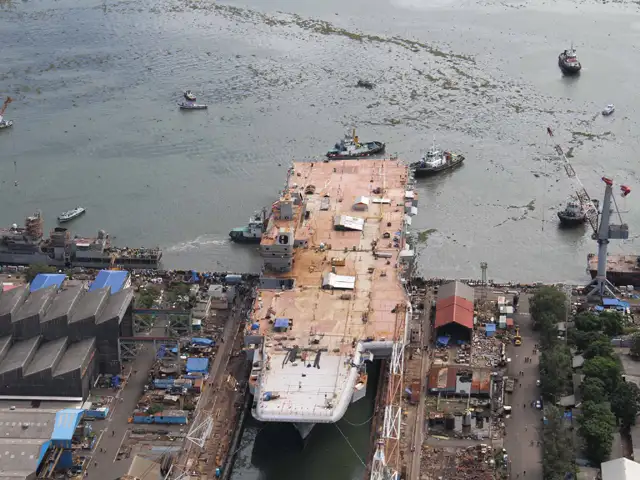
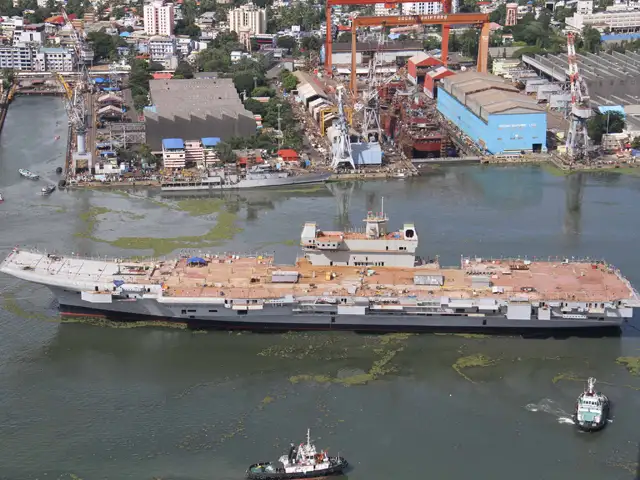
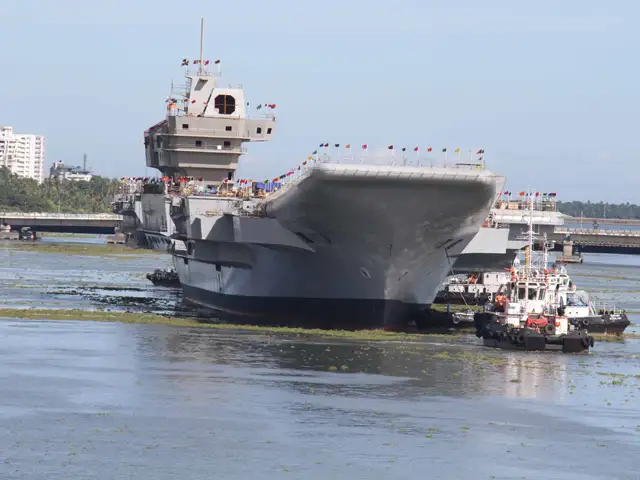
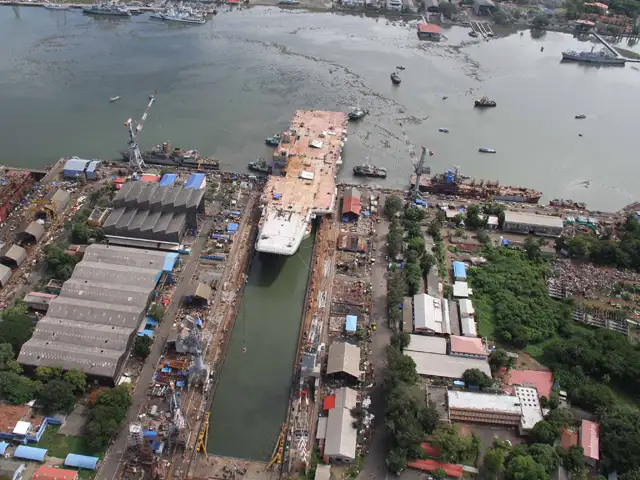
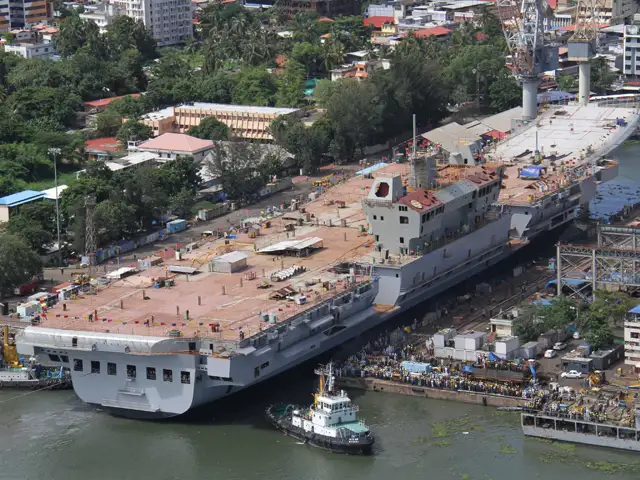
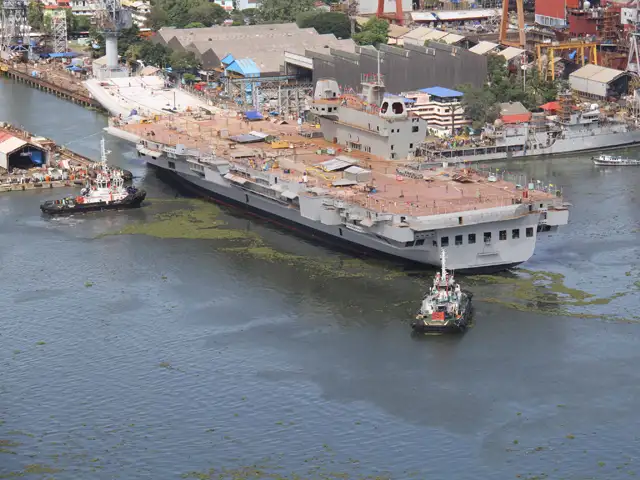
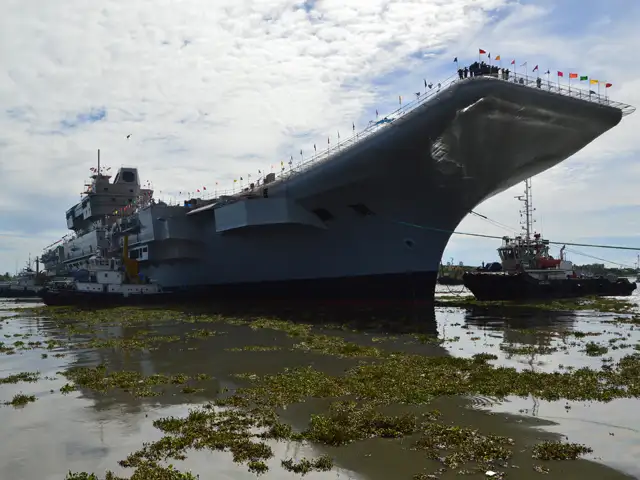
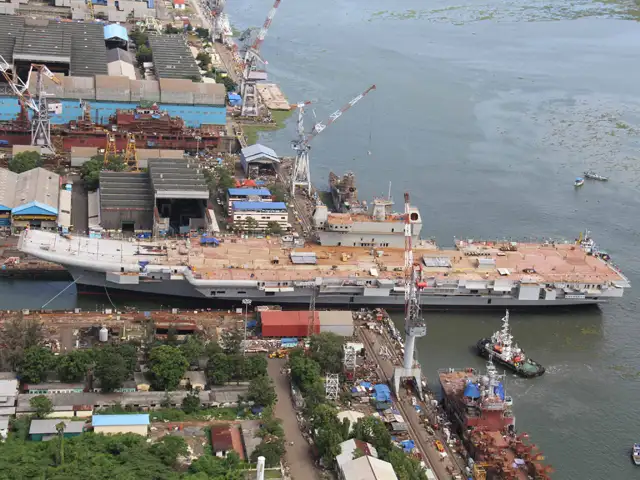
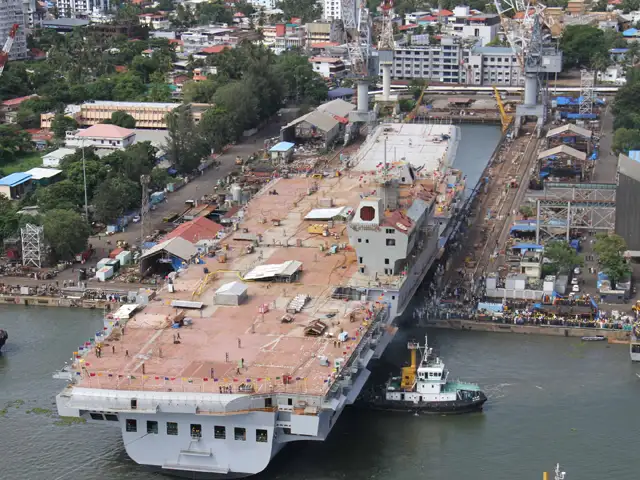
India has undocked its first indigenously-built aircraft carrier INS Vikrant at Cochin Shipyard Limited.
The successful completion of the 40,000 tonne aircraft carrier puts India in the elite group of four nations - the US, Russia, the UK and France - in the world capable of designing and constructing aircraft carriers.
Image: Ministry of Defence
India has undocked its first indigenously-built aircraft carrier INS Vikrant at Cochin Shipyard Limited.
The successful completion of the 40,000 tonne aircraft carrier puts India in the elite group of four nations - the US, Russia, the UK and France - in the world capable of designing and constructing aircraft carriers.
Image: Ministry of Defence


ADVERTISEMENT


