
How Mastercard became one of Wall Street’s greatest wealth creators

1/11
Mastercard’s extraordinary Rally
Mastercard’s extraordinary rise over the past two decades highlights the power of investing in businesses with strong competitive advantages, scalable business models, and long-term growth potential. From benefiting from the global shift toward digital payments to building a dominant financial network, Mastercard has delivered exceptional returns to investors and emerged as a textbook example of long-term compounding. (Sources: MSN, Yahoo Finance, MarketWatch, Barron’s)

2/11
A Remarkable Wealth Creator
Mastercard has emerged as one of the most successful long-term investments in the stock market. Since its IPO in 2006, the company’s stock has climbed more than 11,000%, delivering extraordinary returns to patient investors. The rally reflects the strength of Mastercard’s business model and the long-term growth of digital payments worldwide. The company’s journey shows how quality businesses with strong competitive advantages can create enormous shareholder wealth over time.

3/11
The Secret Behind Mastercard’s Success
Mastercard built a powerful global payment network that benefits from strong network effects. As more consumers use Mastercard cards, more merchants are encouraged to accept them. This creates a cycle that strengthens the company’s dominance in the payments industry. Unlike banks, Mastercard does not directly lend money to consumers. Instead, it earns fees from processing transactions, allowing the company to maintain high profit margins and scale efficiently.
Amazon Top Deals
POWERED BY

Crompton Ozone 75 Litres Desert Air Cooler for home | Large & Easy Clean Ice Chamber | 4-Way Air Deflection | High Density Honeycomb Pads | Everlast Pump | Auto Fill| 3 Year Brand Warranty
₹9,798Buy Now43%
OFF

atomberg Studio Smart+ 1200mm BLDC Ceiling Fan with IoT & Remote | BEE 5 star Rated Energy Efficient Ceiling Fan | High Air Delivery with LED Indicators | 3 Year Warranty (Earth Brown)
₹5,903Buy Now36%
OFF

LG 32 L Convection Microwave Oven (MC3286BRUM, Black, 360° Motorised Rotisserie for Bar-be-queing, 301 Auto Cook Menu, Stainless steel cavity, Indian Cuisine, Tandoor Se, Steam Clean & Diet Fry)
₹19,340Buy Now19%
OFF
4/11
Buffett’s Bet on Payment Giants
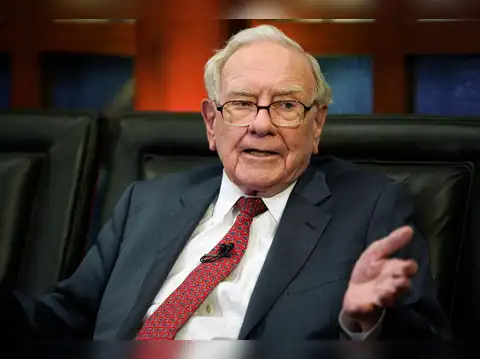
Warren Buffett and Berkshire Hathaway recognized the strength of payment businesses early. Berkshire invested heavily in companies like Visa and Mastercard because of their durable business models and recurring revenue streams. Buffett has long preferred businesses with strong economic moats, and payment networks fit that description perfectly. Their global reach and growing transaction volumes made them attractive long-term investments.

5/11
Riding the Digital Payments Boom
The global shift from cash to digital transactions played a major role in Mastercard’s rise. As online shopping, mobile payments, and digital banking expanded worldwide, Mastercard benefited from rising transaction volumes across markets. The company positioned itself at the center of the digital economy, allowing it to capture growth from changing consumer habits and technological innovation.

6/11
Mastercard vs Visa
Mastercard and Visa dominate the global payments industry and share similar business models. Both companies generate revenue from transaction processing and operate highly scalable networks. While Visa remains larger in scale, Mastercard is often viewed as the faster-growing company with stronger international expansion opportunities. Both firms continue to benefit from the long-term growth in electronic payments.

7/11
Expanding Beyond Card Payments
Mastercard has evolved far beyond traditional card processing. The company has expanded into cybersecurity, fraud prevention, data analytics, and real-time payments. These newer businesses help Mastercard diversify its revenue streams and strengthen its role in the global financial system. The company is also investing in technologies linked to AI and digital commerce to support future growth.

8/11
Risks and Challenges Ahead
Despite its success, Mastercard faces growing competition from fintech firms, real-time payment systems, and government-backed digital payment platforms. Regulatory pressure is another challenge, as governments around the world continue to examine transaction fees and the dominance of large payment networks. However, Mastercard continues investing heavily in innovation to maintain its competitive position.

9/11
Berkshire’s Exit Raises Questions
Berkshire Hathaway exited its investments in Visa and Mastercard during a broader portfolio reshuffle in 2026. The move sparked debate among investors about the future growth prospects of payment companies. Some analysts believe the decision reflected portfolio management rather than weakening confidence in the sector. Others see increasing competition as a potential long-term risk for traditional payment giants.

10/11
Lessons for Investors
Mastercard’s journey highlights the importance of identifying businesses with durable competitive advantages. Companies with strong brands, scalable operations, and recurring revenue can generate exceptional long-term returns. The story also reinforces the value of patience in investing. Investors who remained committed to Mastercard through multiple market cycles were rewarded with significant wealth creation.

11/11
Key Takeaway
Mastercard’s rise from a payment processor to a global digital finance leader remains one of the strongest examples of long-term compounding in modern markets. Even as the payments landscape evolves, the company continues to play a central role in global commerce. Its success demonstrates how powerful business models and long-term growth trends can create extraordinary value for investors.