Now unfolding, the opportunity for India from US-China trade tension
Economists look at both China and India as long-term growth stories.
By Rahul Oberoi, ETMarkets.com |

Getty Images
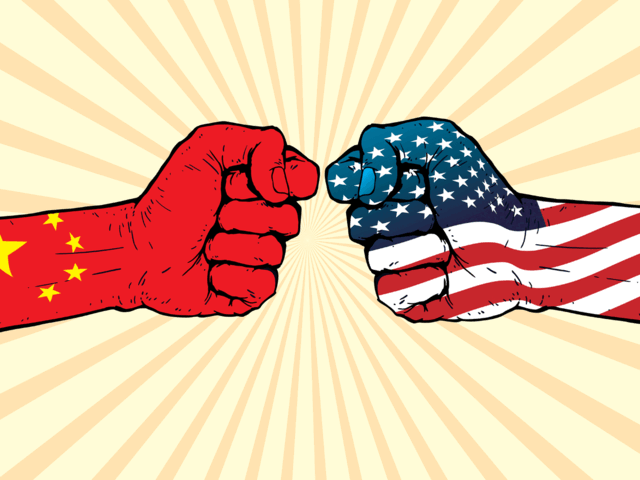
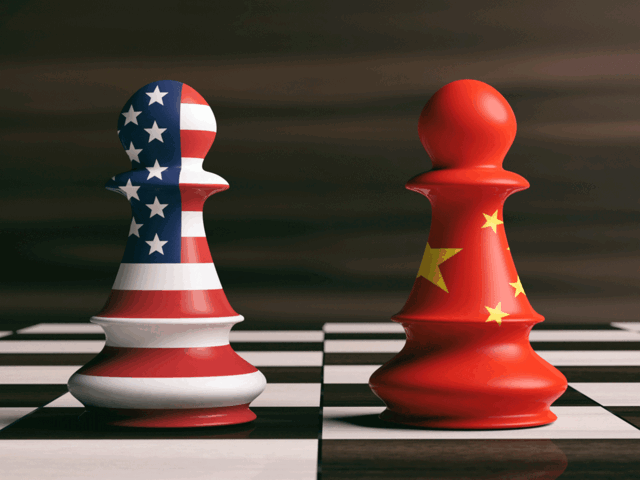
Escalating trade tensions between the US and China can turn into a blessing in disguise for the Indian economy. Industry watchers and economists hope the ongoing tussle may slow down the world’s two biggest economies and channel some overseas investment to India.
The ongoing tariff war may also benefit select industries and cap the upside in crude oil prices, which can help ease the pressure on India’s current account deficit.
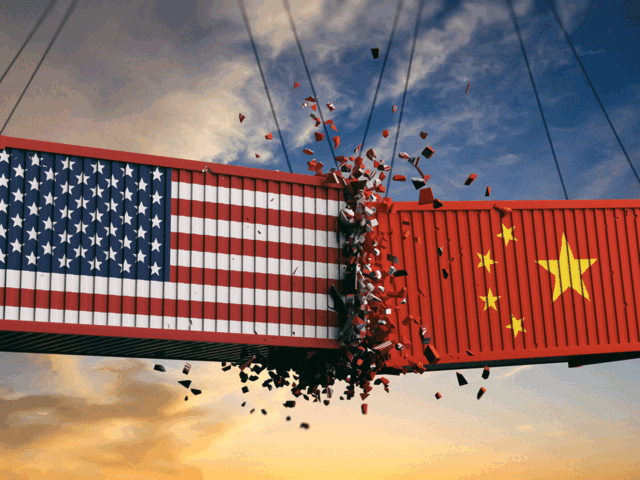
In an escalation of the standoff, the US on May 10 increased tariff on $250 billion worth of Chinese goods from 10 per cent to 25 per cent. President Donald Trump also threatened to impose higher tariffs on the remaining $325 billion Chinese imports in the coming months if China fails to agree on a trade deal.
China retaliated by increasing tariffs on $60 billion worth of US imports from 5 per cent to a 5-25 per cent. This provides an opportunity for companies from countries like India to grab market share.
“From a de-risking perspective the US companies importing goods from China could be looking at alternative countries for imports,” says Rusmik Oza, Head of Fundamental Research, Kotak Securities.
Economists look at both China and India as long-term growth stories. The trade war will also rattle investors who are looking at China from the emerging markets pack with a long-term perspective.
Karun Marwah, head of international business at Motilal Oswal Financial Services, said any trade war like this brings lots of volatility with it.
“Investors from North America like to see substitution towards a market like India where they perceive lesser volatility and which is not subject to the vagaries of trade war with the US. Chinese capitalists may also look at India if things worsen,” he said.
Overseas brokerage UBS earlier this month said India has not been able to gain much from the trade war and managed only a marginal growth from the increment that it was already witnessing from usual diversification away from China.
A majority 37 per cent of fund managers who took part in a recent BofA-Merrill Lynch Global Fund Manager Survey rated trade war as the biggest tail risk for markets followed by China slowdown (16 per cent) and US Politics (12 per cent).
Leading Indian industrialist and Mahindra Group Chairman Anand Mahindra on Wednesday said a wave of Chinese investment to India may be imminent in the wake of intensifying trade war between the US and China. "Even if they settle, a Chinese firm with large exports to the US would be wise to hedge and invest in a subsidiary in India and transfer its scale-manufacturing skills," he said in a tweet.
The trade war between Beijing and Washington has stoked concern in financial markets that China might opt to weaponize its holdings of more than $1.1 trillion worth of US Treasuries in retaliation for the tariffs the Trump administration has imposed on Chinese imports.
Often referred to as the “nuclear option,” choosing to dump so large a pool of assets would likely destabilize world financial markets, drive interest rates higher and push tensions between the world’s two largest economies into uncharted territory.
Here are some key points about China’s Treasuries portfolio.
(Source: Reuters)
He said select commodity exports and industries like chemicals, lubricants, mobile phone makers and readymade garments will also benefit the ongoing trade tensions. “One space where India could truly benefit is China’s commodities market. Indian exports to China in this category can be a lucrative proposition, given that US exports a substantial amount of commodities to China. We can tap export opportunities in corn, oranges, wheat and certain dry fruit varieties to China. India has additional duty concessions compared to other countries under the MFN (most favoured nation) status of APTA agreement,” said Mehta.
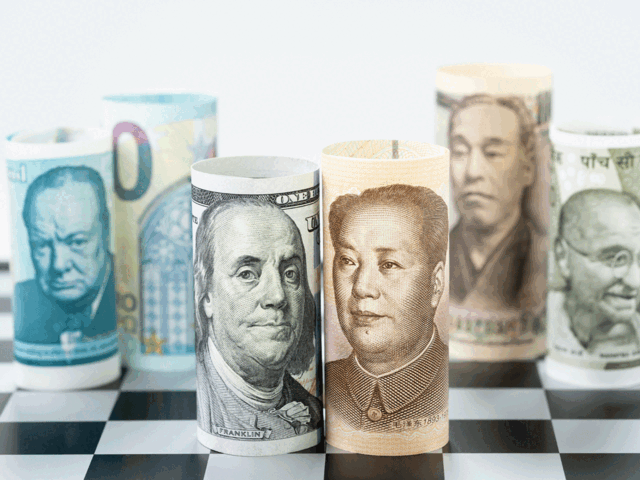
Meanwhile, if China allows yuan to depreciate against the US dollar to reduce the impact of higher import duties, it may impact other emerging market currencies, including the rupee.
Oza believes that if yuan is allowed to depreciate then there could be same kind of depreciation in other emerging market currencies, which could be beneficial for India’s export-driven sectors.
The rupee is already hovering around its two-and-a-half-month-low of 70.51 against the dollar due to foreign fund outflows and renewed worries over rising crude oil prices.
Brokerage ICICIdirect.com said crude oil above $70 is likely to keep the rupee appreciation in check. A move in the Chinese yuan would also be a key trigger for emerging market currencies, including the rupee, in the backdrop of renewed escalation in trade tensions.
The ongoing tariff war may also benefit select industries and cap the upside in crude oil prices, which can help ease the pressure on India’s current account deficit.
In an escalation of the standoff, the US on May 10 increased tariff on $250 billion worth of Chinese goods from 10 per cent to 25 per cent. President Donald Trump also threatened to impose higher tariffs on the remaining $325 billion Chinese imports in the coming months if China fails to agree on a trade deal.
China retaliated by increasing tariffs on $60 billion worth of US imports from 5 per cent to a 5-25 per cent. This provides an opportunity for companies from countries like India to grab market share.
“From a de-risking perspective the US companies importing goods from China could be looking at alternative countries for imports,” says Rusmik Oza, Head of Fundamental Research, Kotak Securities.
Economists look at both China and India as long-term growth stories. The trade war will also rattle investors who are looking at China from the emerging markets pack with a long-term perspective.
ADVERTISEMENT
Karun Marwah, head of international business at Motilal Oswal Financial Services, said any trade war like this brings lots of volatility with it.
“Investors from North America like to see substitution towards a market like India where they perceive lesser volatility and which is not subject to the vagaries of trade war with the US. Chinese capitalists may also look at India if things worsen,” he said.
Overseas brokerage UBS earlier this month said India has not been able to gain much from the trade war and managed only a marginal growth from the increment that it was already witnessing from usual diversification away from China.
A majority 37 per cent of fund managers who took part in a recent BofA-Merrill Lynch Global Fund Manager Survey rated trade war as the biggest tail risk for markets followed by China slowdown (16 per cent) and US Politics (12 per cent).
ADVERTISEMENT
Leading Indian industrialist and Mahindra Group Chairman Anand Mahindra on Wednesday said a wave of Chinese investment to India may be imminent in the wake of intensifying trade war between the US and China. "Even if they settle, a Chinese firm with large exports to the US would be wise to hedge and invest in a subsidiary in India and transfer its scale-manufacturing skills," he said in a tweet.
Often referred to as the “nuclear option,” choosing to dump so large a pool of assets would likely destabilize world financial markets, drive interest rates higher and push tensions between the world’s two largest economies into uncharted territory.
Here are some key points about China’s Treasuries portfolio.
(Source: Reuters)


ADVERTISEMENT
Sher Mehta, Director of Macroeconomic Research and Econometrician, Virtuoso Economics, says Chinese investment in India is likely to rise and oil prices might be capped due to escalation of trade war, which could be positives for India’s current account deficit, the rupee and inflation.He said select commodity exports and industries like chemicals, lubricants, mobile phone makers and readymade garments will also benefit the ongoing trade tensions. “One space where India could truly benefit is China’s commodities market. Indian exports to China in this category can be a lucrative proposition, given that US exports a substantial amount of commodities to China. We can tap export opportunities in corn, oranges, wheat and certain dry fruit varieties to China. India has additional duty concessions compared to other countries under the MFN (most favoured nation) status of APTA agreement,” said Mehta.
Meanwhile, if China allows yuan to depreciate against the US dollar to reduce the impact of higher import duties, it may impact other emerging market currencies, including the rupee.
Oza believes that if yuan is allowed to depreciate then there could be same kind of depreciation in other emerging market currencies, which could be beneficial for India’s export-driven sectors.
The rupee is already hovering around its two-and-a-half-month-low of 70.51 against the dollar due to foreign fund outflows and renewed worries over rising crude oil prices.
Brokerage ICICIdirect.com said crude oil above $70 is likely to keep the rupee appreciation in check. A move in the Chinese yuan would also be a key trigger for emerging market currencies, including the rupee, in the backdrop of renewed escalation in trade tensions.
Too busy to trade in stocks? Invest in Mutual Funds with ET Money!
Bookmark or read stories offline -
Download ET Markets APP
Download ET Markets APP
ADVERTISEMENT


