
Month-end volatility drives surge in Fed’s liquidity tools
1/7
Fed’s Liquidity Tools See Record Action
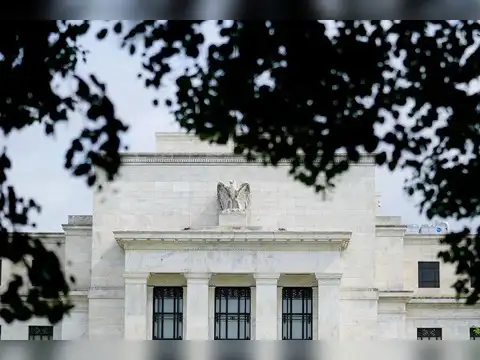
The Federal Reserve’s Standing Repo Facility (SRF) saw record usage on Friday, lending $50.35 billion to financial institutions. At the same time, the Reverse Repo Facility (RRP) attracted $51.8 billion in inflows. The spike reflected typical month-end funding pressures and volatility as firms moved cash around their balance sheets. (Source: Reuters)

2/7
SRF Works as Intended
According to Scott Skyrm of Curvature Securities, “the number of securities given to the Fed approximately equals the amount of cash received.” This marked the first instance where the SRF operated exactly as designed, acting as a true liquidity backstop. Analysts expect funding pressures to ease next week as calendar effects fade.

3/7
QT Nears End as Fed Adjusts Liquidity
The Federal Reserve announced that its balance sheet reduction programme, known as Quantitative Tightening (QT), will end on December 1. Fed Chair Jerome Powell said the system has now reached the level of reserves consistent with ample liquidity. Since mid-2022, the Fed’s balance sheet has shrunk from a peak of $9 trillion to around $6.6 trillion.
Amazon Top Deals
POWERED BY

Crompton Ozone 75 Litres Desert Air Cooler for home | Large & Easy Clean Ice Chamber | 4-Way Air Deflection | High Density Honeycomb Pads | Everlast Pump | Auto Fill| 3 Year Brand Warranty
₹9,798Buy Now43%
OFF

LG 32 L Convection Microwave Oven (MC3286BRUM, Black, 360° Motorised Rotisserie for Bar-be-queing, 301 Auto Cook Menu, Stainless steel cavity, Indian Cuisine, Tandoor Se, Steam Clean & Diet Fry)
₹19,340Buy Now19%
OFF
4/7
Why QT Stopped Early
The Fed’s goal with QT was to remove excess liquidity and restore normal volatility in short-term lending rates. However, recent increases in money market and federal funds rates indicated that liquidity had already tightened sufficiently. Markets had anticipated QT to continue into early next year, but the Fed decided to stop early as its objectives were largely achieved.

5/7
Officials Express Mixed Feelings
Dallas Fed President Lorie Logan supported the decision to end QT but raised concerns about the limited use of the SRF. The facility was created as a “shock absorber” to provide funds during tight liquidity periods, yet banks have been hesitant to use it. Logan suggested that dealers need to be more prepared to tap the SRF as market rates fluctuate.

6/7
Calls for Better SRF Adoption
Cleveland Fed President Beth Hammack echoed similar concerns, saying it was “disappointing” that banks have not actively used the tools they once requested. She emphasised that greater participation in the SRF could help redistribute reserves more efficiently across the banking system, strengthening overall market stability.

7/7
Key Takeaways
Record SRF usage highlights growing liquidity stress at month-end, while the Fed’s move to end QT signals a shift from tightening to stabilisation. Despite differing opinions among officials, the overall message is clear — the Fed is approaching a balance between maintaining ample reserves and ensuring smooth functioning in short-term money markets.
(Disclaimer: This slideshow has been sourced from Reuters.)
(Disclaimer: This slideshow has been sourced from Reuters.)