Markets will be closed on Budget day for first time in over two decades
“I don’t think there is any correlation between the day on which the market is open and the day on which the Budget is presented,” Sebi chief said.
By ET Bureau | Updated:

MUMBAI: For the first time in over two decades, Indian stock markets will remain closed on Budget day.
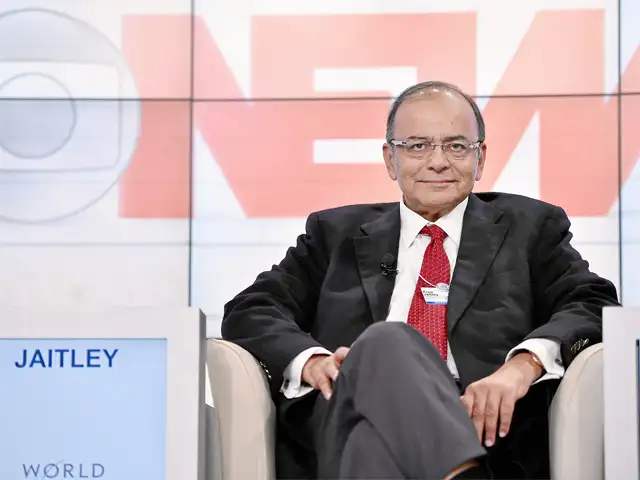
Finance minister Arun Jaitley will make his Budget proposals for 2015-16 to Parliament on February 28, a Saturday. But, the Securities and Exchange Board of India ( Sebi) has said it has received no proposal as yet to keep the stock exchanges open on the Budget day. In the past, markets have remained open on three occasions when the Budget was presented on a Saturday — former finance minister Manmohan Singh had presented his budgets on February 29,1992 and February 27,1993, while Yashwant Sinha had presented it on February 27,1999. The regulator feels there is no relation between the Budget and stock markets being open and that its should be treated like any normal event.
“I don’t think there is any correlation between the day on which the market is open and the day on which the Budget is presented,” Sebi chief UK Sinha had recently said on the sidelines of an event. “The market functions in its own way; it has its own momentum, its own calendar. I don’t think the two are related. The timing of the Budget is the prerogative of Parliament and the government. The market functions according to its own calendar,” he had said.
Typically, stock markets witness volatility on a realtime basis when the Budget is being presented to Parliament as market participants try to price in the likely impacts of the announcements being made. Market participants feel stock markets should be kept open this time around, too, as a lot of investors are calling up their offices and inquiring it. “Investors are very anxious this time and, for the first time, they have been calling up our offices and asking if markets would remain open during Budget,” said CJ George, managing director at Geojit BNP Paribas Financial Services.
“Expectations are very high and it will enable traders and investors to take positions on the basis of a quick assessment of the Budget. So, I’m of the view that markets should be kept open,” George said. Brokers said that for decades, Budget day trading has been considered like Muharat trading by the stock market community and it would be unfair to them if the markets are closed this time around.
Finance minister Arun Jaitley will make his Budget proposals for 2015-16 to Parliament on February 28, a Saturday. But, the Securities and Exchange Board of India ( Sebi) has said it has received no proposal as yet to keep the stock exchanges open on the Budget day. In the past, markets have remained open on three occasions when the Budget was presented on a Saturday — former finance minister Manmohan Singh had presented his budgets on February 29,1992 and February 27,1993, while Yashwant Sinha had presented it on February 27,1999. The regulator feels there is no relation between the Budget and stock markets being open and that its should be treated like any normal event.
“I don’t think there is any correlation between the day on which the market is open and the day on which the Budget is presented,” Sebi chief UK Sinha had recently said on the sidelines of an event. “The market functions in its own way; it has its own momentum, its own calendar. I don’t think the two are related. The timing of the Budget is the prerogative of Parliament and the government. The market functions according to its own calendar,” he had said.
Typically, stock markets witness volatility on a realtime basis when the Budget is being presented to Parliament as market participants try to price in the likely impacts of the announcements being made. Market participants feel stock markets should be kept open this time around, too, as a lot of investors are calling up their offices and inquiring it. “Investors are very anxious this time and, for the first time, they have been calling up our offices and asking if markets would remain open during Budget,” said CJ George, managing director at Geojit BNP Paribas Financial Services.
“Expectations are very high and it will enable traders and investors to take positions on the basis of a quick assessment of the Budget. So, I’m of the view that markets should be kept open,” George said. Brokers said that for decades, Budget day trading has been considered like Muharat trading by the stock market community and it would be unfair to them if the markets are closed this time around.
Too busy to trade in stocks? Invest in Mutual Funds with ET Money!
Bookmark or read stories offline -
Download ET Markets APP
Download ET Markets APP
Text: ET Bureau
ET looks at the recent speeches of finance minister Arun Jaitley for clues to the budget for FY16. The budget is widely expected to lay down the agenda for the remaining four years of the Narendra Modi government.
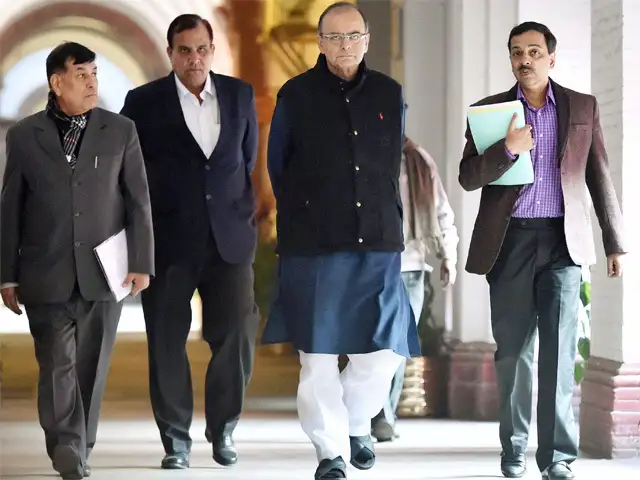
In Pic: Jaitley arrives at the Pre-Budget Consultation with the representatives of Trade Union, in New Delhi.
ET looks at the recent speeches of finance minister Arun Jaitley for clues to the budget for FY16. The budget is widely expected to lay down the agenda for the remaining four years of the Narendra Modi government.
In Pic: Jaitley arrives at the Pre-Budget Consultation with the representatives of Trade Union, in New Delhi.