
Investor sentiment cautious amid Japan leadership doubts
1/6
Japan's Ruling Coalition Loses Upper House
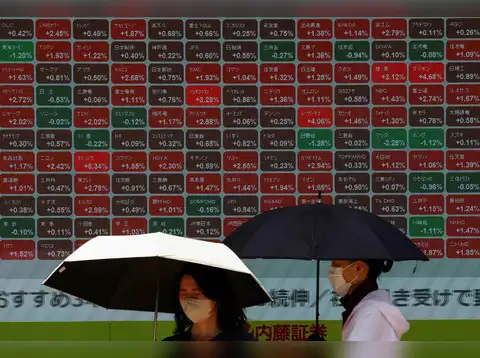
Prime Minister Shigeru Ishiba’s ruling coalition suffered a significant political setback by losing control of the upper house in Sunday’s election. Despite the loss, Ishiba has expressed his intention to stay on as party leader, citing the urgency of ongoing tariff negotiations with the United States. While markets were closed for a holiday on Monday, the yen strengthened and Nikkei futures rose slightly, suggesting the election outcome was already priced in by investors. (Source: Reuters)

2/6
Political Uncertainty Deepens
The election result introduces fresh uncertainty into Japan’s political landscape. It could lead to either policy gridlock or a greater fiscal deficit depending on how the ruling party responds and the strength of the opposition. Ishiba now faces difficulty in passing legislation and will need to rely on opposition parties for support on a case-by-case basis, potentially stalling his administration’s agenda.

3/6
Expert Views – Oxford Economics & AGF
Norihiro Yamaguchi from Oxford Economics suggests that Japan’s political situation is now fluid, possibly resulting in a leadership change or a reshuffled coalition. However, he believes Ishiba will likely remain in office to finish the tariff negotiations with the U.S. Tom Nakamura of AGF Investments adds that while the election results were largely anticipated, the ruling coalition’s shortfall might lead the government to consider fiscal easing measures, such as cutting the consumption tax, which could deepen fiscal concerns.
Amazon Top Deals
POWERED BY

Crompton Ozone 75 Litres Desert Air Cooler for home | Large & Easy Clean Ice Chamber | 4-Way Air Deflection | High Density Honeycomb Pads | Everlast Pump | Auto Fill| 3 Year Brand Warranty
₹9,798Buy Now43%
OFF

LG 32 L Convection Microwave Oven (MC3286BRUM, Black, 360° Motorised Rotisserie for Bar-be-queing, 301 Auto Cook Menu, Stainless steel cavity, Indian Cuisine, Tandoor Se, Steam Clean & Diet Fry)
₹19,090Buy Now20%
OFF

4/6
Bond Market & Fiscal Risks
Carlos Casanova of UBP points out that although Ishiba is determined to stay, Japanese politics often sees leadership changes within two months of an election defeat. Investors will closely watch whether Ishiba can retain his position. Magdalene Teo from Julius Baer highlights that if Ishiba stays, Japanese government bond (JGB) yields are expected to remain elevated, with the possibility of a steeper yield curve as the government might be forced to adopt debt-driven policies amid slowing economic growth.
5/6
Yen, Trade Talks & Continuity
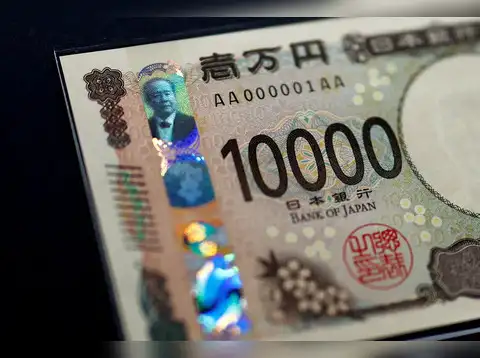
Hirofumi Suzuki of SMBC notes that the election outcome was not as disastrous as feared and that Ishiba’s prompt declaration to stay helped prevent a sharp drop in the yen. However, ongoing political instability is likely to continue applying downward pressure on the currency. Ray Attrill from National Australia Bank believes much of the yen’s underperformance was already priced in before the vote. He emphasises that Japan’s weakened political unity could undermine its position in critical trade talks with the U.S., just ahead of a major tariff deadline.

6/6
Mizuho’s Take – No Resignation Yet
According to Shoki Omori from Mizuho Securities, Ishiba’s post-election remarks indicate he has no plans to resign. Many in the ruling LDP are also hesitant to initiate a leadership contest while U.S. tariff talks remain unresolved and party approval ratings are low. Under these conditions, the likelihood of aggressive fiscal stimulus is limited. Even if there is a leadership change, it may not speed up the implementation of a large-scale spending plan. The only measure currently being discussed is a one-time cash handout to households, which would have minimal fiscal impact.
(Disclaimer: This slideshow has been sourced from Reuters)
(Disclaimer: This slideshow has been sourced from Reuters)