
Explained! What India's inclusion in JPMorgan's bond index means for its markets

1/5
Money Making Ideas
JPMorgan will include Indian government bonds in its Government Bond Index-Emerging Markets (GBI-EM) from June 2024, the Wall Street bank said on Friday.The inclusion, a first for the country, could lead to billions of dollars of inflows into local currency-denominated government debt and bring down bond yields, while also providing some support for the rupee.However, there is little direct impact expected on the equity markets.

2/5
What prompted the inclusion?
The Indian government began discussing the inclusion of its securities in global indexes as far back as 2013. However, its restrictions on foreign investments in domestic debt held that back.
In April 2020, the Reserve Bank of India introduced a clutch of securities that were exempt from any foreign investment restrictions under a "fully accessible route" (FAR), making them eligible for inclusion in global indexes.
Currently, 23 Indian Government Bonds (IGBs) with a combined notional value of $330 billion are index eligible, JPMorgan said.
About 73% of benchmarked investors voted in favour of India's inclusion, it said.
In April 2020, the Reserve Bank of India introduced a clutch of securities that were exempt from any foreign investment restrictions under a "fully accessible route" (FAR), making them eligible for inclusion in global indexes.
Currently, 23 Indian Government Bonds (IGBs) with a combined notional value of $330 billion are index eligible, JPMorgan said.
About 73% of benchmarked investors voted in favour of India's inclusion, it said.

3/5
How large will the inflows be?
JPMorgan said Indian bonds will eventually hold a weight of 10% in its index, following 1% additions to its weightage each month from next June.
The inclusion could result in inflows of close to $24 billion over this 10-month period, analysts estimate.
This is significantly higher than the $3.5 billion invested by foreign investors in Indian debt so far this calendar year.
Foreign holdings of outstanding bonds could rise to 3.4% by April-May 2025, from 1.7% currently, analysts estimate.
The inclusion could result in inflows of close to $24 billion over this 10-month period, analysts estimate.
This is significantly higher than the $3.5 billion invested by foreign investors in Indian debt so far this calendar year.
Foreign holdings of outstanding bonds could rise to 3.4% by April-May 2025, from 1.7% currently, analysts estimate.
Amazon Top Deals
POWERED BY

Crompton Ozone 75 Litres Desert Air Cooler for home | Large & Easy Clean Ice Chamber | 4-Way Air Deflection | High Density Honeycomb Pads | Everlast Pump | Auto Fill| 3 Year Brand Warranty
₹9,798Buy Now43%
OFF

atomberg Studio Smart+ 1200mm BLDC Ceiling Fan with IoT & Remote | BEE 5 star Rated Energy Efficient Ceiling Fan | High Air Delivery with LED Indicators | 3 Year Warranty (Earth Brown)
₹5,903Buy Now36%
OFF

LG 32 L Convection Microwave Oven (MC3286BRUM, Black, 360° Motorised Rotisserie for Bar-be-queing, 301 Auto Cook Menu, Stainless steel cavity, Indian Cuisine, Tandoor Se, Steam Clean & Diet Fry)
₹19,340Buy Now19%
OFF

4/5
What is the impact on bond yields, borrowing costs?
India's fiscal deficit remains high at a targeted 5.9% of GDP for the year ending March 31, 2024, which will result in the government borrowing a record 15 trillion rupees (about $181 billion).
So far, banks, insurance companies and mutual funds have been the largest buyers of government debt. An additional source of funds will help cap bond yields and the government's borrowing costs.
Traders estimate the benchmark bond yield will fall 10-15 basis points to 7% over the next few months.
Corporate borrowers will also benefit as their borrowing costs are benchmarked to government bonds.
However, increased foreign flows will also make the bond and currency markets more volatile and could push the government and central bank to intervene more actively.
So far, banks, insurance companies and mutual funds have been the largest buyers of government debt. An additional source of funds will help cap bond yields and the government's borrowing costs.
Traders estimate the benchmark bond yield will fall 10-15 basis points to 7% over the next few months.
Corporate borrowers will also benefit as their borrowing costs are benchmarked to government bonds.
However, increased foreign flows will also make the bond and currency markets more volatile and could push the government and central bank to intervene more actively.
5/5
What does it mean for the rupee?
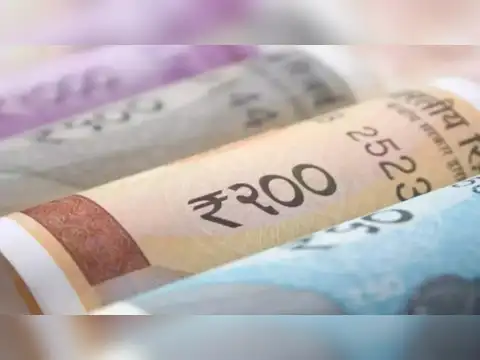
Larger debt inflows from next financial year will make it easier for India to finance its current account deficit and reduce the pressure on the rupee.
Index inclusion-related inflows of close to $24 billion will cover a material part of India's $81 billion current account deficit, estimated for next financial by IDFC First Bank.
Index inclusion-related inflows of close to $24 billion will cover a material part of India's $81 billion current account deficit, estimated for next financial by IDFC First Bank.