Dwarikesh Sugar to split shares in 10:1 ratio

The sub-division of share swill result in enhanced liquidity and will help in increasing investor base.

Dwarikesh Sugar to split shares in 10:1 ratio
NEW DELHI: Dwarikesh Sugar Industries Ltd today said its board has approved splitting of equity shares to enhance liquidity and increase investor base.

The existing shareholders will get 10 new equity shares for every 1 currently held by them, the company said in a regulatory filing.

The board, in its meeting held today, approved "sub- division of existing 1 equity shares having face value of Rs 10 each fully paid up into 10 equity shares having face value of Rs 1 each, subject to the approval of members", it said.

The board also approved subdivision in authorised share capital from 2,25,00,000 shares of Rs 10 each into 22,50,00,000 shares of Rs 1 each.

The postal ballot notice for sub-division of shares of equity share capital and consequential alteration in memorandum of the company was also approved.

"The Board believes sub-division of shares...will result in enhanced liquidity and will help in increasing investor base," the company said.
ADVERTISEMENT

"Our aim is to create value to our stakeholders. Sub- division of shares will help in enhancing liquidity and make our company's equity shares even more affordable to investors at large," said B J Maheshwari, Whole Time Director, Dwarikesh Sugar Industries.

At the end of March quarter, Dwarikesh Sugar's shareholder base is 11,102 that includes promoters who hold 41.87 per cent stake in the company.
Decoding enigma of bitcoin in 9 slides
1/9
Source: Investopedia & Agencies

Bitcoin, the first decentralized digital currency, recently made news when it became the choice of currency for the cyber attackers who crippled computer networks around the world. After which, the value of the currency shot up and now stands at Rs 1,56,452.46 to even exceed the price of gold!

Here’s a look at the digital currency and what it means to investors
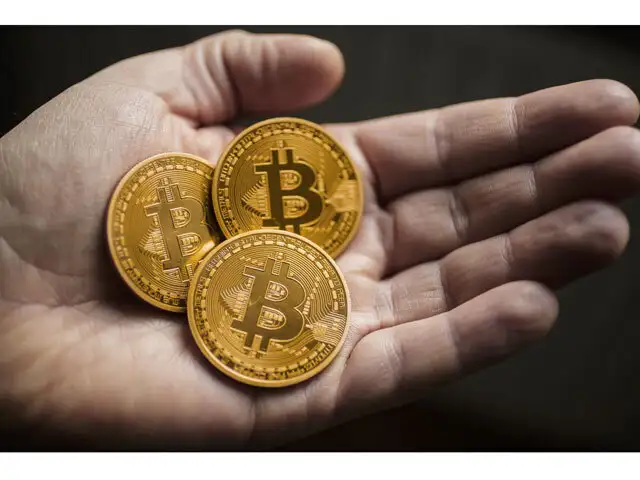
Source: Investopedia & Agencies Bitcoin, the first decentralized digital currency, recently made news when it became the choice of currency for the cyber attackers who crippled computer networks aro..
Read More
- Bitcoin is a decentralized digital currency that enables instant payments to anyone, anywhere in the world using peer-to-peer technology, operating without any central authority.

- Transaction management and money issuance are carried out collectively by the network.

- After you install a bitcoin wallet on your computer or mobile phone, it will generate your first bitcoin address and you can create more whenever you need one.

- You can disclose your addresses to your friends so that they can pay you or vice versa. It is pretty similar to how email works, except that bitcoin addresses should only be used once.
- Bitcoin is a decentralized digital currency that enables instant payments to anyone, anywhere in the world using peer-to-peer technology, operating without any central authority. - Transaction man..
Read More
- Bitcoin was mysteriously launched in 2009 by a person or group of people operating under the name of Satoshi Nakamoto.

- The currency was then adopted by a small clutch of enthusiasts.

- Nakamoto dropped off the map as bitcoin began to attract widespread attention and handed over the reins to developer Gavin Andresen, who then became the bitcoin lead developer at the Bitcoin Foundation.
- Bitcoin was mysteriously launched in 2009 by a person or group of people operating under the name of Satoshi Nakamoto. - The currency was then adopted by a small clutch of enthusiasts. - Nakamoto..
Read More
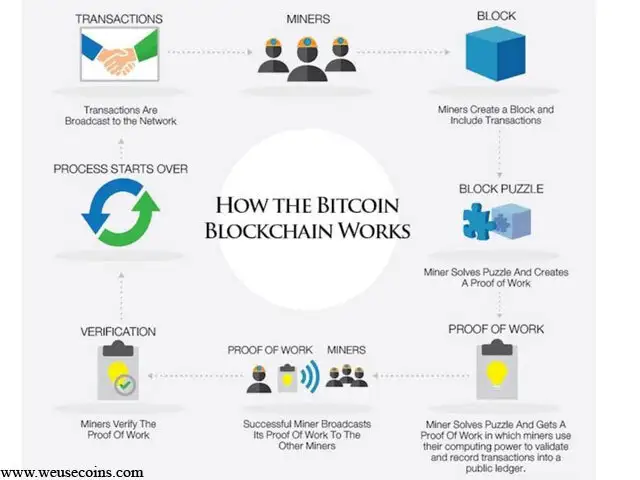
- Bitcoin uses public-key cryptography, peer-to-peer networking, and proof-of-work to process and verify payments.

- They are sent (or signed over) from one address to another with each user potentially having many, many addresses.

- Each payment transaction is broadcast to the network and included in the blockchain so that the included bitcoins cannot be spent twice.

- After an hour or two, each transaction is locked in time by the massive amount of processing power that continues to extend the blockchain.
- Bitcoin uses public-key cryptography, peer-to-peer networking, and proof-of-work to process and verify payments. - They are sent (or signed over) from one address to another with each user potenti..
Read More
- One bitcoin recently traded for $1,734.65, according to Coinbase, a company that helps users exchange bitcoins. That makes it more valuable than an ounce of gold, which trades at less than $1,230.

- The value of bitcoins can swing sharply, though. A year ago, one was worth $457.04, which means that it's nearly quadrupled in the last 12 months.


- One bitcoin recently traded for $1,734.65, according to Coinbase, a company that helps users exchange bitcoins. That makes it more valuable than an ounce of gold, which trades at less than $1,230. ..
Read More
- Many bitcoin supporters are of the view that digital currency is the future. People who endorse it also believe that it facilitates a quick, no-fee payment system for transactions across the world.

- Bitcoin can be exchanged for traditional currencies; in fact, its exchange rate against the dollar is what makes it an attractive choice for investors and traders interested in currency plays.

- It also acts as an alternative to national fiat money and traditional commodities like gold, which is one of the primary reasons for the growth of digital currencies like bitcoin. Like any other asset, the principle of buy low and sell high applies to bitcoins.

- Currently, bitcoin is becoming popular in Asia, attracting Mrs Watanabe - the metaphorical Japanese housewife investor - South Korean retirees and thousands of others who are trying to escape rock-bottom savings rates by investing in the crypto-currency.
- Many bitcoin supporters are of the view that digital currency is the future. People who endorse it also believe that it facilitates a quick, no-fee payment system for transactions across the world...
Read More
- Though Bitcoin was not designed as a normal equity investment, some speculative investors were drawn to the digital money after it appreciated rapidly in May 2011 and again in November 2013.

- Since then, many people purchase bitcoin for its investment value rather than as a medium of exchange.

- The lack of guaranteed value and digital nature of bitcoin means that its purchase and use carries several inherent risks. Many investor alerts have been issued by the Securities and Exchange Commission (SEC), the Financial Industry Regulatory Authority (FINRA), the Consumer Financial Protection Bureau (CFPB), and other agencies.
- Though Bitcoin was not designed as a normal equity investment, some speculative investors were drawn to the digital money after it appreciated rapidly in May 2011 and again in November 2013. - Sin..
Read More
Regulatory Risk: Bitcoins are a rival to government currency and may be used for black market transactions, money laundering, illegal activities or tax evasion. As a result, governments may seek to regulate, restrict or ban the use and sale of bitcoins, like some already have.

Security Risk: Bitcoin exchanges are entirely digital and, as with any virtual system, are at risk from hackers, malware and operational glitches. If a thief gains access to a bitcoin owner's computer hard drive and steals his private encryption key, he could transfer the stolen bitcoins to another account. Hackers can also target bitcoin exchanges, gaining access to thousands of accounts and digital wallets where bitcoins are stored.

Insurance Risk: Some investments are insured through the Securities Investor Protection Corporation. Normal bank accounts are insured through the Federal Deposit Insurance Corporation (FDIC) up to a certain amount depending on the jurisdiction. Bitcoin exchanges and bitcoin accounts are not insured by any type of federal or government program.
Regulatory Risk: Bitcoins are a rival to government currency and may be used for black market transactions, money laundering, illegal activities or tax evasion. As a result, governments may seek to r..
Read More
Fraud Risk: While bitcoin uses private key encryption to verify owners and register transactions, fraudsters and scammers may attempt to sell false bitcoins. For instance, in July 2013, the SEC brought legal action against an operator of a bitcoin-related Ponzi scheme.

Market Risk: Like with any investment, bitcoin values can fluctuate. Indeed, the value of the currency has seen wild swings in price over its short existence. Subject to high volume buying and selling on exchanges, it has a high sensitivity to "news." According to the CFPB, the price of bitcoins fell by 61% in a single day in 2013, while the one-day price drop in 2014 has been as big as 80%.

Tax Risk: As bitcoin is ineligible to be included in any tax-advantaged retirement accounts, there are no good, legal options to shield investments from taxation.
Fraud Risk: While bitcoin uses private key encryption to verify owners and register transactions, fraudsters and scammers may attempt to sell false bitcoins. For instance, in July 2013, the SEC broug..
Read More
ADVERTISEMENT
READ MORE

READ MORE:

LOGIN & CLAIM

50 TIMESPOINTS

Related Companies

More from our Partners

Loading next story
Business News › Markets › Stocks › News › Dwarikesh Sugar to split shares in 10:1 ratio
Text Size:AAA
Success
This article has been saved

*

+