
BOJ signals steady course on bond tapering

1/7
BOJ’s Bond Tapering Strategy
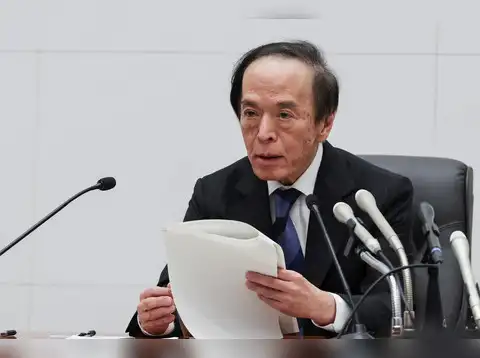
Asahi Noguchi emphasised that there is currently no need to make significant changes to the Bank of Japan’s bond tapering strategy. He noted that any increase in bond purchases should be reserved for times of severe market disruption. The BOJ retains flexibility in its operations, allowing it to adjust bond buying in response to sudden market movements, but this would only be done under exceptional circumstances. (Source: Reuters)

2/7
On Interest Rates
Noguchi stated that interest rate hikes should be approached cautiously and gradually. The BOJ must ensure that inflation stabilises around its 2% target, and this can only be achieved if it is supported by continuous wage growth. A step-by-step strategy is essential to avoid premature tightening that could derail economic recovery.

3/7
Market Context & JGB Yields
Japanese government bond (JGB) yields, particularly on super-long tenures, have recently surged to record highs. This comes amid growing calls from politicians for substantial fiscal spending. Such developments may complicate the central bank’s efforts to gradually normalise its ultra-loose monetary policy.
Amazon Top Deals
POWERED BY

4/7
BOJ Policy Timeline
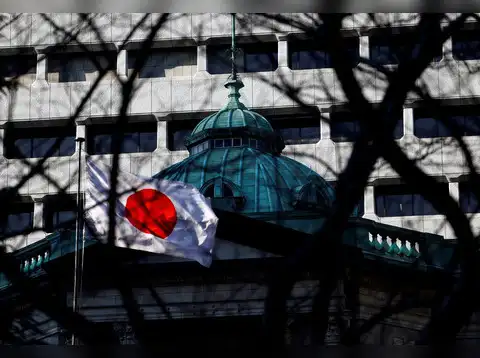
In January, the BOJ raised its short-term policy rate to 0.5% for the first time since ending its zero-yield cap. Looking ahead, the central bank will conduct an interim review of its current bond tapering plan, which runs through March 2026. Based on this review, it will outline a new framework to guide bond reductions from April 2026 onward.

5/7
Noguchi’s Outlook
Noguchi reiterated that he sees no immediate need for major revisions to the existing tapering plan. He believes the BOJ has ample time to gradually reduce the size of its balance sheet. Any future tapering decisions should be made from a long-term perspective, ensuring economic stability remains intact.

6/7
Inflation & Wage Trends
Despite consumer inflation staying above 2% for the past three years, Noguchi pointed out that the rise has mainly been driven by higher import costs rather than domestic wage growth. He emphasised that service inflation remains weak, indicating that many businesses have yet to pass on wage increases. For inflation to be sustainably anchored at the BOJ’s target, wage-driven price growth in the services sector is essential.
7/7
Key Takeaways
The Bank of Japan continues to take a dovish and cautious stance. Significant policy changes are unlikely in the near future. The BOJ’s decisions will hinge on the evolution of wage growth and whether services inflation can consistently exceed 2%, which is crucial for sustainably achieving its inflation goal.
(Disclaimer: This slideshow has been sourced from Reuters)
(Disclaimer: This slideshow has been sourced from Reuters)