5 reforms that markets would love to hear in FM's Budget speech
Jaitley will probably stick to the word in his attempt to create a macroeconomic balance and provide headroom for monetary easing.
By ET Online |

NEW DELHI: Fiscal prudence will be the key word when finance minister Arun Jaitley unveils his growth plan for Asia's third-largest economy. Jaitley will probably stick to the word in his attempt to create a macroeconomic balance and provide headroom for monetary easing.
"The fact remains that the onus is on the government to get the economy back into the growth mode by way of investments. At the moment, investment is clearly the only engine that can generate some force. Other engines are still in a slowdown," says Anup Maheshwari, Head-Equities & Corporate Strategy, DSP BlackRock.
"There is a lot of focus on how the government plans to spend money. They have had a boost from the lowering of oil and other commodity prices. Subsidies are going lower too. So there is levy for the government to step up capital expenditure," he adds.
Stocks in sectors such as capital goods, cement, infrastructure, real estate and banking have already risen sharply amid expectations of higher budgetary allocations for capital expenditure and push for manufacturing.
"The government is expected to move towards improving quality of spending, taking a shift away from subsidy based spending to propelling the investment cycle by increasing capital allocations," Angel Broking said in a note.
"The government is expected to raise the target spend on capital expenditure to 2% of GDP in FY2016 vis-à-vis an estimated 1.7% of GDP in FY2015 in an attempt to crowd in private investment," added the note.
Capital expenditure remained at an average of sub-2% of GDP in the last decade. The government may attempt to boost growth multiplier by increasing allocations to national highways, roads, railways, rural and urban housing apart from likely push towards building smart cities.

Top five structural reforms eyed by markets:
Good and Services Tax (GST):
Angel Broking is of the view that the implementation of GST is likely to broaden the tax base, simplify tax structure and increase the tax to GDP ratio. The central government has to tackle opposition from states amid concerns about revenue sharing and loss of fiscal autonomy.
"We expect stability in tax rates, though there may be some adjustments, keeping in mind the eventual movement to GST. Excise duties may be rationalized and customs duty may be imposed on several items to further the 'Make in India' theme," said a Kotak Securities - Private Client Research report.
"The fact remains that the onus is on the government to get the economy back into the growth mode by way of investments. At the moment, investment is clearly the only engine that can generate some force. Other engines are still in a slowdown," says Anup Maheshwari, Head-Equities & Corporate Strategy, DSP BlackRock.
"There is a lot of focus on how the government plans to spend money. They have had a boost from the lowering of oil and other commodity prices. Subsidies are going lower too. So there is levy for the government to step up capital expenditure," he adds.
Stocks in sectors such as capital goods, cement, infrastructure, real estate and banking have already risen sharply amid expectations of higher budgetary allocations for capital expenditure and push for manufacturing.
"The government is expected to move towards improving quality of spending, taking a shift away from subsidy based spending to propelling the investment cycle by increasing capital allocations," Angel Broking said in a note.
"The government is expected to raise the target spend on capital expenditure to 2% of GDP in FY2016 vis-à-vis an estimated 1.7% of GDP in FY2015 in an attempt to crowd in private investment," added the note.
ADVERTISEMENT
Capital expenditure remained at an average of sub-2% of GDP in the last decade. The government may attempt to boost growth multiplier by increasing allocations to national highways, roads, railways, rural and urban housing apart from likely push towards building smart cities.
Top five structural reforms eyed by markets:
Good and Services Tax (GST):
ADVERTISEMENT
The government is expected to lay more specifics regarding the road map for GST implementation. The impending legislation is aimed at creating a unified market for goods and services by replacing all indirect taxes at central (like excise and service tax) and state level (like octroi and sales tax).Angel Broking is of the view that the implementation of GST is likely to broaden the tax base, simplify tax structure and increase the tax to GDP ratio. The central government has to tackle opposition from states amid concerns about revenue sharing and loss of fiscal autonomy.
ADVERTISEMENT
Midcap stocks are already buzzing ahead of the Union Budget on hopes that the 'Make in India' initiative and the GST implementation will be a big positive."We expect stability in tax rates, though there may be some adjustments, keeping in mind the eventual movement to GST. Excise duties may be rationalized and customs duty may be imposed on several items to further the 'Make in India' theme," said a Kotak Securities - Private Client Research report.
Implementation of GAAR, proposed to be levied on companies and investors routing money through tax havens, was deferred to April 2016 from April 2014. Market is seeking a new timeline for GAAR (postponement by 2 years) and applying the tax prospectively, and not since 2010, amid expectation of investor-friendly measures.
"The government may also look at exempting transactions under tax-treaties, which have built-in checks against tax avoidance," said the Angel Broking report.
There are reports that GAAR may be deferred by about two years to boost business sentiment. A positive stance will act as a major booster to investor confidence and spike up the market as well.
"General Anti-Avoidance Rules (GAAR) should be deferred for another two years as there is need for further measures to create a transparent and non-adversarial tax policy," says Bimal Tanna, Partner and Leader - Industrial Manufacturing, PwC India.
More push for Make in India
ADVERTISEMENT
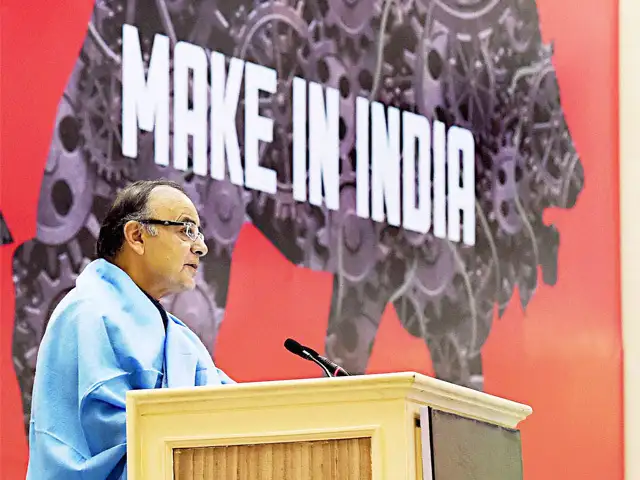
The government is expected to roll out incentives to boost manufacturing in an effort to support the government's 'Make in India' campaign. The government may opt for a stable tax regime through no retrospective taxation and transparent resolution of tax disputes, apart from addressing inverted duty structure on certain domestic manufactured goods.
Prime Minister Narendra Modi unveiled the ambitious "Make in India" campaign last year with an aim to turn India into a global manufacturing hub.
"This I believe would be the key theme the Union Budget 2015 would be focussing upon," says Aviral Gupta, Independent Investment Strategist. "In order to attract more investment in business of manufacturing defence and aerospace equipment, the scope of units eligible for deduction under section 80-IA may be extended to units engaged in business of manufacturing defence and aerospace equipment," he adds.
Boost for banking
ADVERTISEMENT
The government may opt for setting up of holding company to improve operational efficiency in management of the state-run entities and also allocate funds towards further capitalization of banks.
The Centre may look to infuse about Rs 18,000 crore into public sector banks next fiscal, more than doubling the allocation from the current fiscal, ET reported earlier this week.
ADVERTISEMENT
"Since the beginning of this financial year, the government has provided an assistance of Rs 6,990 crore to nine of the 26 state-run banks on the basis of two new parameters of efficiency - return on equity (RoE) and return on assets (RoA). It had budgeted Rs 11,200 crore for capital infusion this fiscal," added the report.
More power for railways
Along with the general budget, rail budget too assumes significance with the government identifying it as a focus area and a domain expert minister being in charge.
"We expect railways to report an improvement in finances, bolstered by freight revenue, announce new innovative sources of funding and make some headway in taking the PPP schemes forward, besides announcement toward improvement in infrastructure, operations and passenger amenities," Motilal Oswal said in a note.
(The above report was compiled with inputs from Angel Broking)
Too busy to trade in stocks? Invest in Mutual Funds with ET Money!
Bookmark or read stories offline -
Download ET Markets APP
Download ET Markets APP
Text: ET Bureau
ET looks at the recent speeches of finance minister Arun Jaitley for clues to the budget for FY16. The budget is widely expected to lay down the agenda for the remaining four years of the Narendra Modi government.
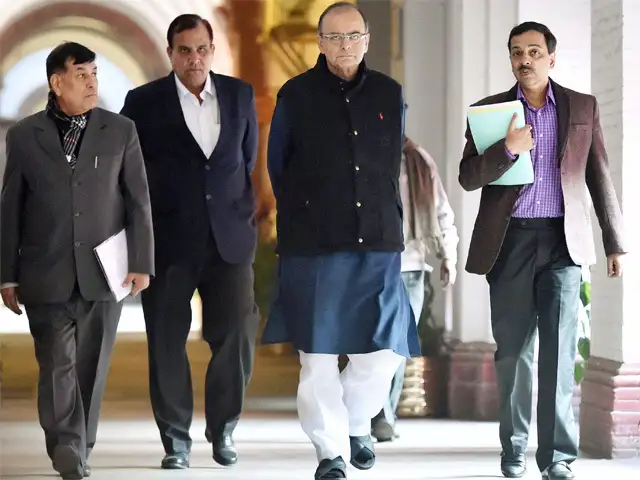
In Pic: Jaitley arrives at the Pre-Budget Consultation with the representatives of Trade Union, in New Delhi.
ET looks at the recent speeches of finance minister Arun Jaitley for clues to the budget for FY16. The budget is widely expected to lay down the agenda for the remaining four years of the Narendra Modi government.
In Pic: Jaitley arrives at the Pre-Budget Consultation with the representatives of Trade Union, in New Delhi.