US with an inexperienced President, over-leveraged China are biggest risks: Kenneth Rogoff, Harvard University
Team surrounding Trump is very mixed at best. Don't know if he listens to them, says Rogoff.
By  | Updated:
| Updated: 
Talking to Punita Kumari Sinha of ET Now, Kenneth Rogoff, Economics Professor, Harvard University, says about 80% of US currency is in 100 dollar bills and 95% of American have never seen a 100 dollar bill.
Edited excerpts:
What worries you in terms of the biggest risks in terms of probabilities that you see?
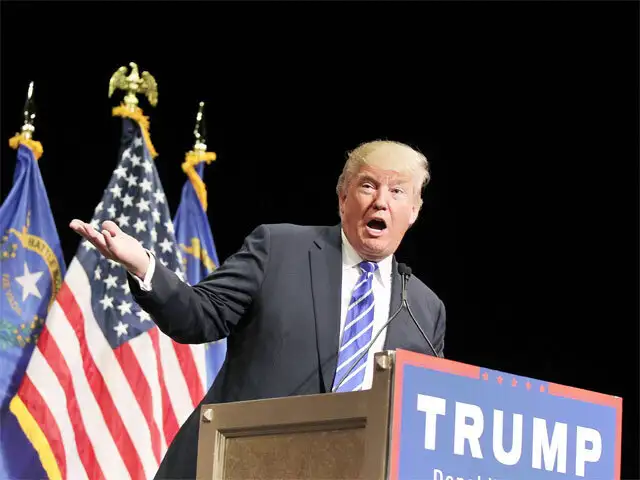
We get some very irrational action coming out of the US administration that would not even occur to me to say what it would be. These actions create problems and we cannot pullback on them very quickly. We have a very inexperienced president. The team surrounding him is very mixed at best. I do not know if he listens to people, I am not sure. I am worried about that.
But there are other risks as well. There is risk from Europe and not to forget China, who have tended to be the rock of stability but their economy is very vulnerable. It is a over leveraged. It has been growing very fast. But next year too despite those risks, I think the balance is on the positive side.
Coming to your book, The Curse of Cash. Given that the world is chugging along fairly well, why would you think that one should reduce cash in the economy? Is it based on where we are in the economy or is it a general view?
No I have been writing about this for 20 years and I am talking about advanced economies. I have some material about India in the book, mostly praising some of the policies that India has been doing for financial inclusion, trying to reduce corruption by reducing the use of cash. My book was published in September 2016.
I certainly knew nothing about what was happening in November. Somebody must have known but if we look in the advanced economies, the use of cash is going downward in legal transactions. It now accounts for less than 10% of the value of retail transactions. Just a few years ago, it was 15%. It will probably be 5% in another few years. So, it is going downward but the supply of cash is going upward. It is almost all in 100 dollar bills, 500 euro notes, 1000 franc notes. About 80% of US currency is in 100 dollar bills, 90% of euro currency is in 50 euro and above.
I have seen a 100 dollar bill but 95% of Americans report never seeing one, 5% report holding one or two a year. The Fed does not know where these notes are. But we kind of do know where they are because there are uncovered in big drug busts, tax evasion busts, human trafficking, you name it.
I have argued in favour of recalibrating the use of cash, not getting rid of it, trying to preserve how ordinary people use it. I include dealing on illegal things but on a small scale. Somebody is using marijuana or some transaction they are not reporting to taxes but it is not a 10 million dollar transaction. I am not trying to interfere with that but unfortunately a lot of the use of cash is much bigger.
For example, in New York, Los Angeles, Miami they are actually a lot of houses and apartments that change for suitcases of cash. I am speaking to an Indian audience where everything seems to change for suitcases and cash.
So first let me say that the Prime Minister Modi and his administration has done many things that have been very constructive in trying to reduce corruption and financial inclusion. There have been studies about the use of smart cards among lower income people and how actually that surprisingly reduced their vulnerability to corruption.
Yes it is only in isolated pockets that you see the data showing some pain from the demonetisation but the broad GDP numbers are good.
GDP numbers are missing 25% or 30% of all activities. Certainly the Indian people have been very patient. But nevertheless, I would not have done it that way. We can pick a lot of things, but number one issue is it is very difficult and expensive to print cash and it would be obviously a lot easier if they had the cash on hand. Now I understand why the prime minister did not do that. I felt that trying to get just take the black money out is too hard, So, my suggestions are more along the lines of making it more difficult in the future, create frictions, making it harder to have a big pile of cash. But we are where we are and it is good if the effects have not been that negative. II have to say a lot of my colleagues around Cambridge who work in India, do surveys in India are pretty sceptical but this will pass.
Edited excerpts:
What worries you in terms of the biggest risks in terms of probabilities that you see?
We get some very irrational action coming out of the US administration that would not even occur to me to say what it would be. These actions create problems and we cannot pullback on them very quickly. We have a very inexperienced president. The team surrounding him is very mixed at best. I do not know if he listens to people, I am not sure. I am worried about that.
But there are other risks as well. There is risk from Europe and not to forget China, who have tended to be the rock of stability but their economy is very vulnerable. It is a over leveraged. It has been growing very fast. But next year too despite those risks, I think the balance is on the positive side.
Coming to your book, The Curse of Cash. Given that the world is chugging along fairly well, why would you think that one should reduce cash in the economy? Is it based on where we are in the economy or is it a general view?
No I have been writing about this for 20 years and I am talking about advanced economies. I have some material about India in the book, mostly praising some of the policies that India has been doing for financial inclusion, trying to reduce corruption by reducing the use of cash. My book was published in September 2016.
ADVERTISEMENT
I certainly knew nothing about what was happening in November. Somebody must have known but if we look in the advanced economies, the use of cash is going downward in legal transactions. It now accounts for less than 10% of the value of retail transactions. Just a few years ago, it was 15%. It will probably be 5% in another few years. So, it is going downward but the supply of cash is going upward. It is almost all in 100 dollar bills, 500 euro notes, 1000 franc notes. About 80% of US currency is in 100 dollar bills, 90% of euro currency is in 50 euro and above.
I have seen a 100 dollar bill but 95% of Americans report never seeing one, 5% report holding one or two a year. The Fed does not know where these notes are. But we kind of do know where they are because there are uncovered in big drug busts, tax evasion busts, human trafficking, you name it.
I have argued in favour of recalibrating the use of cash, not getting rid of it, trying to preserve how ordinary people use it. I include dealing on illegal things but on a small scale. Somebody is using marijuana or some transaction they are not reporting to taxes but it is not a 10 million dollar transaction. I am not trying to interfere with that but unfortunately a lot of the use of cash is much bigger.
For example, in New York, Los Angeles, Miami they are actually a lot of houses and apartments that change for suitcases of cash. I am speaking to an Indian audience where everything seems to change for suitcases and cash.
ADVERTISEMENT
Let us talk a little bit about India because I saw your interviews and you were a little concerned that the way cash was taken out of the economy and felt that it would really hurt the economic growth. But we do not seem to have seen any real negative impact on the data, the numbers that are coming out. How do you explain that?So first let me say that the Prime Minister Modi and his administration has done many things that have been very constructive in trying to reduce corruption and financial inclusion. There have been studies about the use of smart cards among lower income people and how actually that surprisingly reduced their vulnerability to corruption.
ADVERTISEMENT
There have been a lot of good things going on. But on demonetisation, I would not have advised doing it that way. I do think the economy has done much worse than it seems because of course a lot of the use of cash is in the underground economy where you do not have numbers and there is a lot of circumstantial evidence saying the number of scooters sales and cars have gone down. The economy has slowed down more than the official numbers. Nobody knows how big the underground economy is…Yes it is only in isolated pockets that you see the data showing some pain from the demonetisation but the broad GDP numbers are good.
GDP numbers are missing 25% or 30% of all activities. Certainly the Indian people have been very patient. But nevertheless, I would not have done it that way. We can pick a lot of things, but number one issue is it is very difficult and expensive to print cash and it would be obviously a lot easier if they had the cash on hand. Now I understand why the prime minister did not do that. I felt that trying to get just take the black money out is too hard, So, my suggestions are more along the lines of making it more difficult in the future, create frictions, making it harder to have a big pile of cash. But we are where we are and it is good if the effects have not been that negative. II have to say a lot of my colleagues around Cambridge who work in India, do surveys in India are pretty sceptical but this will pass.
Too busy to trade in stocks? Invest in Mutual Funds with ET Money!
Bookmark or read stories offline -
Download ET Markets APP
Download ET Markets APP
Related Articles
 Trump's high tariffs on several countries to hold back US economic growth: Harvard economist Kenneth Rogoff2025-10-01T09:20:30Z
- Donald Trump has succeeded in imposing US tariffs globally now — but this won’t last as nations will learn how to retaliate: Kenneth Rogoff2025-07-31T17:22:00Z
- ET@Davos: Trump is setting us up for a giant crypto collapse, says Kenneth Rogoff2025-01-21T19:42:34Z
Check out the major incidents from 2016 and 2017, that affected the stock markets.


ADVERTISEMENT


